Main content blocks
Section outline
-
-
-
-
Students mustMark as done
1. The role of transparency in transboundary water management
Transparency in water governance means ensuring that data, processes, and decisions are accessible and understandable to relevant stakeholders. However, the degree of openness varies, as some data is restricted to experts, while other information is publicly available.
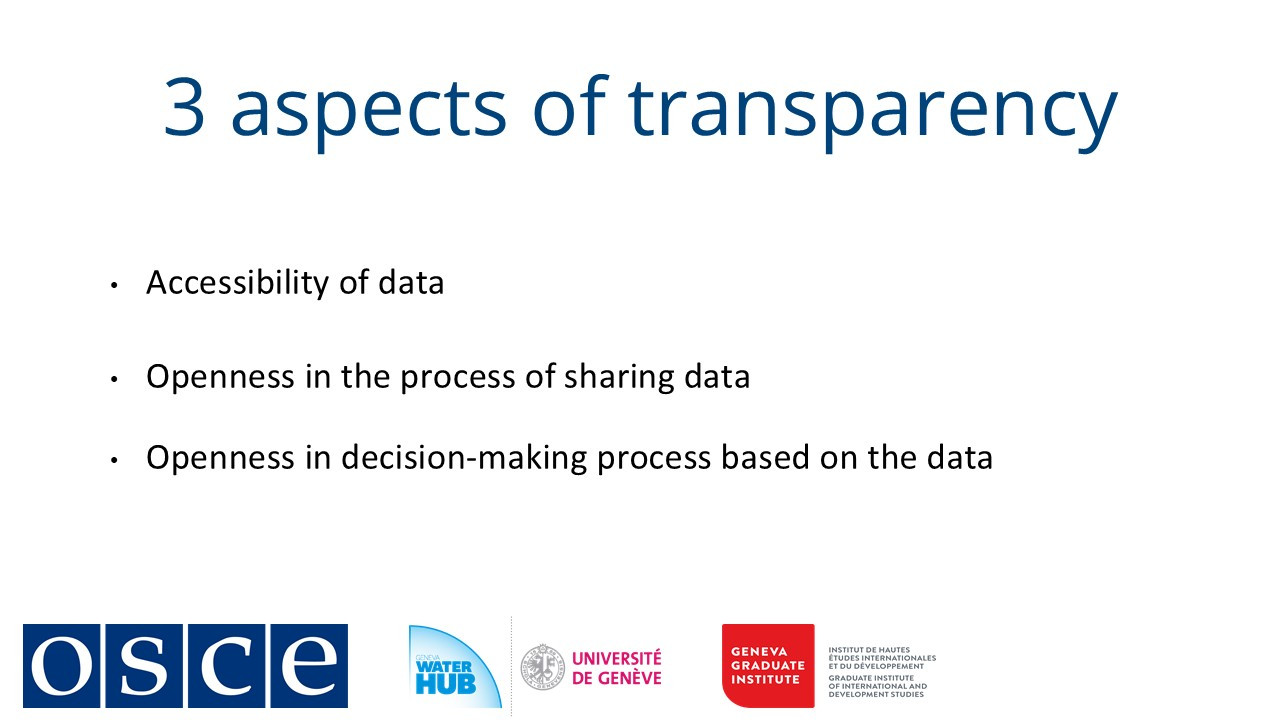
In transboundary water management, transparency operates at three key levels:
-
Data accessibility: Is hydrological, meteorological, or usage data available to stakeholders, or is it restricted?
-
Process openness: Are the methods of data collection, analysis, and modeling shared to allow quality assessment?
-
Inclusive decision-making: Are governance processes open to participation beyond technical and political elites?
Despite its benefits, transparency faces significant barriers. Many stakeholder groups, particularly local communities, indigenous groups, and marginalized populations are excluded due to technical, financial, or institutional obstacles. For instance, interpreting hydrological data often requires specialized expertise, while participation in decision-making forums may depend on political access or funding.
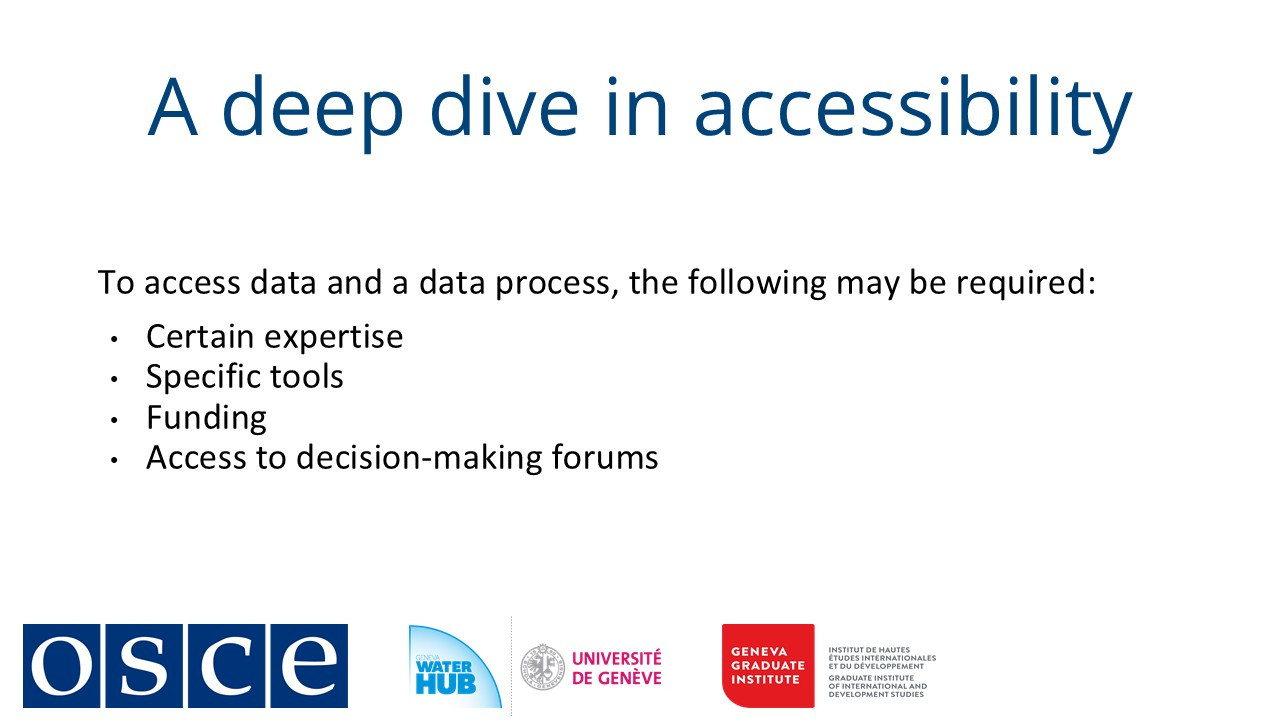
Water management intersects with food and energy systems, yet these sectors frequently operate in isolation. Divergent monitoring standards, incompatible datasets, and competing institutional priorities hinder integrated planning. Effective coordination requires aligning data collection, agreeing on shared platforms, and clarifying decision-making responsibilities, which is often a slow and politically fraught process.
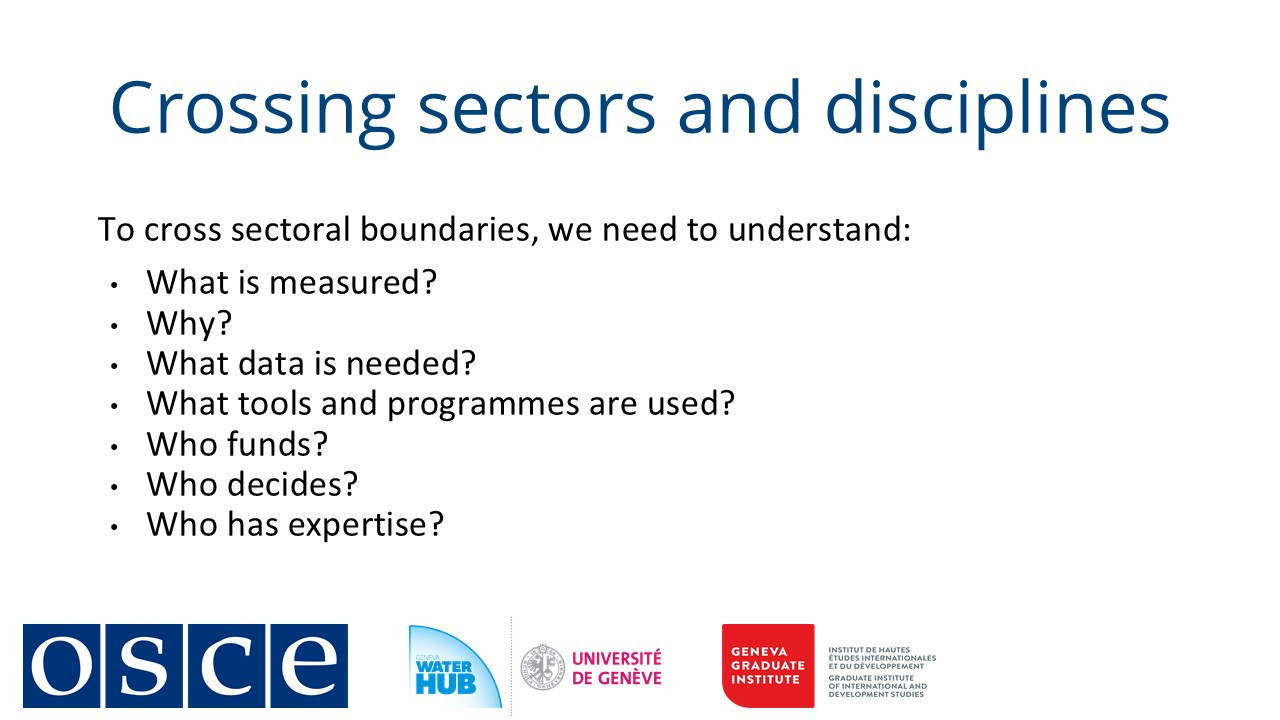
Transparency is a deeply political element. Open data can empower accountability, such as when poor water quality triggers public scrutiny or legal penalties. However, it can also provoke resistance because governments or institutions may withhold data due to fears of exposing non-compliance, inviting external interference, or losing control over information. Additionally, open datasets can be exploited by private entities, raising ethical concerns.
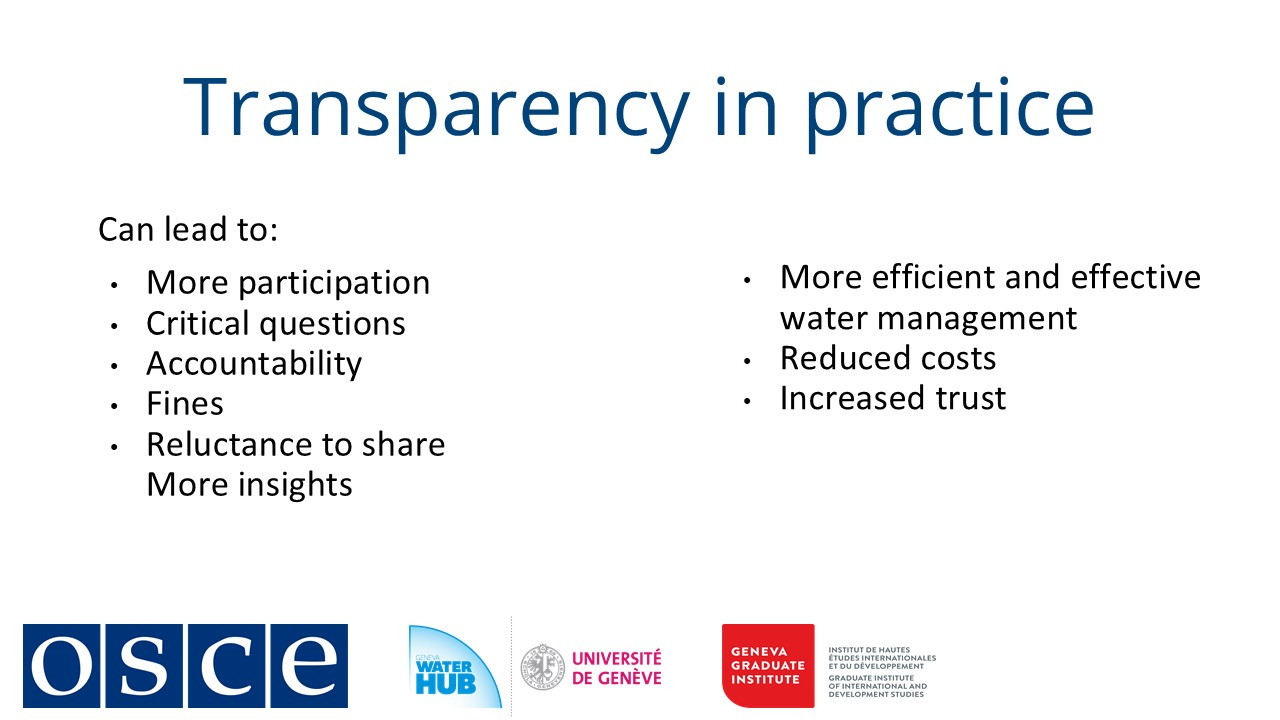
Despite these challenges, transparency strengthens water governance by improving efficiency, reducing costs, and fostering trust between nations. Over time, robust monitoring systems can depoliticize data sharing, as stakeholders grow accustomed to collaborative frameworks. Institutionalized transparency also supports compliance with international agreements, ensuring more sustainable and equitable water management.
-
-
Students mustMark as done
2. Data and neutrality: the political nature of data monitoring
Scientific measurements in water management are often perceived as neutral, yet they are inherently political. Data collection, such as river flow measurements or pollution sampling, depends on where, what, and how variables are measured, influencing interpretations and policy decisions. For example, differing sampling locations along a transboundary river can yield conflicting conclusions about water quality, leading to disputes.
Beyond raw data, assessments require value judgments, such as determining acceptable water quality standards. These benchmarks are not purely scientific but are shaped by policy agreements (e.g., the EU Water Framework Directive) and negotiations between stakeholders. Disagreements over thresholds or pollution sources highlight the political dimensions of water governance.
What is the difference between monitoring and assessment?
-
Monitoring involves long-term data collection on water quantity and quality, supporting regulatory and usage decisions (e.g., drinking water safety);
-
Assessment is often short-term and investigative, identifying pollution sources (e.g., industrial leaks) or causes of groundwater depletion.
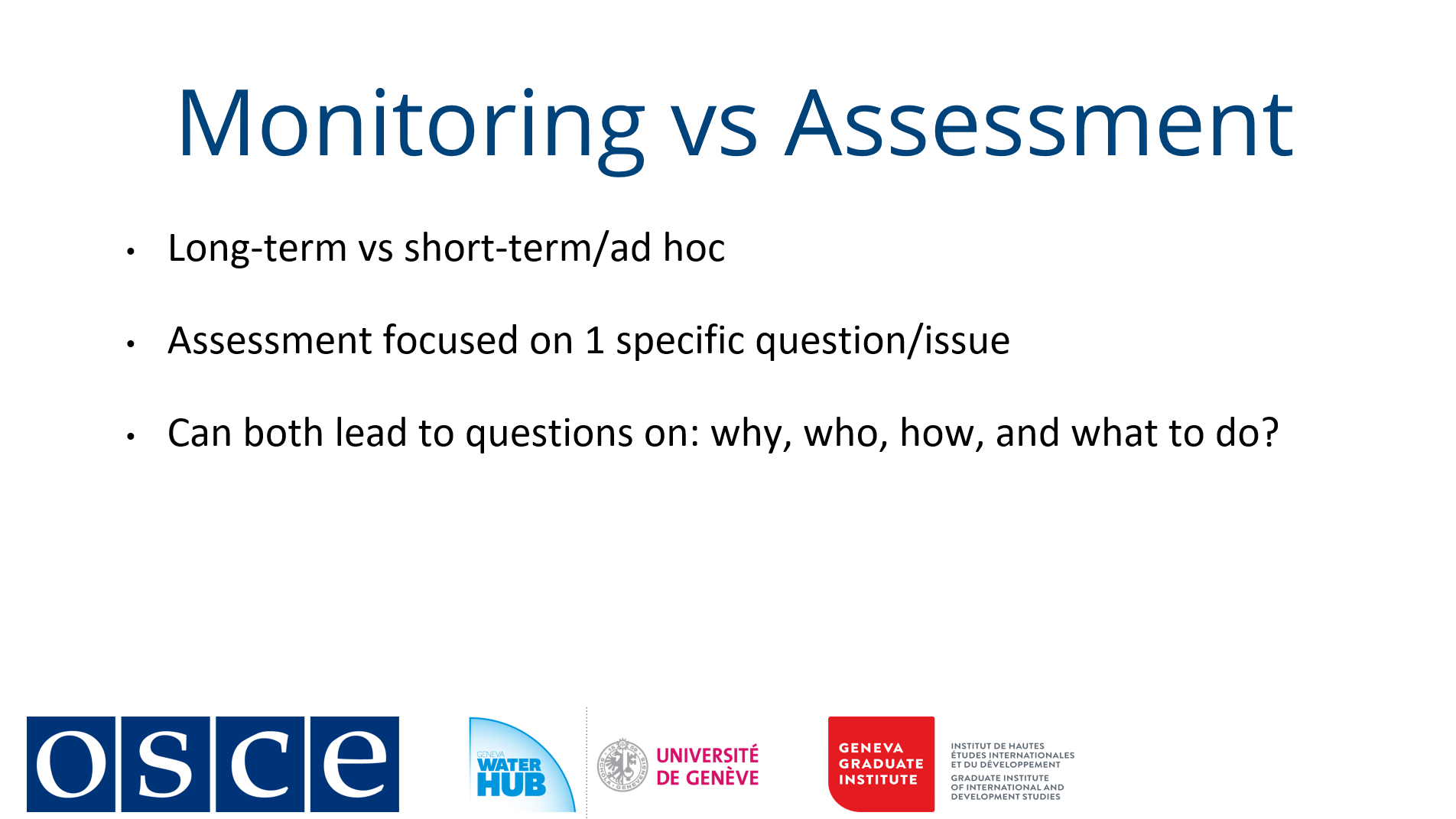
Both processes operate at the science-policy interface, blending technical methods with political negotiation. Divergent methodologies do not necessarily invalidate data but underscore the need for agreed-upon protocols. Joint fact-finding, where stakeholders collaboratively define monitoring goals, methods, and funding, can mitigate conflicts by ensuring mutual acceptance of findings.
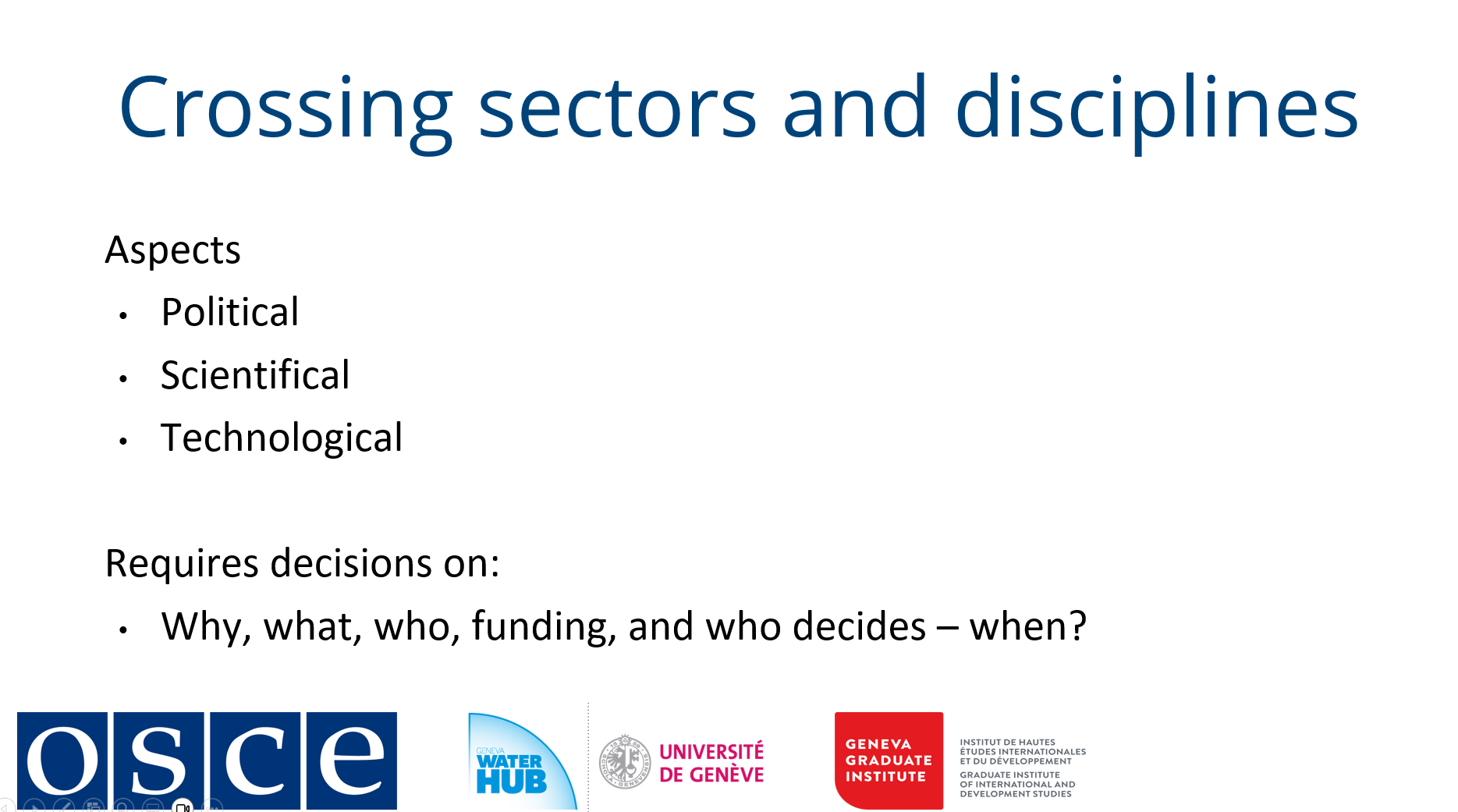
Ultimately, water data is never purely neutral; it reflects the priorities, power dynamics, and institutional frameworks of those who collect and use it. Transparent, cooperative approaches are essential to balancing scientific rigor with equitable decision-making.
-
-
-
-
-
-
Students mustMark as done
1. Examples of open data platforms and the importance of data standards
Effective water management relies on robust data collection and sharing systems that operate at the intersection of science, policy and technology. While technological advances like remote sensing and cloud computing have dramatically expanded our monitoring capabilities, the true potential of these tools can only be realized through establishing comprehensive data standards that address political, scientific and technical dimensions.
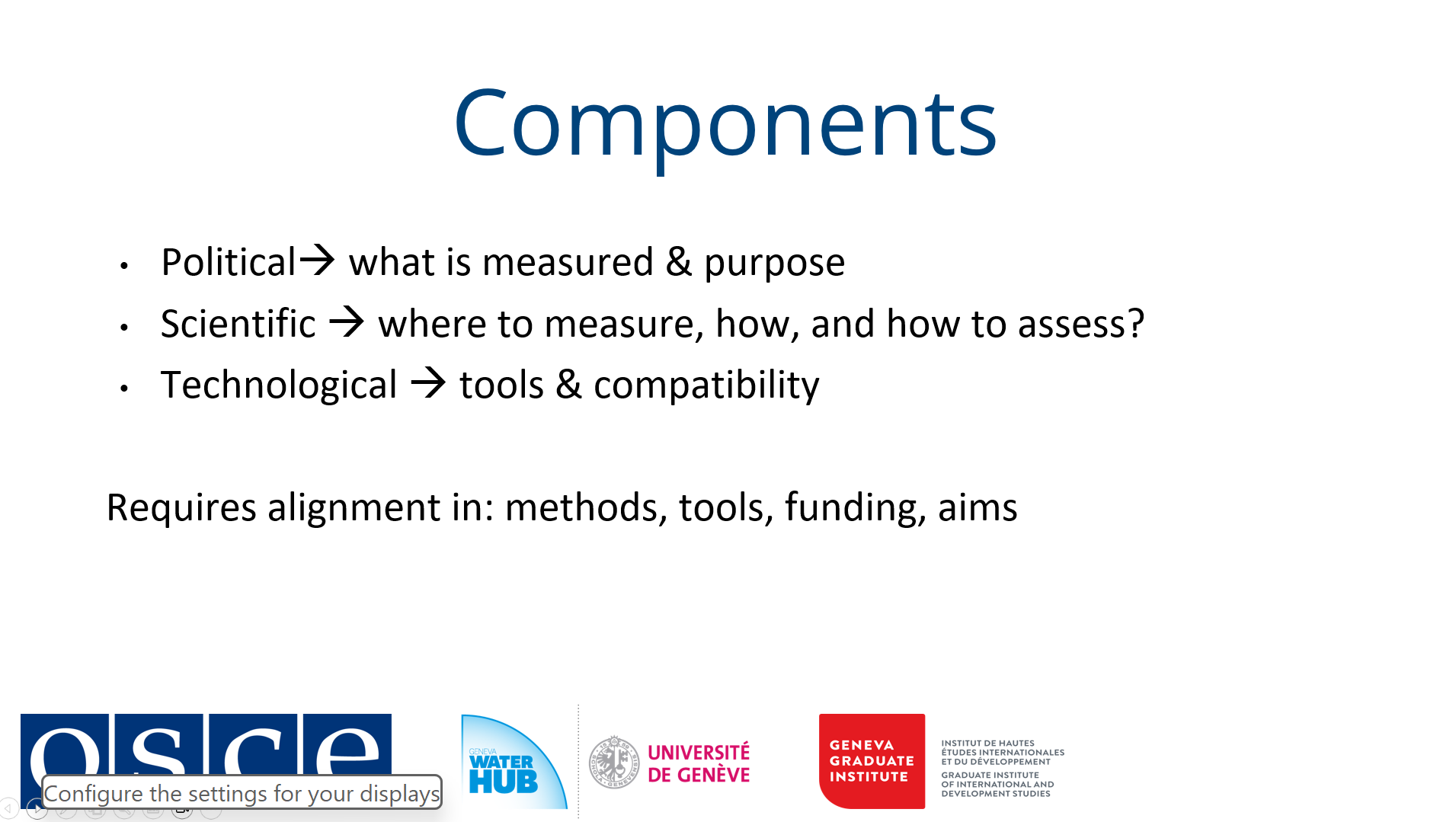
From a political perspective, data standards fundamentally shape what gets measured and why, reflecting policy priorities and governance structures. The selection of monitoring parameters and indicators often involves delicate negotiations between stakeholders with competing interests. Scientifically, standards ensure methodological consistency in data collection approaches, whether using remote sensing platforms or ground-based measurements, and analytical techniques. The choice between different evapotranspiration models or water quality assessment methods, for instance, can significantly influence the resulting datasets and their interpretation.
On the technical side, interoperability remains a critical challenge. Even when measuring the same phenomena, differences in data formats, storage systems and analytical tools can create barriers to effective data sharing and integration. A monitoring system using one software platform may produce datasets incompatible with another country's analysis tools, despite measuring identical water parameters. These technical hurdles often mirror deeper political and institutional divides in transboundary water management.
The implementation of open data platforms represents a promising approach to overcoming these challenges while enhancing transparency. These systems range from restricted-access platforms for authorized government agencies to fully public portals, with access levels reflecting both technical capacities and political agreements. Successful examples include real-time water quality monitoring networks in shared river basins and global frameworks like the UN's Sustainable Development Goal monitoring system, where countries contribute standardized water indicators.
However, the effectiveness of such platforms depends on more than just technical design. Truly functional data sharing systems require alignment across multiple dimensions: consistent monitoring protocols, compatible measurement technologies, harmonized analytical methods, and perhaps most critically, sustained political commitment. When these elements converge, the benefits are substantial - reduced monitoring costs, minimized conflicts over data interpretation, and more efficient water governance.
-
Students mustMark as done
2. Challenges and ways forward
The evolving landscape of data sharing and water management faces both geopolitical and technological challenges. Geopolitical tensions increasingly influence countries' willingness to share data transparently, with concerns over data sovereignty and accountability shaping international cooperation. Despite these constraints, the benefits of open data supporting decision-making, public accountability, and efficient water governance remain critical, particularly for local communities dependent on shared water resources.
Technological advancements offer promising solutions but also present new complexities. Remote sensing and mobile applications have democratized data collection, enabling broader public participation in monitoring efforts. However, these tools cannot fully replace in-situ measurements, especially as the interconnectedness of physical and human systems demands contextual understanding alongside raw data.
The rise of AI and digital twin technologies introduces both opportunities and risks. While machine learning can uncover hidden patterns in vast datasets, its "black box" nature raises concerns about interpretability and trust. Digital twins - virtual replicas of water systems, aim to improve management but struggle to fully capture hydrological and socio-political complexities.
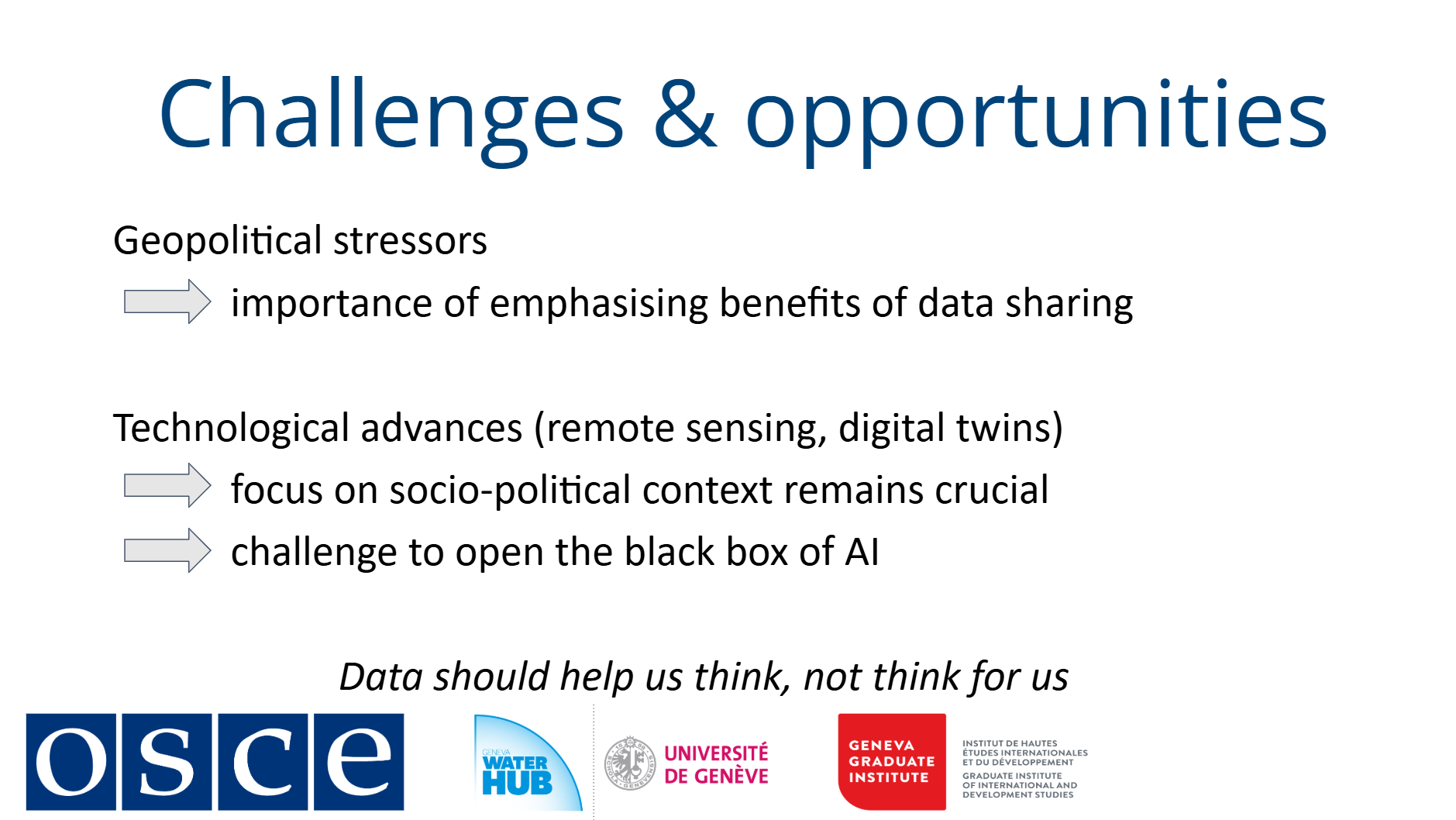
Moving forward, technology should augment, not replace, human judgment. Strengthening institutional capacity to assess risks, validate AI-driven insights, and integrate local knowledge remains essential. Balancing innovation with critical oversight ensures that digital advancements serve equitable and sustainable water management.
-
-
-
-
-
Students mustMark as done
1. An interview on trust, mistrust, data sharing and technological developments
This interview with researcher and practitioner Bota Sharipova offers valuable lessons for water policymakers, technical experts, and civil society working on transboundary cooperation. Her work uncovers a critical paradox: while water professionals in Central Asia maintain strong personal relationships, institutional distrust continues to block formal data sharing.
By comparing the Aral Sea and Sava River basins, Sharipova reveals how informal data exchanges between individuals fail to become systematic cooperation. In the Sava basin, joint projects built trust where none existed, while in Central Asia, initial trust collapsed due to political conflicts. Her research shows that sustainable data sharing requires institutional solutions, as automated monitoring systems face political barriers in upstream-downstream disputes over data sovereignty.
Bota Sharipova emphasizes that water professionals need both technical skills and political awareness, a challenge relevant worldwide. Ultimately, her findings demonstrate that trust is not just about personal connections but must be embedded in governance systems that ensure reliability, fairness, and long-term cooperation.
-
Students mustMark as done
4. An interview on practical examples from Central Asia on data sharing in water management
In this interview, researcher and practitioner Bota Sharipova shares insights on data and information exchange in transboundary water governance, drawing from her extensive work in Central Asia's Syr Darya River basin. She highlights how digital tools are transforming water data accessibility across multiple levels. At local scales, mobile applications like Uzbekistan's "Tomchi" and Kazakhstan's "Hydropost KZ" empower farmers and communities with real-time water information. Nationally, automated monitoring stations are replacing manual data collection, while bilateral initiatives between Uzbekistan-Kazakhstan and Uzbekistan-Tajikistan demonstrate growing regional cooperation in transboundary data sharing. Most strikingly, Sharipova uncovers how social dynamics influence data practices - where shared cultural ties foster informal exchanges, yet limited formal use of technologies like remote sensing in negotiations.
The Central Asian experience proves that effective transboundary data governance needs balancing technical innovation with political awareness and social trust. As digital tools advance, Sharipova's work reminds us that sustainable water cooperation depends on building systems that respect both hydrological realities and human relationships. For anyone working on transboundary waters, this interview reveals why some digital initiatives succeed while others stall, and how to design data systems that connect technical and political divides.
-
Students mustMark as done
This module has demonstrated that digital tools and water data management extend far beyond technical considerations, as they are deeply shaped by political, institutional, and social factors. Transparency in water governance must prioritize equity, inclusion, and accountability, as unequal access to technology, legal barriers, or lack of trust can exacerbate disparities rather than resolve them.
We examined how data collection and interpretation require collaborative development of monitoring standards and assessment frameworks to ensure legitimacy. While technological innovations from open-data platforms to AI-driven modelling offer transformative potential, their effectiveness depends on strong governance structures and human oversight to prevent misuse or marginalization.
Bota Sharipova’s insights reinforced that success hinges on trust-building, regional cooperation, and context-sensitive approaches. As you move forward, we encourage you to integrate these lessons into your work, balancing technological opportunities with inclusive, accountable water governance.
-
-