Main content blocks
Section outline
-
-
-
-
Students mustMark as done
1. Data collection and management process
Digital technologies are transforming how we manage water resources, from smart sensors to predictive modeling. But beyond the technical innovations lies a critical question: How can these tools promote transparent, equitable, and accountable water governance?
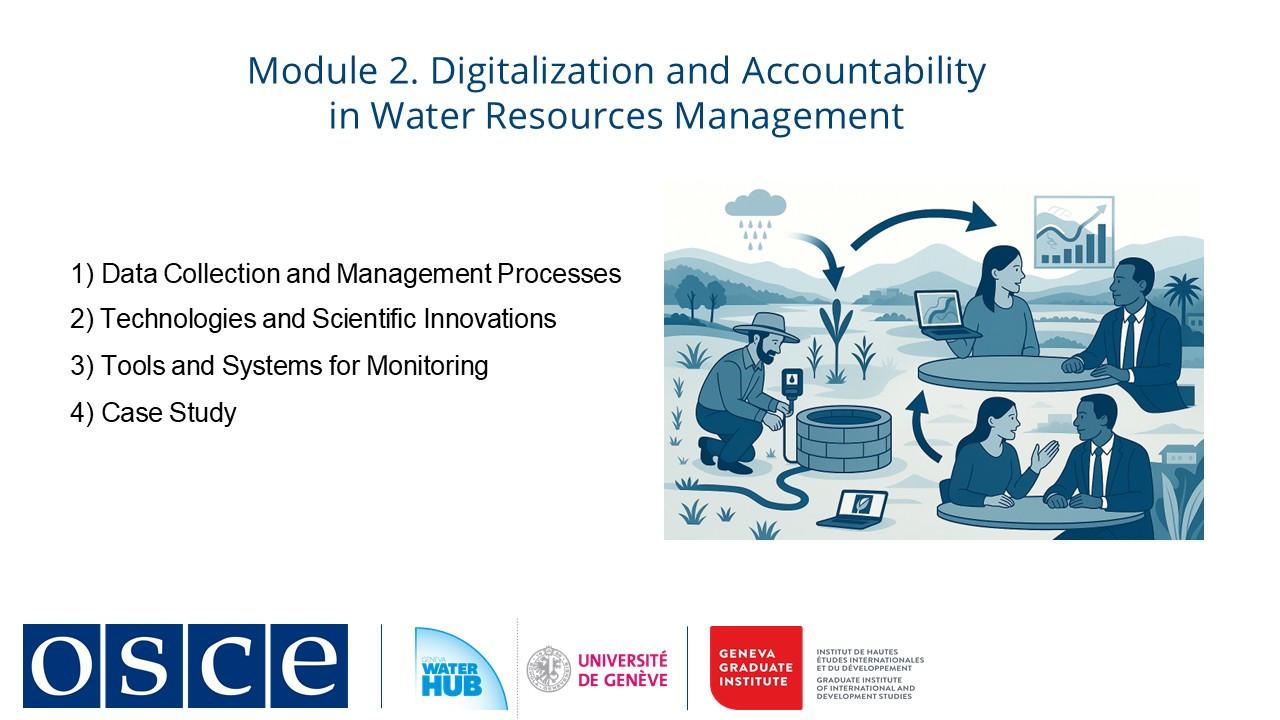
This module examines the opportunities and challenges of digital water management, focusing on the full data cycle, collection, interpretation, analysis, and dissemination. We explore how data systems shape decision-making, who benefits from these technologies, and what governance structures ensure they serve the public interest.
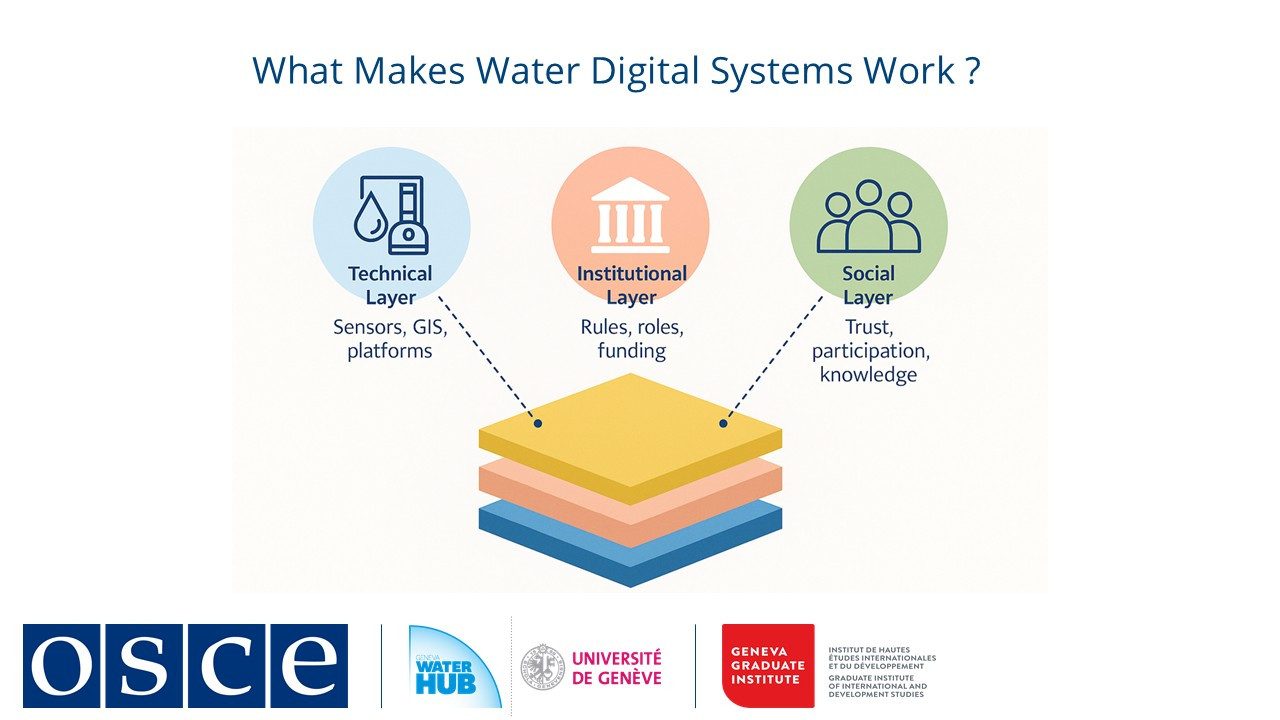
Effective water resource management relies on a continuous data cycle: collection, interpretation, analysis, and dissemination. It depends on structured data systems that integrate technical, institutional, and social dimensions. The process begins with data collection, where information is gathered through sensors, satellite monitoring, and community reporting. However, the scope and accuracy of collected data are influenced by factors such as sensor placement, funding allocations, and institutional priorities, which can lead to gaps in coverage, particularly in informal settlements or rural areas. Data is gathered through sensors, satellites, and community reports, though coverage gaps may persist in underserved areas. Raw data is then processed and classified using scientific standards, which may not always align with local knowledge.
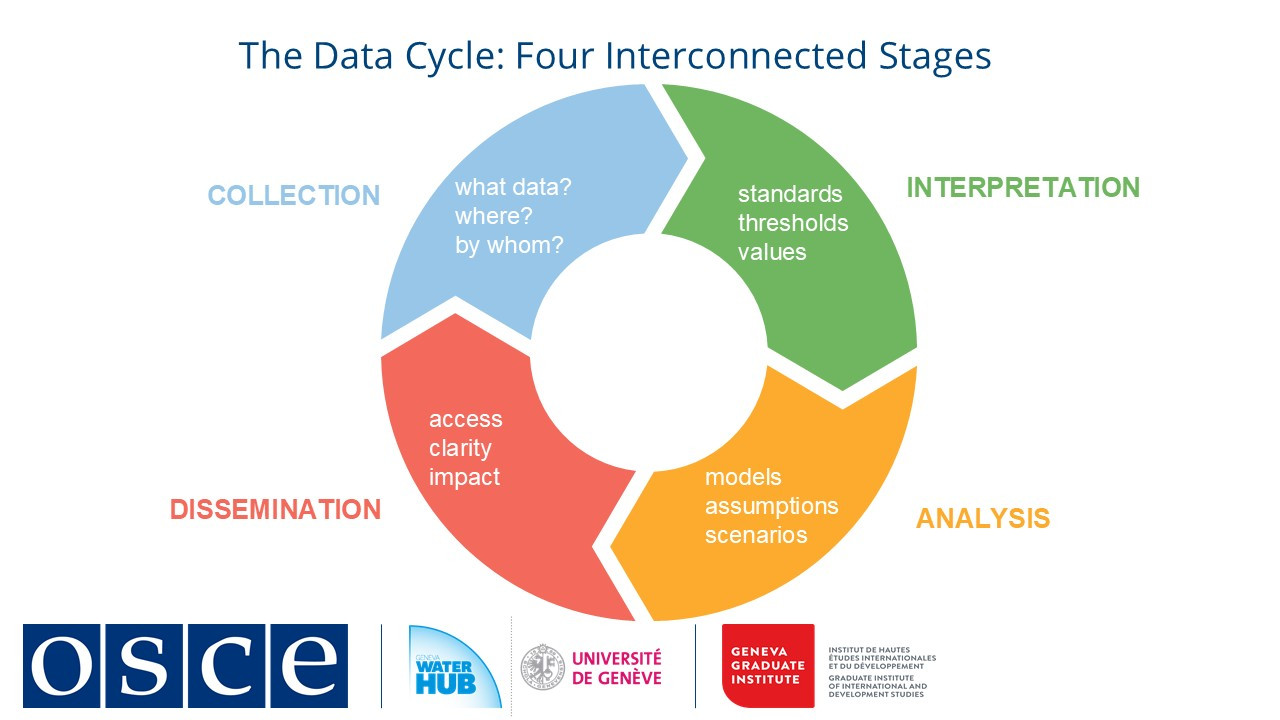
Analysis transforms this data into projections using models like WEAP (Water Evaluation And Planning system) or machine learning, dependent on input assumptions about usage and climate. Finally, dissemination delivers insights to decision-makers and communities, requiring clear communication to bridge technical and practical needs.
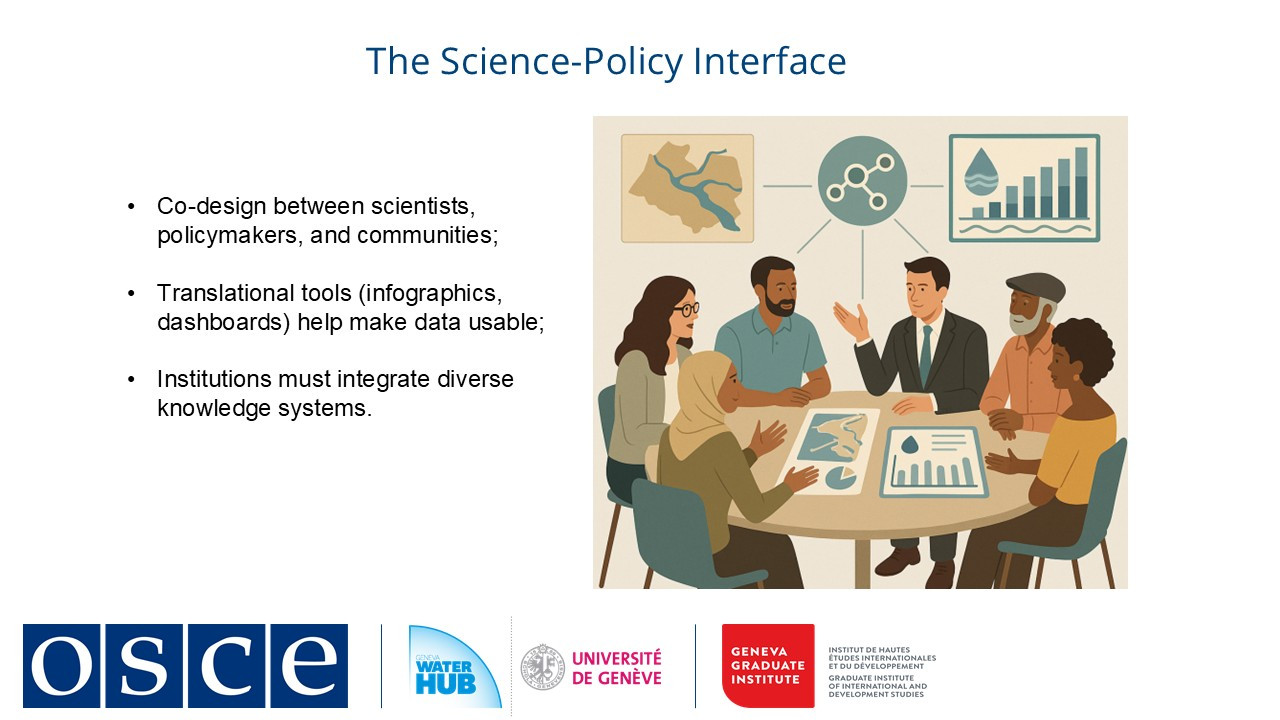
The full data cycle operates within a broader governance framework, where accountability depends not only on technological capacity but also on inclusive design. Digital tools, such as real-time dashboards, can enhance transparency, but their impact is determined by whether institutions prioritize equitable participation, ethical data practices, and adaptive policy responses. Thus, a well-functioning data system is one that aligns technical capabilities with social and institutional structures to support informed, responsive, and inclusive water governance.
-
Students mustMark as done
2. Technologies and scientific innovations
Building on our exploration of digital water governance, we now examine how technology is transforming our approach to one of water management's most critical challenges: ensuring water quality.
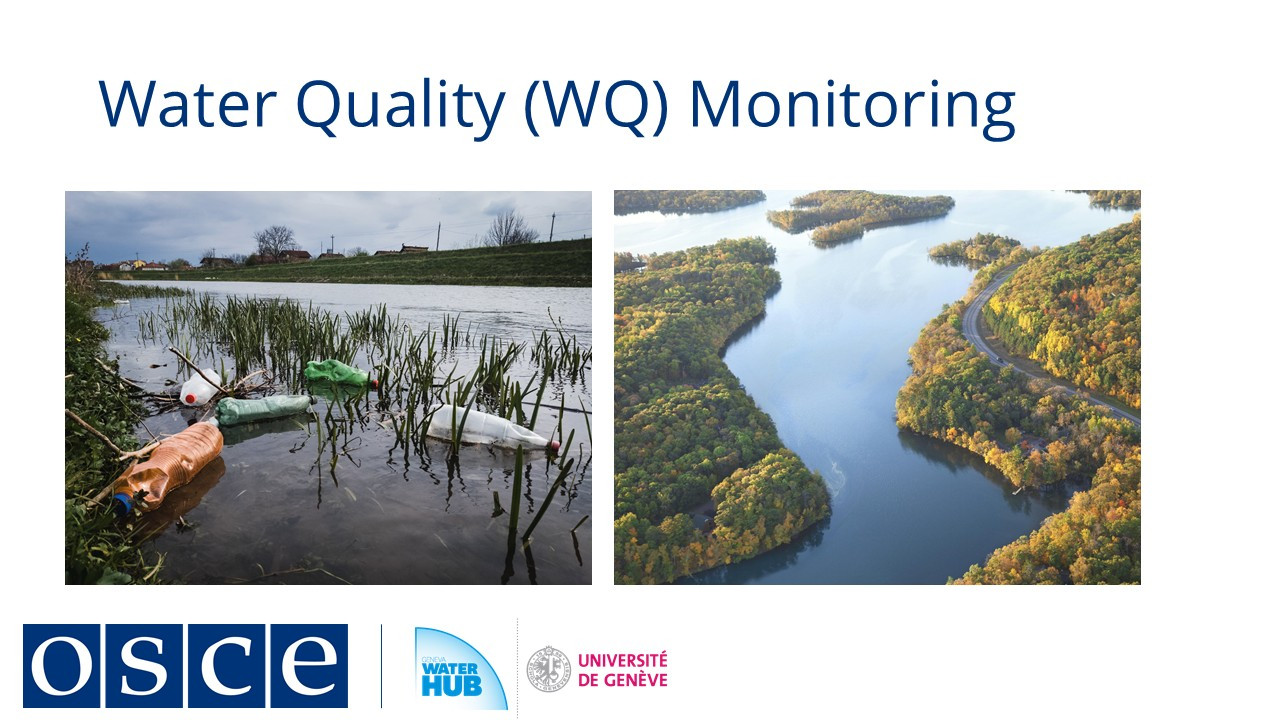
As new contaminants emerge and monitoring capabilities advance, understanding these dynamics becomes essential for protecting human health, ecosystems, and livelihoods.
Water quality issues stem from both natural processes and human activities, affecting everything from drinking water safety to agricultural productivity.
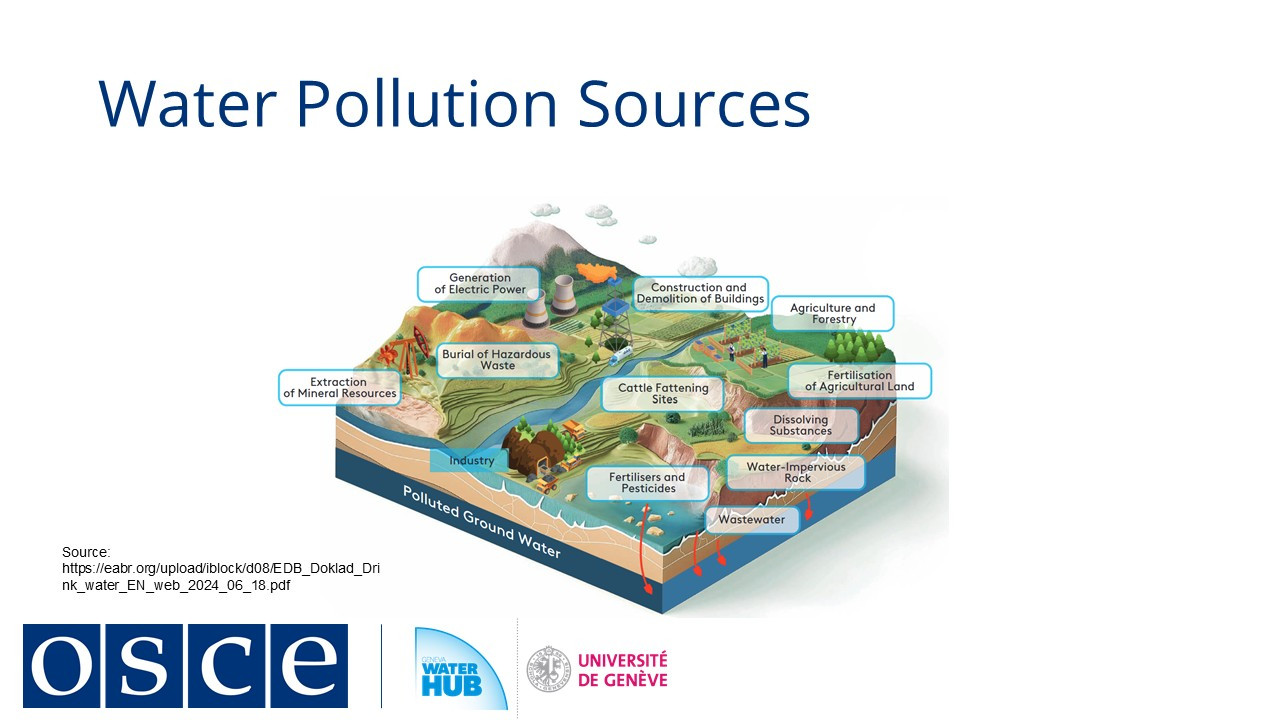
Traditional concerns like nutrient pollution and pathogens remain persistent threats, while emerging contaminants present new risks with still-uncertain impacts. These challenges vary by region and development level, but all underscore the same reality: abundant water means little if it's unsafe for use.
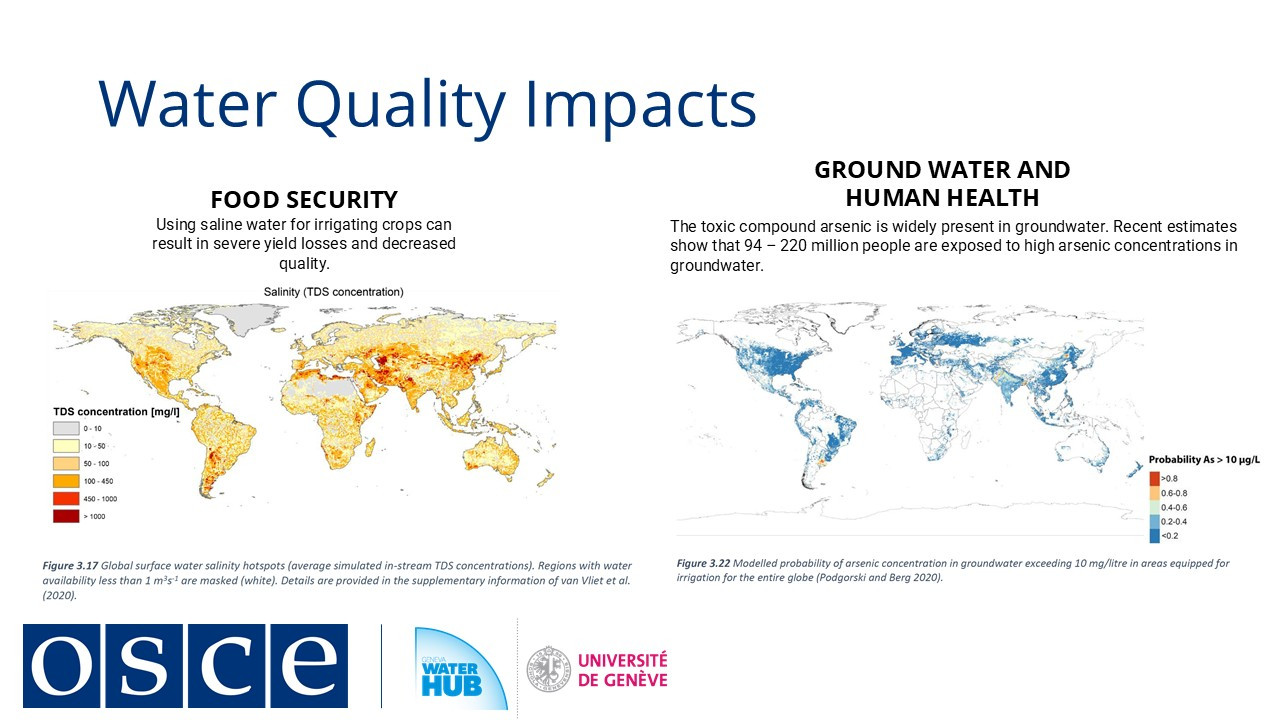
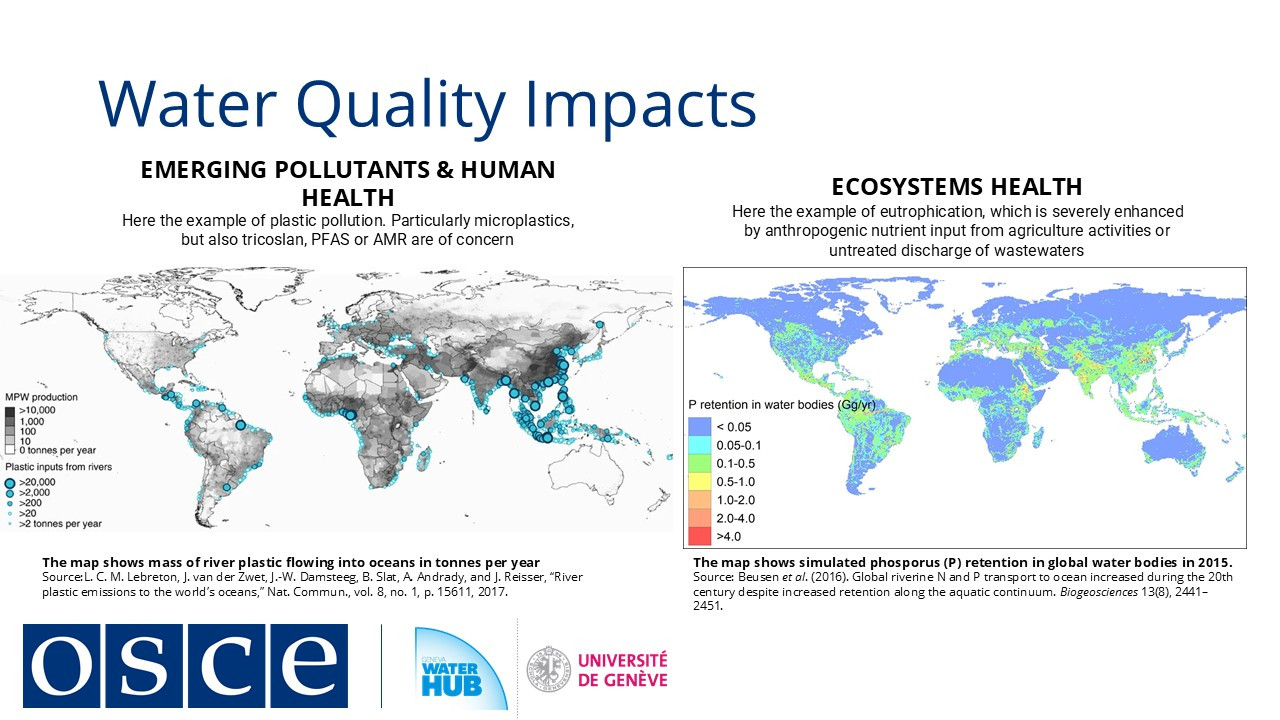
Effective water quality management begins with robust monitoring systems. By tracking physical (e.g., temperature, turbidity), chemical (e.g., nitrates, toxins), and biological (e.g., bacteria, algae) indicators, we can identify risks, enforce standards, and prioritize interventions. However, monitoring efforts often face gaps due to uneven capacities, fragmented institutional mandates, or limited resources, especially in transboundary basins where coordination is critical.
Digital innovations are revolutionizing water quality monitoring. Remote sensors, AI-driven analysis, and low-cost tools are making data collection more accessible and actionable, helping bridge gaps between high- and low-resource settings. Yet technology alone is not a panacea: its effectiveness depends on political will, harmonized standards, and inclusive governance to ensure data translates into equitable solutions.
Building on our exploration of digital water governance, we now examine how technology is transforming our approach to one of water management's most critical challenges: ensuring water quality. As new contaminants emerge and monitoring capabilities advance, understanding these dynamics becomes essential for protecting human health, ecosystems, and livelihoods.
Water quality issues stem from both natural processes and human activities, affecting everything from drinking water safety to agricultural productivity. Traditional concerns like nutrient pollution and pathogens remain persistent threats, while emerging contaminants present new risks with still-uncertain impacts. These challenges vary by region and development level, but all underscore the same reality: abundant water means little if it's unsafe for use.
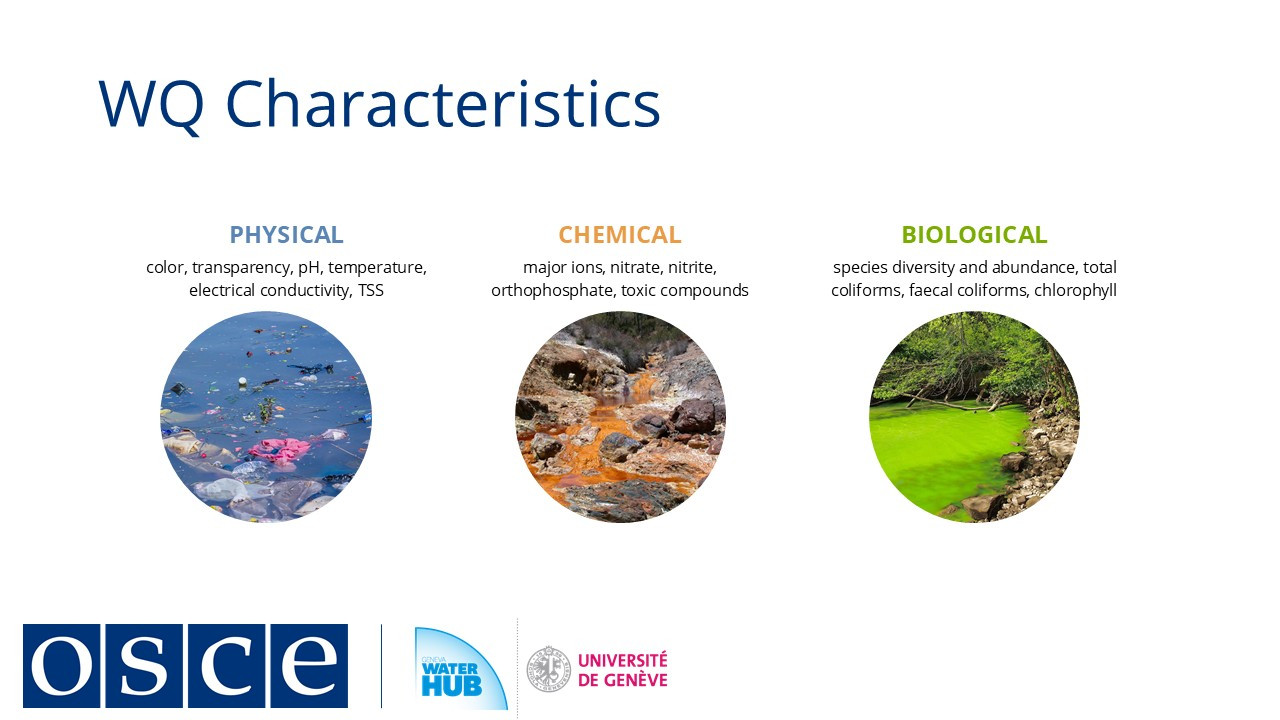
Effective water quality management begins with robust monitoring systems. By tracking physical (e.g., temperature, turbidity), chemical (e.g., nitrates, toxins), and biological (e.g., bacteria, algae) indicators, we can identify risks, enforce standards, and prioritize interventions. However, monitoring efforts often face gaps due to uneven capacities, fragmented institutional mandates, or limited resources, especially in transboundary basins where coordination is critical.
Digital innovations are revolutionizing water quality monitoring. Remote sensors, AI-driven analysis, and low-cost tools are making data collection more accessible and actionable, helping bridge gaps between high- and low-resource settings. Yet technology alone is not a panacea: its effectiveness depends on political will, harmonized standards, and inclusive governance to ensure data translates into equitable solutions.
-
Students mustMark as done
3. Tools and systems for monitoring
Building on our discussion of water quality challenges, we now examine the tools and approaches used to monitor water quality effectively, particularly in transboundary contexts where cooperation is essential.
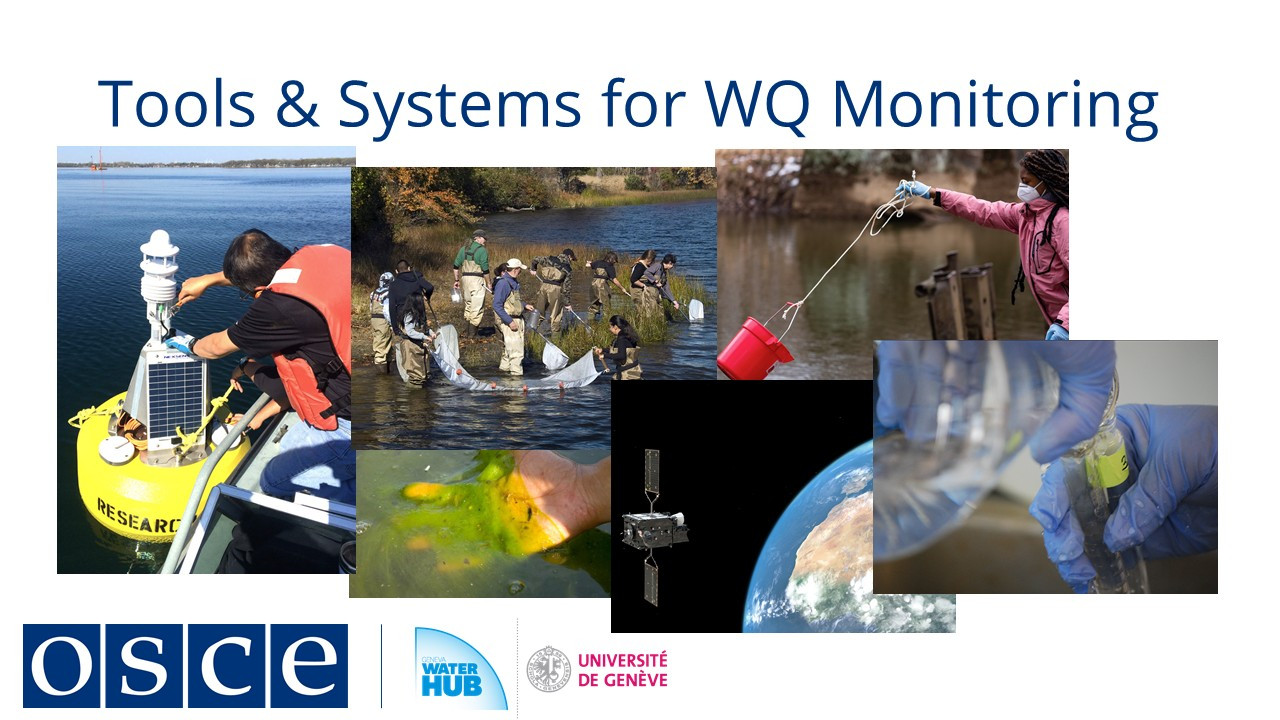
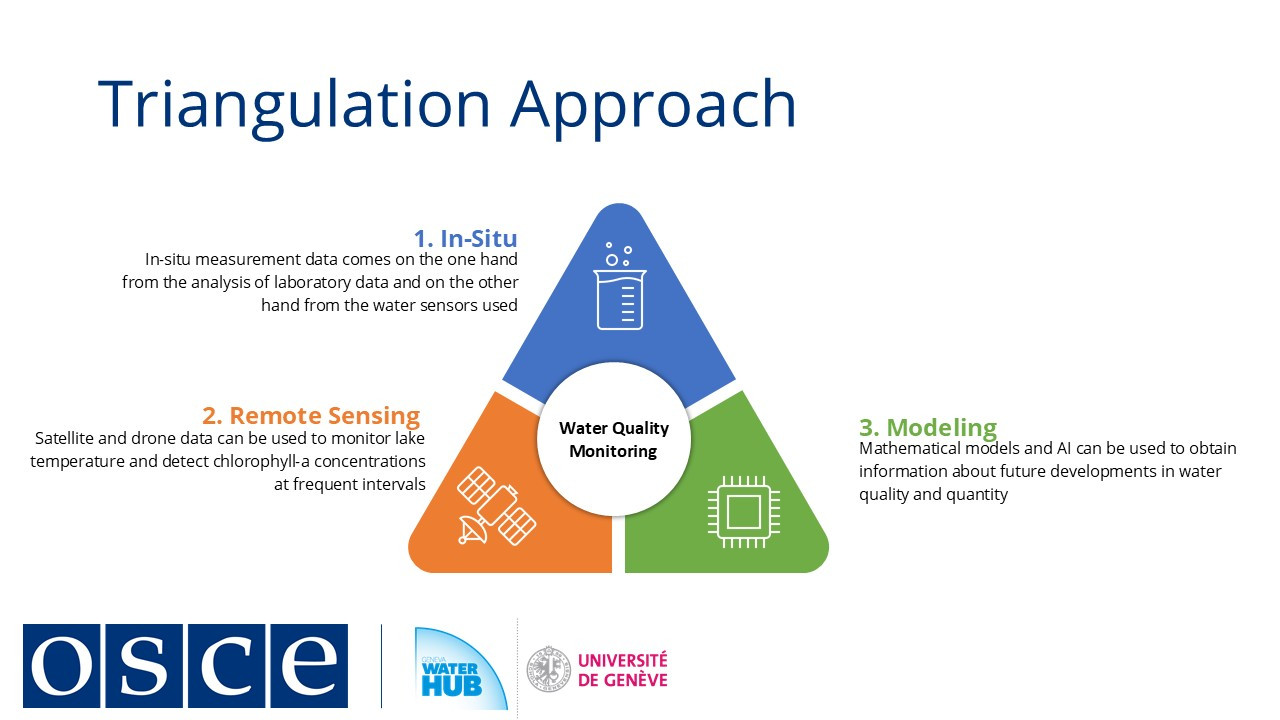
Modern water quality monitoring draws on three complementary methods:-
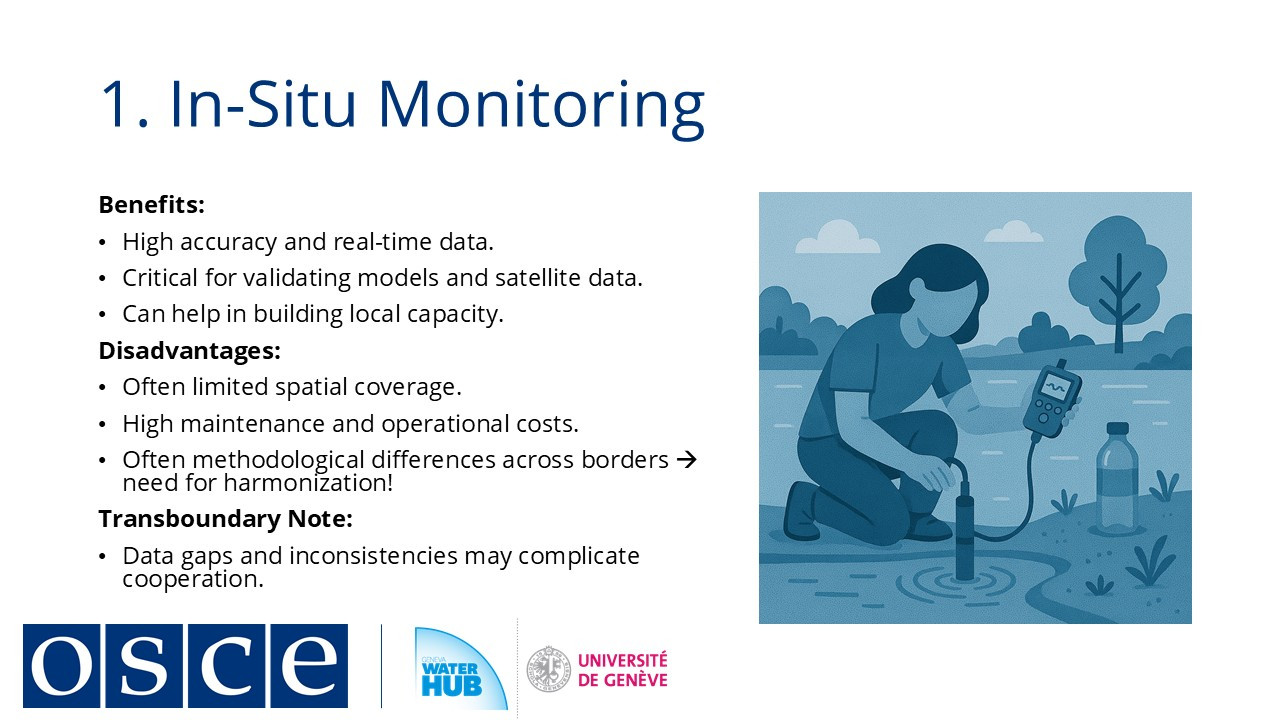
In-situ measurements using IoT sensor networks for real-time data collection, which also serve as trust-building exercises through joint sampling initiatives between neighboring states;
-
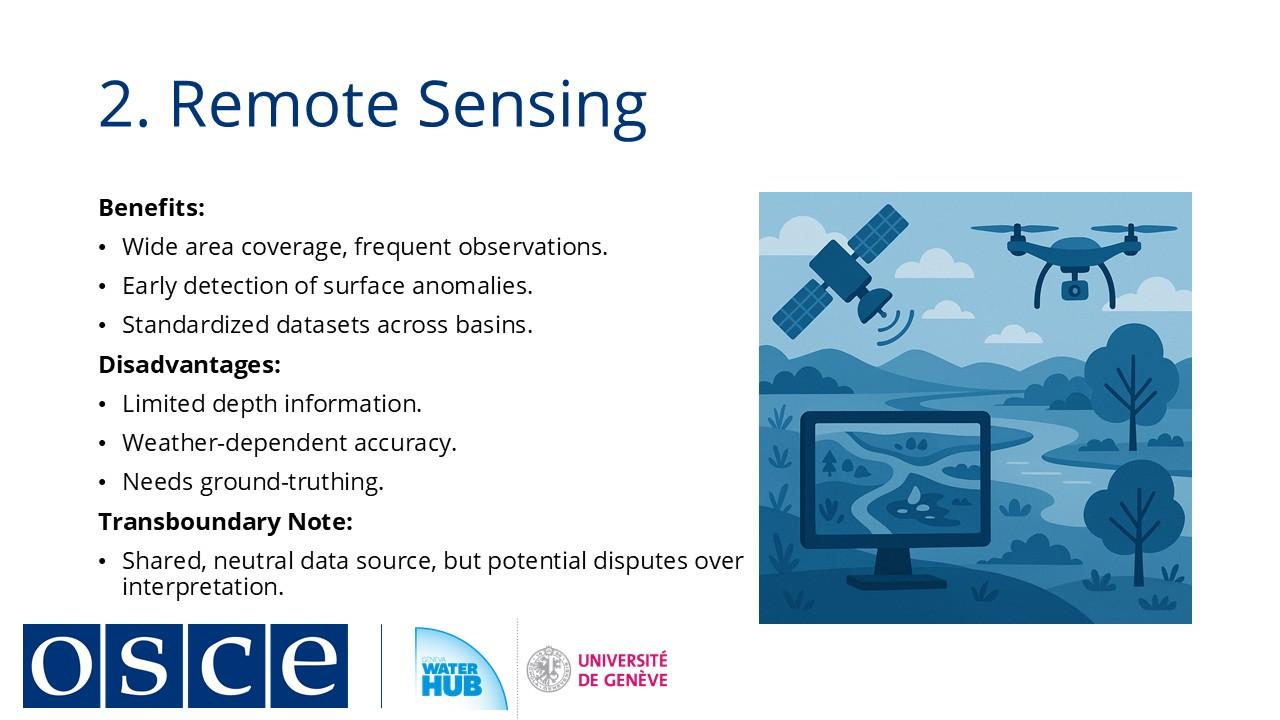
Remote sensing via satellites to track large-scale pollution like algal blooms or illegal water withdrawals;
-
Modeling systems that simulate water quality scenarios to support joint planning.
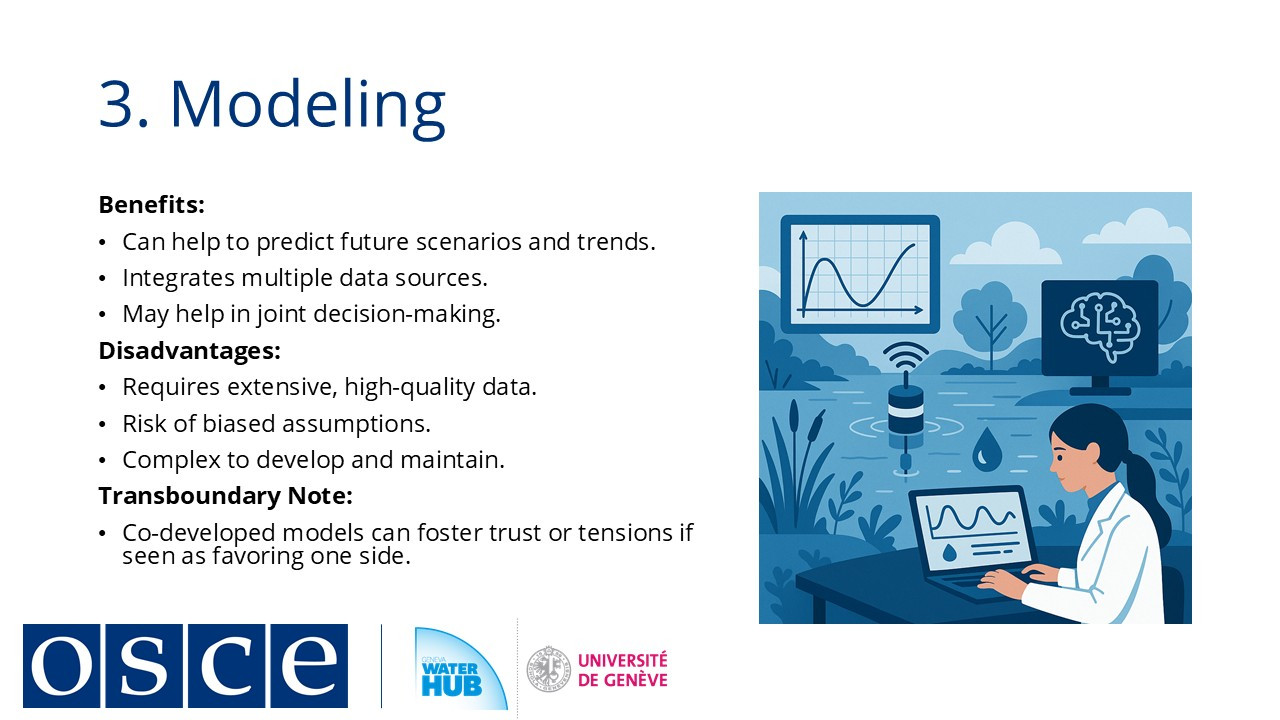
Effective water quality monitoring relies on integrated approaches combining in-situ measurements, remote sensing, and modeling. Modern sensor networks enable real-time data collection, while satellite technology provides large-scale observation capabilities. Computational models complement these methods by simulating water quality scenarios and filling data gaps.
In transboundary contexts, joint monitoring initiatives serve both technical and diplomatic purposes. Collaborative data collection between neighboring states promotes transparency and builds institutional trust. The Kazakhstan-Uzbekistan working group in the Syrdarya River basin demonstrates how such cooperation can expand to include additional regional partners over time.
Emerging technologies like blockchain and artificial intelligence enhance monitoring systems by improving data security and enabling predictive analysis. However, successful implementation depends on aligning these tools with governance frameworks and ensuring public accessibility of information. When combined with community engagement and open data practices, these systems support evidence-based decision-making while fulfilling international commitments to water quality management.
The effectiveness of monitoring programs ultimately depends on their integration with policy processes and their capacity to address both current pollution challenges and emerging climate-related risks.
-
-
Students mustMark as done
4. Case study of integration of technology with participatory approaches in Sidi Bouzid, Tunisia
This module concludes by examining how digital water governance principles are implemented in real-world contexts. A case study from Sidi Bouzid, Tunisia, demonstrates the integration of technology with participatory approaches to address groundwater management challenges.
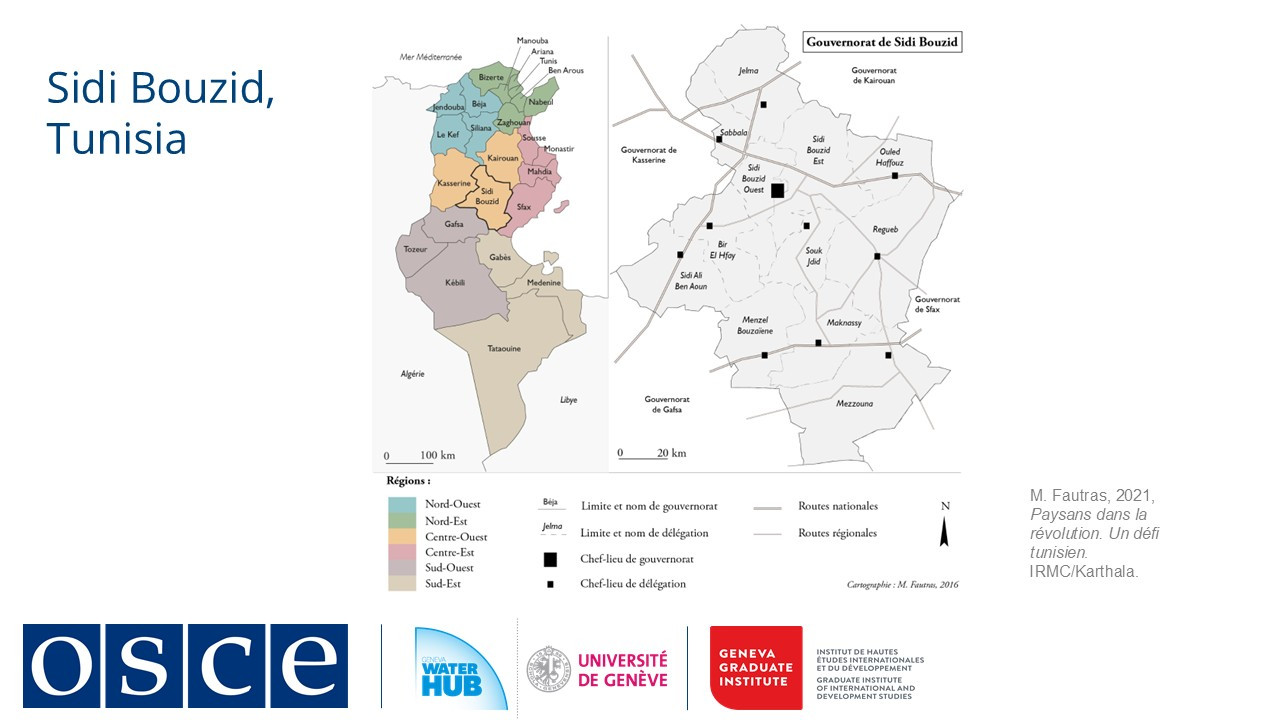
In this agricultural region, groundwater depletion created tensions between farmers and water authorities.
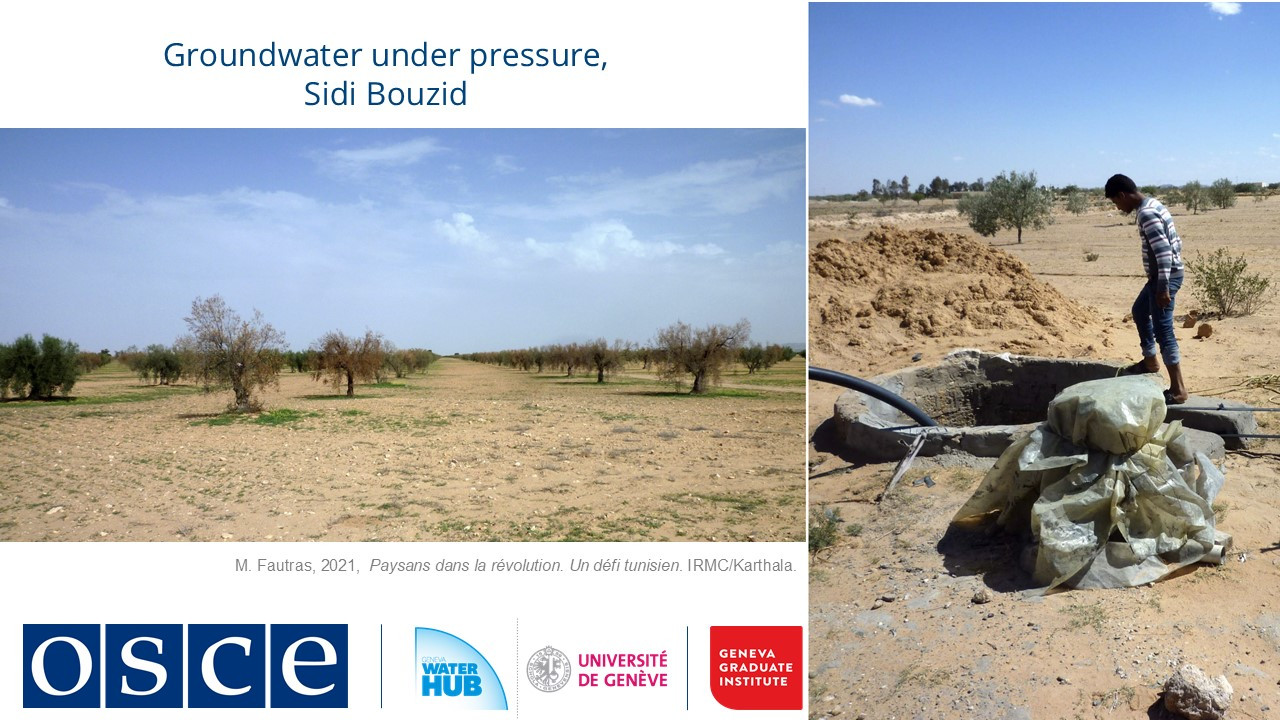
While data existed, the lack of shared understanding hindered effective management.

A local initiative addressed this through a four-part approach:
-
Deployment of low-cost piezometers connected to a mobile app, enabling farmers to monitor well levels in real time;
-
Creation of a shared data platform allowing comparison of groundwater trends across villages;
-
Establishment of "data cafés" where farmers and officials jointly interpreted data;
-
Engagement of water authorities who incorporated community findings into management decisions.
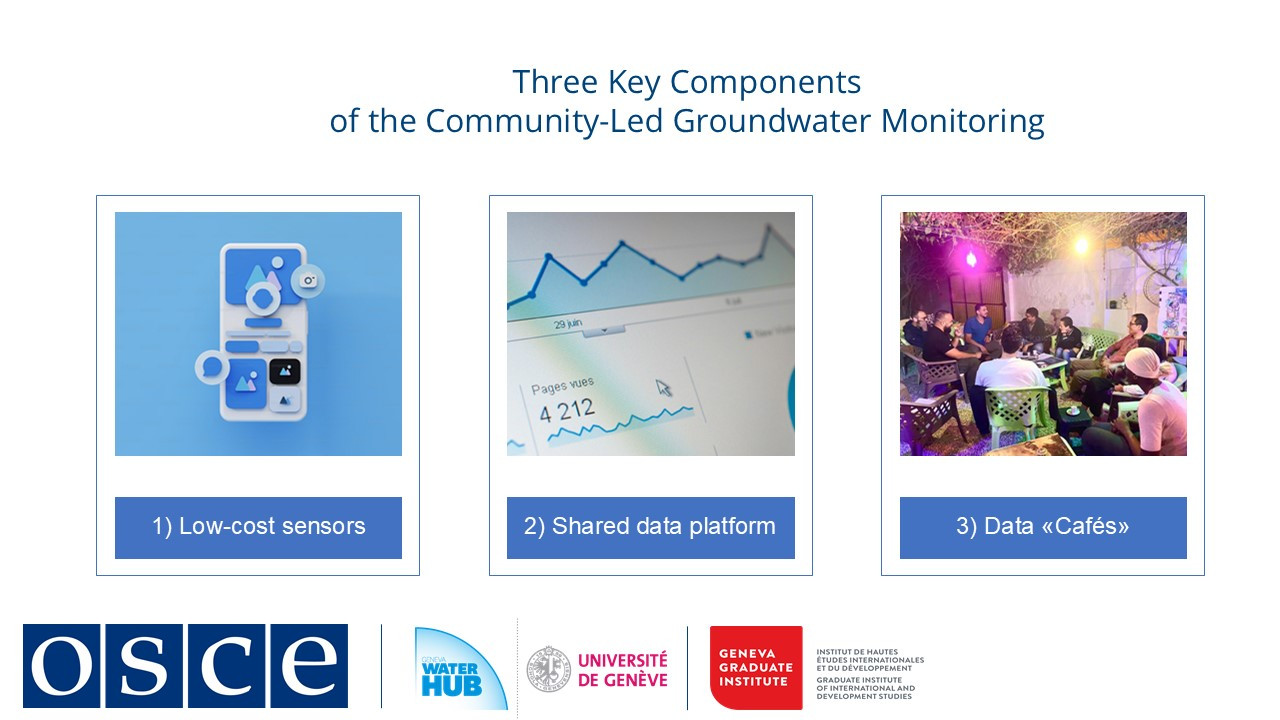
The initiative improved both technical understanding and institutional relationships. Farmers gained evidence-based insights into aquifer dynamics, while authorities adjusted pumping schedules based on community-collected data. This case highlights how digital tools gain value when embedded in social processes, creating transparency and shared ownership of information.
The lessons from this local project have broader relevance, particularly for transboundary contexts where multiple jurisdictions and competing interests complicate water management. As demonstrated, effective digital water governance depends not on technology alone, but on its integration with participatory processes that build trust and collective understanding.
This module has shown that digital transformation in water management requires balancing technical solutions with social and institutional considerations. When successfully implemented, such approaches can turn data into actionable knowledge while fostering cooperation among diverse stakeholders.
-
-
-
-