Main content blocks
Section outline
-
-
Students mustMark as done
Legal aspects of exchange of data and information
Now, we focus on how regular information exchange, notification of planned projects, and emergency alerts contribute to preventing disputes and ensuring sustainable water management across borders.
One of the most emblematic examples of cooperation among riparian countries is the practice of exchanging data and information regarding the quality and quantity of transboundary waters. Unfortunately, in some cases, riparian countries do not share this data regularly. In certain circumstances, states may lack the technical and scientific knowledge about a source of water, such as a transboundary aquifer. Moreover, when it comes to major projects such as dams or industrial facilities, some countries may be reluctant to notify neighboring states about developments that could have transboundary impacts.
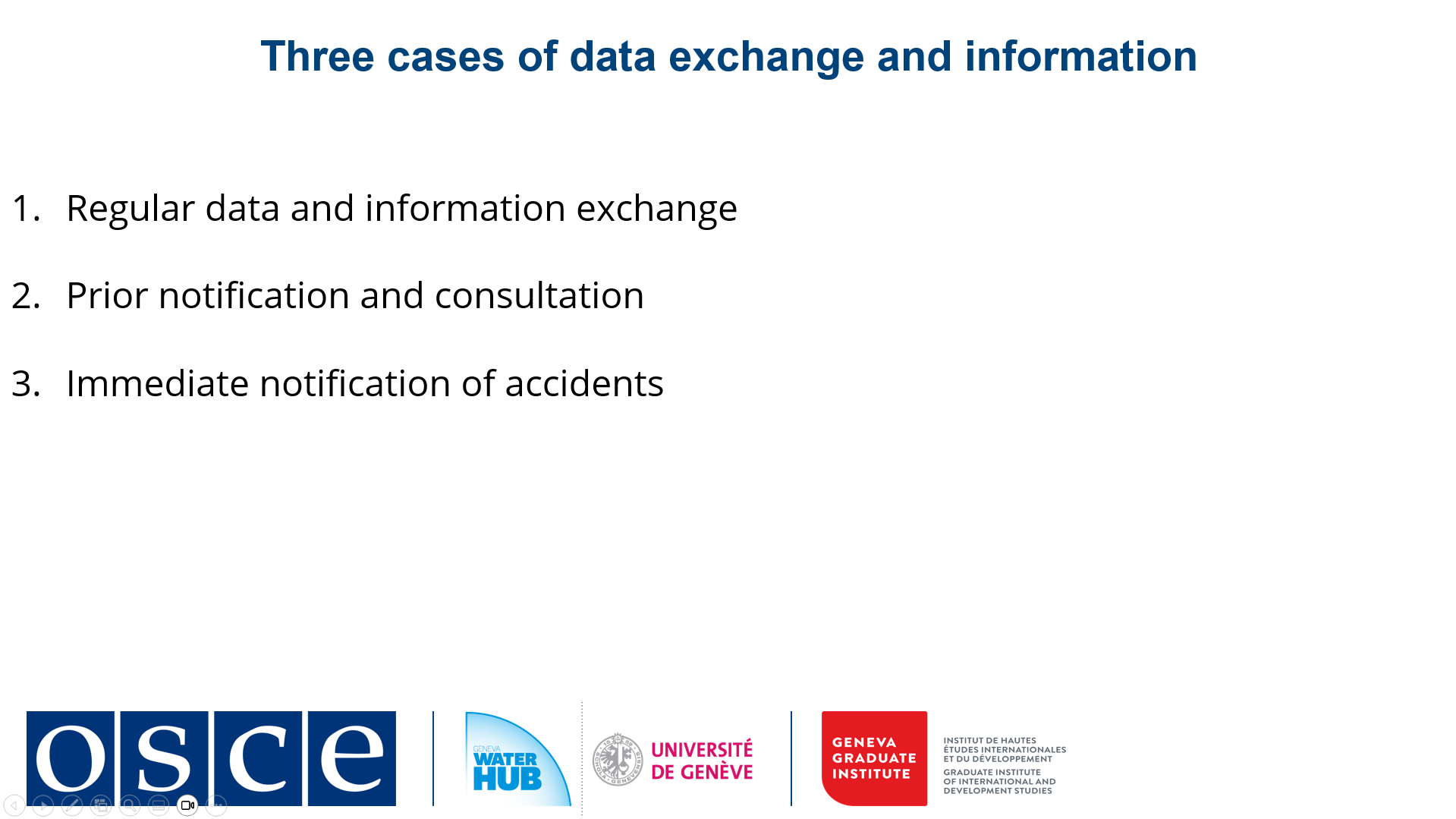
In this course, we offer three distinct cases of data and information exchange:
1) the regular data and information exchange among riparians;
2) the obligations of notification and consultation in the case of planned projects, which include the communication of the results of an environmental impact assessment; and
3) the immediate notification of incidents in transboundary waters that pose a risk of transboundary effects.
In all three cases, information sharing depends on the fundamental duty of cooperation among riparian states, which helps prevent disputes. The exchange of information, notification and consultation allow for early identification of potential sources of disagreement and provide means to prevent their escalation.
-