Main content blocks
Section outline
-
-
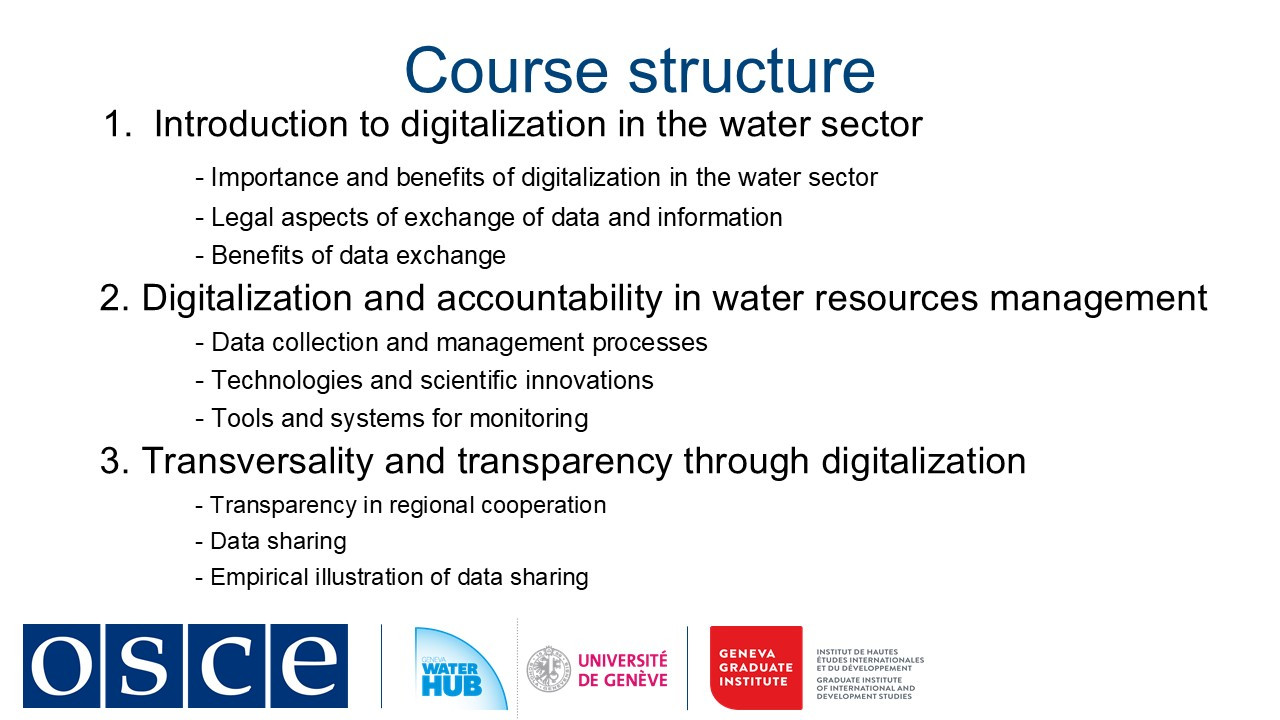
Module 1: Introduction to digitalization in the water sector
Theory 1: Introduction to the course
Theory 2: Legal aspects of exchange of data and information
Theory 3: Benefits of data exchange
Case study: Strengthening data and information sharing in the Lake Titicaca basin
This first module will introduce the political dimension of transboundary waters. During the theoretical input, we will cover the different regimes and institutional architectures for transboundary water governance and explain the actors, scales, and discourses involved. During the practical input, we will examine the case of the lake Titicaca.
This first module will introduce the transformative role of digitalization in water management, with a focus on transboundary cooperation. During the theoretical input, we will explore key concepts and legal frameworks that enable effective data exchange. We will also examine why digitalization is critical not for water governance but also for climate resilience, economic development, and dispute prevention. In the practical input, we will apply these concepts to a real-world case in the Lake Titicaca Basin. By analyzing this example, participants will see how digital tools and inclusion of indigenous knowledge can enhance transparency and trust between riparian countries.
-
Module 2: Digitalization and Accountability in Water Resource Management
Theory 1: Data collection and management processes
Theory 2: Technologies and scientific innovations
Theory 3: Tools and systems for monitoring
Case: Community-led groundwater monitoring in Sidi Bouzid,Tunisia
The second module examines how digital tools enhance transparency and trust in water governance through improved data management and innovative technologies. The theoretical sessions explore the entire data lifecycle and the capacities needed for effective water resource monitoring. Participants will learn about cutting-edge tools, along with their role in bridging the science-policy gap and turning data into actionable insights for sustainable resource governance. The module then shifts to a practical case study of community-led groundwater monitoring in Sidi Bouzid, Tunisia to see how accessible technologies can empower stakeholders, improve decision-making, and foster equitable water management.
-
Module 3: Digitalization, transparency and data sharing
Theory 1: Transparency in regional cooperation
Theory 2: Data sharing
Interview 1. An interview on trust, mistrust, data sharing and technological developments
Interview 2. An interview on practical examples from Central Asia on data sharing in water management
This third and final module explores how digitalization fosters transparency in transboundary water management through open data sharing and standardized practices. The theoretical sessions examine the role of transparency in building trust among stakeholders, the concept of data neutrality, and the challenges of implementing interoperable data platforms. These discussions set the stage for two practitioner interviews with Bota Sharipova (IHE Delft), who shares insights on overcoming mistrust through technology and presents real-world examples of data-sharing initiatives in Central Asia.
-
Conclusion
This section includes the course's self-evaluation. The evaluation consists of a multiple-choice test to assess your increased capacities and knowledge of water diplomacy. This section will also allow you to provide feedback and further suggestions for the attention of OSCE project staff.
-
Course evaluation
Your understanding of the course will be checked through multiple choice questions. Each module includes 2 questions for the knowledge check. At the end of the course, there will be one final question highlighting the key takeaways of the course. The combined score of the evaluations will measure your comprehension of the course content and determine your grade.
To pass the course and receive the certificate, you will need a minimum of 4 points out of 7 in the cumulative evaluation.
-