
The e-learning course "Data sharing and digitalization in the water sector" aims to increase awareness of water practitioners, government officials, and university students in the field of water governance on the role of digitalization
About this course
The e-learning course on "Data sharing and digitalization in the water sector" equips water professionals, policymakers, and development practitioners with the knowledge and skills to harness digitalization for better water governance. Digitalization tools in the water sector enhance transparency and accountability in water management, contributing to strengthened transboundary water co-operation.
The course provides the knowledge and skills to strengthened dialogue and co-operation around transboundary water bodies and enhanced knowledge of the role of digital tools in transboundary water resource management, to highlight the importance of data and information exchange for the effective management of water and provide an overview of current and available mechanisms to understand and measure water conditions as a means to promote cooperation, peace and regional integration.
By the end of the course, the participants will have the overview of digital tools to enhance transboundary water cooperation and get acquainted with data-sharing frameworks that improve water cooperation.
Requirements
Everyone, regardless of previous education, can take part in this course. The course is particularly useful for water practitioners, policymakers, and university students with a keen interest in water management and its interlinkages with digital tools.
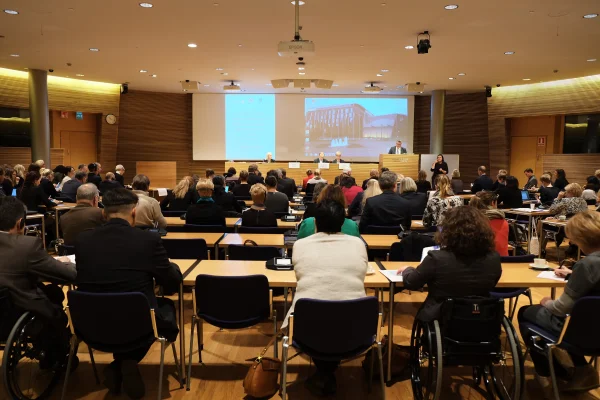
This course provides tips, tools and good practices for making parliaments and political parties in the OSCE region more disability inclusive.

During this course, participants will learn risk analysis and management techniques and tools for improving the resilience of critical energy infrastructure from natural and manmade disasters.
В ходе этого курса участники изучат методы анализа и управления рисками, а также инструменты для повышения устойчивости критически важных объектов энергетической инфраструктуры к природным и техногенным катастрофам.
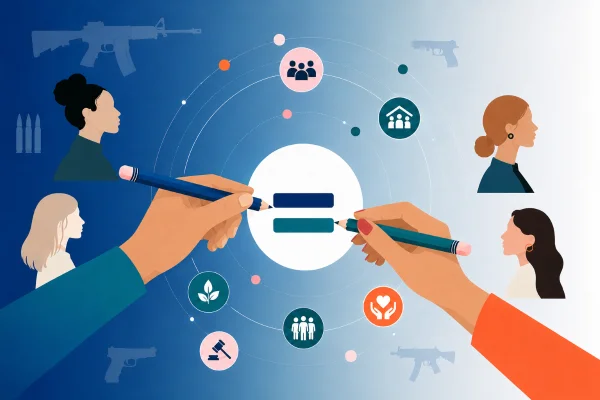
Overview of the Course
The E-learning Course on Gender Mainstreaming into OSCE Practical Assistance Projects in the Field of SALW and SCA provides comprehensive training on the knowledge and tools necessary to incorporate gender considerations for effective SALW and SCA control, as well as step-by-step practical guidance on integrating gender considerations throughout each of the seven stages of the assistance mechanism, from identifying the need for assistance to project completion.
Course level: Recommended for participants with basic and in-depth knowledge
Methodology: Online Self-paced Course
Registration: Public Self-enrolment
Further information and enrollment details are available below.
Course curriculum
The E-learning Course on Gender Mainstreaming into OSCE Practical Assistance Projects in the Field of SALW and SCA consists of 2 Units:
- Introduction to Gender and the OSCE Assistance Mechanism
- Gender Mainstreaming in Practice
Target Audience
This e-learning is designed for OSCE staff/project managers, OSCE field mission personnel, implementing partners, and other stakeholders involved in SALW and SCA assistance projects.
Gender Mainstreaming into SALW and SCA Assistance Projects E-learning Outcomes
By completing the E-learning Course on Gender Mainstreaming into OSCE Practical Assistance Projects in the Field of SALW and SCA, participants will be able to demonstrate an understanding of key gender-related concepts and terminology; explain the policy rationale for integrating gender perspectives into SALW and SCA control efforts within the OSCE framework; identify how gender considerations may be incorporated throughout the seven stages of the OSCE assistance mechanism; apply inclusive language and communication approaches in a professional context; and understand the role of gender equality and the meaningful participation of women and men in SALW and SCA initiatives in accordance with OSCE commitments and policies.
Language and Technical Requirements
Language: The course is available in English
Hardware: Computer or mobile device equipped with audio capabilities and a reliable internet connection
Materials: Digital handbooks and guides may be downloadable from the course platform
Assessments and Certification
Participants who successfully complete the training course will be awarded a Certificate of Completion.
Continuous Online Assessments:
- Multiple-choice quiz upon completion of the e-learning module
- Participants should score 80% or more in total to receive the certificate
Certification:
- Digital certificate issued to participants who successfully complete the course and pass the assessment
Contact Information:
CONFLICT PREVENTION CENTRE / FSCOS/ FSC PROJECTS UNIT
OFFICE: +43 1 514 36 6262
https://www.osce.org/forum-for-security-cooperation
Frequently Asked Questions
How long will this course take?
This course is entirely self-paced, meaning that you can log in to the OSCE E-Learning platform at any time and progress at your own speed to complete the module.
Why is this course free?
All courses available on the OSCE E-Learning platform are free. We extend our gratitude and thank our organizational donors in European Union, Finland, France, Germany, Liechtenstein, Netherlands, Norway, Slovakia, Spain, Poland, and Switzerland for their contributions to the ExB project that supported the development of this knowledge product.
What language is the course available in?
The course is available in English.
Can I receive the certificate?
Yes, after completion of the course and if you pass the certificate assessment.
How does the Certificate assessment work?
There will be questions at the end of the e-learning module covering all topics of the module. You should score 80% or more in total to get the certificate. Please note:
- You will get only one attempt per question
- Except for Correct/Incorrect – no further feedback is provided
Can I learn using my mobile phone?
Yes. The Moodle platform works on desktop and mobile devices with current versions of Chrome, Edge, Firefox, Internet Explorer, or Safari. See the list of supported browsers for the most up-to-date information.
Overview of the Course
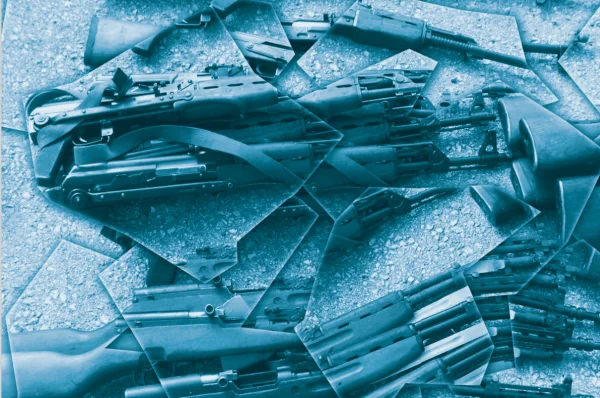
The E-learning Course on Theory of Deactivating Small Arms and Light Weapons provides comprehensive training on the standards and frameworks for the deactivation of Small Arms and Light Weapons (SALW). It enhances understanding and compliance with international and regional regulations, focusing on OSCE's normative frameworks, best practice guides, and practical assistance projects.
Participants gain insights into global standards, including the United Nations Firearms Protocol, UN MOSAIC, and EU regulations.
Enhanced with interactive elements and visual aids, the e-learning course equips participants with the knowledge and skills needed to effectively meet deactivation standards.
Course level: Recommended for participants with basic knowledge
Methodology: Online Self-paced Course
Registration: Public Self-enrolment
Participants seeking practical knowledge of firearm deactivation processes for various weapon types may also enroll in the E-learning Course on Practice of Deactivating Small Arms and Light Weapons. Further information and enrollment details are available here.
Course Curriculum
E-learning Course on Theory of Deactivating Small Arms and Light Weapons consists of 3 introductory modules:
-
Introduction to SALW and SALW Deactivation
-
International Frameworks and Standards for SALW Deactivation (Focusing on OSCE, EU, and UN Guidelines and Protocols)
-
Firearm Deactivation Standards: Inspection, Verification, Certification, and Record-Keeping
Target Audience
-
Practitioners from the Ministry of Interior (Police Department – Criminal Investigators, Forensic Investigators, Analysts)
-
Ministry of Foreign Affairs (Security and Arms Control Divisions)
-
Ministry of Economy (Customs Administration, Arms Control Export, Import, and Transit Licensing Departments)
-
Arms Control Practitioners
-
Other entities involved in the deactivation process
SALW Deactivation E-Learning Course Outcomes
By completing the E-learning Course on Theory of Deactivating Small Arms and Light Weapons, participants will:
-
Gain a comprehensive understanding of SALW control efforts, including OSCE initiatives, normative frameworks, and international standards
-
Familiarize themselves with key international protocols and regulations, including the United Nations Firearms Protocol, UN MOSAIC, EU Standards, and OSCE Best Practice Guides
-
Learn to apply international and regional deactivation standards, ensuring compliance with EU Regulation and related frameworks
-
Acquire skills in inspection, verification, certification, and record-keeping to uphold professional and regulatory standards in SALW deactivation
Language and Technical Requirements
Language: The course is available in English
Hardware: Computer or mobile device equipped with audio capabilities and a reliable internet connection
Materials: Digital handbooks and guides may be downloadable from the course platform
Assessments and Certification
Participants who successfully complete the training course will be awarded a Certificate of Completion. For official certification of deactivators or verifiers, please contact your local SALW Control Commission or OSCE.
Continuous Online Assessments:
-
Multiple-choice quizzes after each module
-
Participants should score 50% or more in total to receive the certificate
Certification:
-
Digital certificates issued to participants who successfully complete the course and pass the continuous assessments
If you have any questions, do not hesitate to reach out to us:
CONFLICT PREVENTION CENTRE / FSC SUPPORT UNIT
OFFICE: +43 1 514 36 6262
https://www.osce.org/forum-for-security-cooperation
Frequently Asked Questions
How long will this course take?
This course is entirely self-paced, meaning that you can log in to the OSCE E-Learning platform at any time and progress at your own speed to complete modules in no particular order.
Why is this course free?
All courses available on the OSCE E-Learning platform are free. We extend our gratitude and thank our organizational donors in European Union, France, Germany, Liechtenstein, Norway, Poland, Slovakia, Spain and Switzerland for their contributions that supported the development of this knowledge product.
What language is the course available in?
The course is available in English.
Can I receive the certificate?
Yes, after completion of the course and if you pass the certificate assessment – you will receive an official OSCE and BNE certificate of achievement.
How does the Certificate assessment work?
There will be questions at the end of each module covering all topics of the module. You should score 50% or more in total to get the certificate. Please note:
-
You will get only one attempt per question
-
Except for Correct/Incorrect – no further feedback is provided
Can I learn using my mobile phone?
Yes. The Open edX platform works on desktop and mobile devices with current versions of Chrome, Edge, Firefox, Internet Explorer, or Safari. See the list of supported browsers for the most up-to-date information.

Capacity Building course for survivors of human trafficking from OSCE countries and beyond who aim to become part of the OSCE/ODIHR network of survivor leaders.