Completion requirements
7. Entry Points for Supporting Integrity Building - 2
International, regional, national, local legal and policy frameworks provide entry points for building integrity in the security sector, especially by means of policies and regulations within security sector institutions. Support in this area can involve mapping legislative gaps, supporting legal and policy framework development in line with international standards, and supporting the practical application of these frameworks. While legal and policy frameworks related to integrity will differ from context to context, the following are some broad examples:
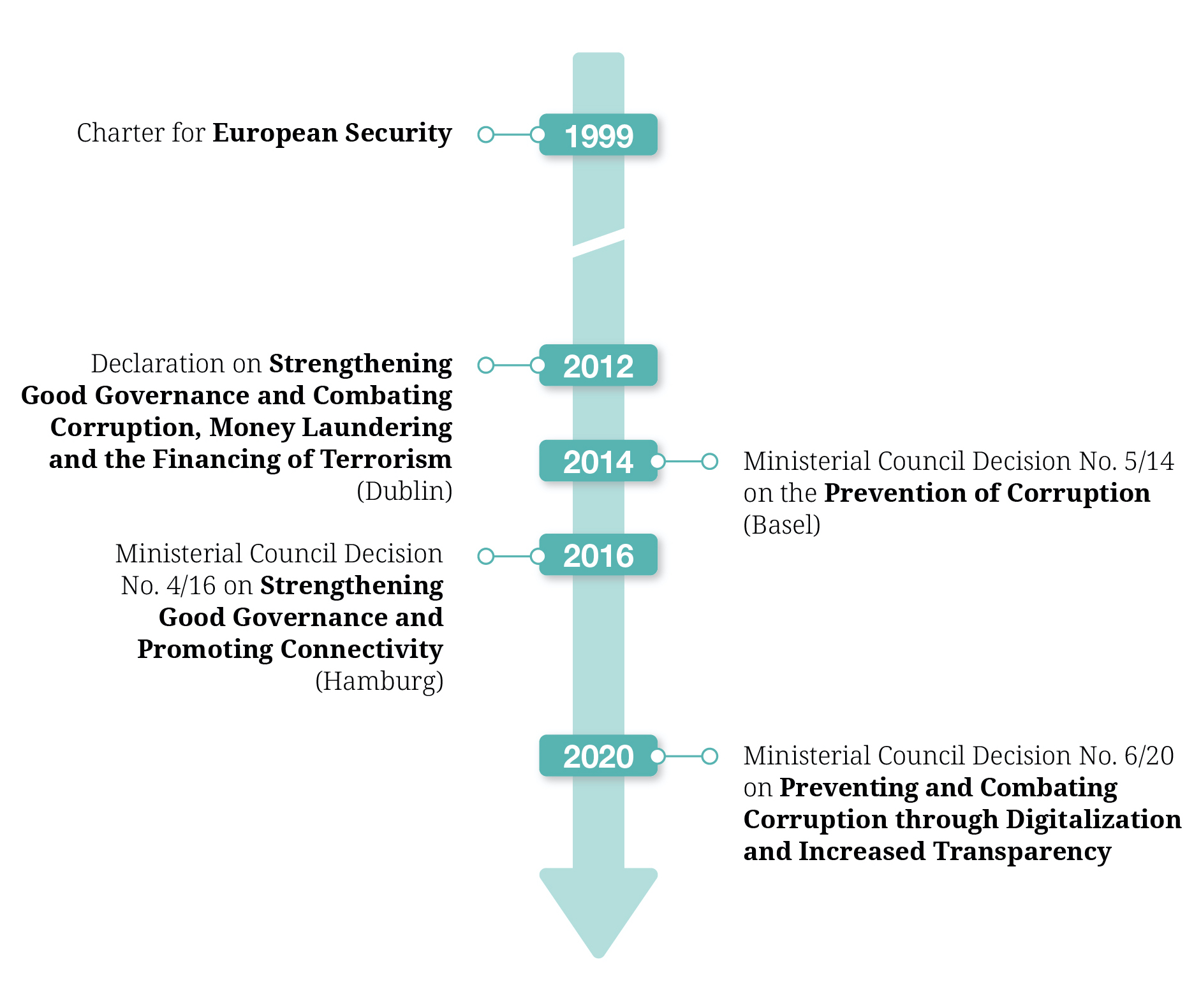
- International conventions and other tools and commitments made by Governments that include references to integrity and democratic governance of the public sector, and in particular, of the security sector (e.g., the UN Convention against Corruption, the World Customs Organization’s Revised Arusha Declaration on Good Governance and Integrity in Customs Services, the International Organization of Supreme Audit Institutions’ declarations and guidelines on international professional standards for public sector auditing or relevant OSCE commitments).
- National legislation that builds on applicable international standards and sets a clear context-specific framework to support integrity building in the security sector (e.g., laws on civil service, anti-corruption laws, surveillance laws, etc.).
- National strategies include anti-corruption strategies and national security strategies, which are the two most relevant and common strategies in the area of integrity. Anti-corruption strategies should not only set minimum standards to be observed in the public sector but also explicitly mention the importance of these for the security sector. National security strategies should also explicitly mention integrity building as a prominent issue that affects the effective delivery of security.
- National action plans seeking the implementation of the commitments made in the aforementioned instruments. Enough human and financial resources should be allocated to that end, and accountability for their implementation should be sought, including by establishing clear M&E mechanisms.
For further information, see section 4.2 in Chapter 6 of the Guidelines.