Supporting Governance-Driven Approaches to Building Integrity in the Security Sector

Site: OSCE eLearning
Course: OSCE Training on Security Sector Governance and Reform (SSG/R)
Book: Supporting Governance-Driven Approaches to Building Integrity in the Security Sector
Printed by: Guest user
Date: Thursday, 1 October 2026, 1:25 AM

1. Introduction

Module 6 Cover_dark

Welcome to the final module of the OSCE Training on Security Sector Governance and Reform (SSG/R). After completing both e-learning and in-class parts of this module, you should be able to:

      • Explain the concept of integrity in the security sector within the OSCE context
      • Describe the relation of good governance principles to integrity-building programming in the security sector
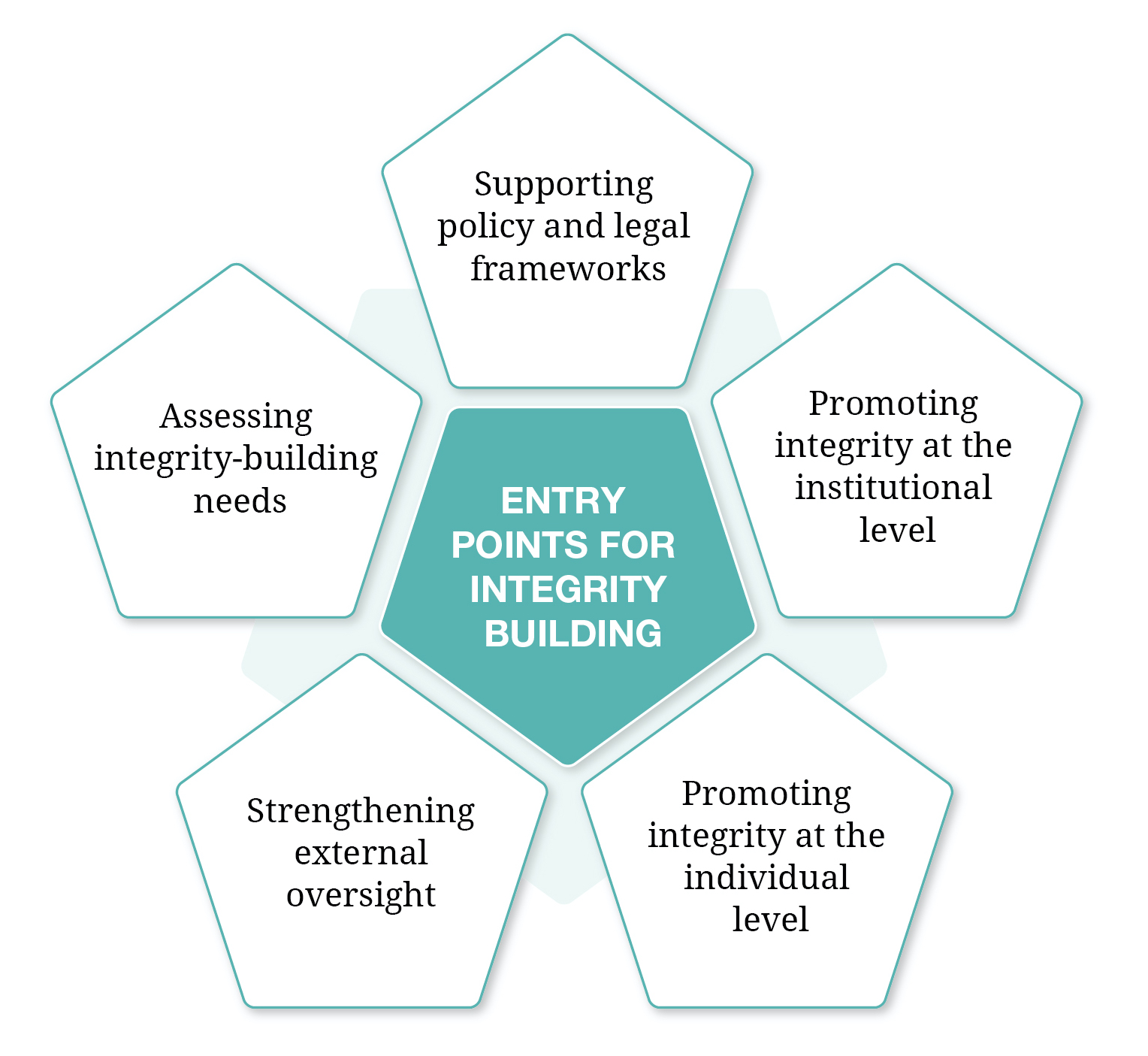
      • Identify entry points for supporting integrity building in the security sector

The module is based on the sixth chapter of the Guidelines on SSG/R for OSCE Staff (2nd edition), which is required reading for this course.

2. Integrity Building in the Security Sector

Integrity is of particular importance to SSG/R as the security sector is the only public sector holding the legitimate authority to use violence. As security sector institutions also may limit civil liberties (e.g., when making arrests), it is paramount to demonstrate their commitment to the delivery of security for all people. The integrity of the security sector, just as in any other public sector, refers to “the consistent alignment of, and adherence to, shared ethical values, principles and norms for upholding and prioritizing the public interest over private interests in the sector.”

Building integrity is much broader than tackling corruption. While the ethical values to be promoted are likely to depend on local standards and wider political realities, a common trend is the need to ensure that integrity transpires at both the individual and institutional levels and is reinforced by strong mechanisms for internal accountability and external oversight.

3. Cross-Dimensional Approaches to Integrity Building

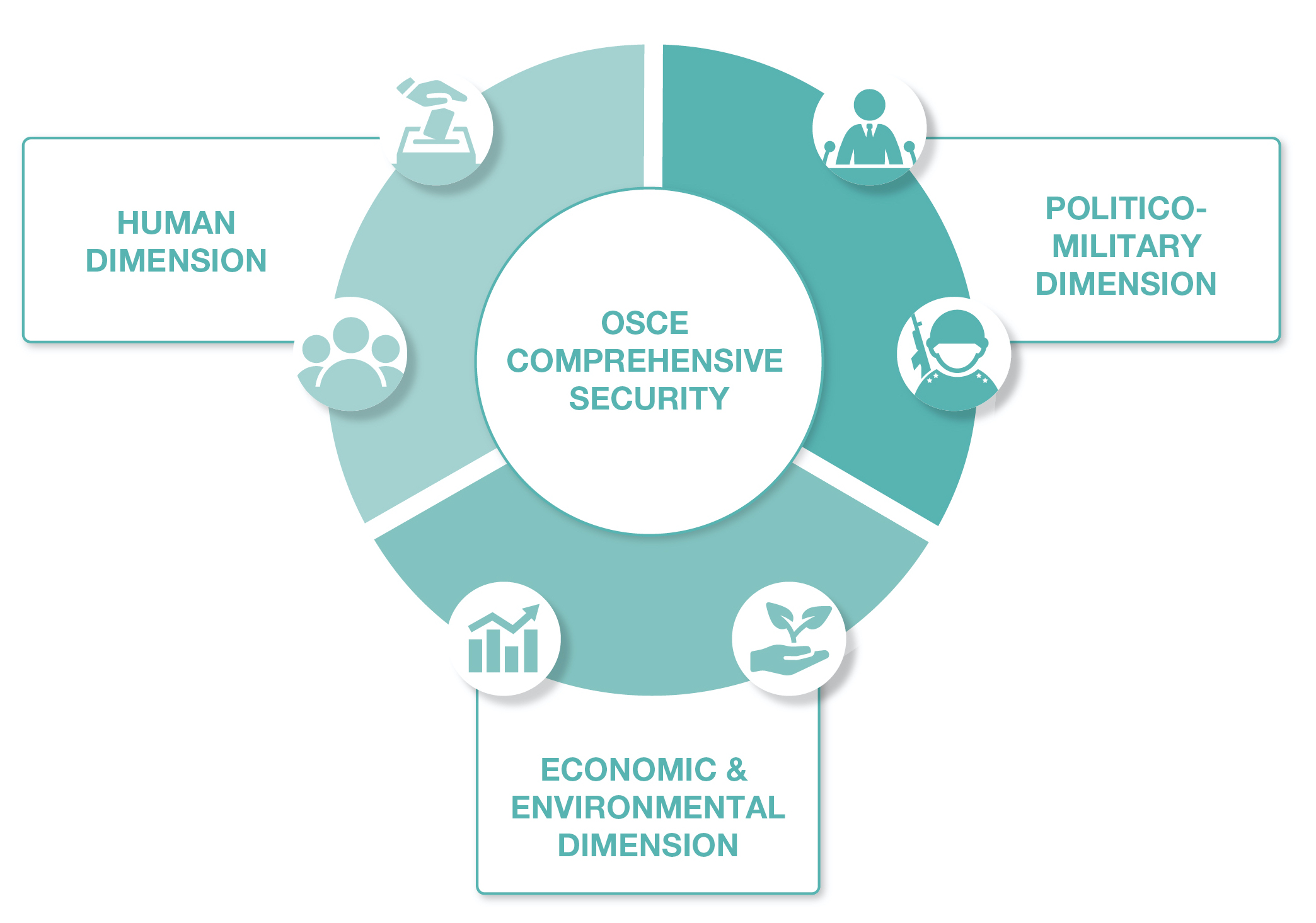
To ensure effective OSCE support, there is a need for stronger cross-dimensional approaches to identifying integrity-building needs and to acting on these. Such cross-dimensional approaches can build on the comparative advantages of each OSCE dimension, which can bring different expertise to the table.

OSCE Dimensions

Politico-Military Dimension

Under the first dimension, several field operations have sought to engage in integrity building, with a particular focus on policing and border management. Occasionally, the OSCE has supported programmes aimed at building accountability of specific security institutions in a comprehensive manner (including areas such as parliamentary oversight, external and internal oversight mechanisms, training, community consultations, and media support), which set the foundations for building integrity. However, the first dimension’s efforts to date have often been focused on specific parts of the security sector, driven by the perception that integrity building within the security sector as a whole is a matter for the second dimension, just like for the other parts of the public sector.

Economic and Environmental Dimension

The second dimension has developed significant experience in supporting the development of anti-corruption strategies, sound and transparent public procurement processes, and regulations on whistle-blower protection, as well as in promoting integrity in the public sector. However, except for very few exceptions, the Office of the Co-ordinator of OSCE Economic and Environmental Activities (OCEEA) has not been involved in activities related to integrity building in the security sector per se. It has, however, engaged in building the capacity of the security sector, and in particular, investigators and prosecutors in investigating corruption and money laundering. Efforts have also been made to support the adoption and implementation of existing instruments, standards and norms.

Human Dimension

The third dimension has also made an important contribution to building a culture of integrity within the security sector, working mainly on building external accountability (e.g., through supporting ombuds institutions and other independent oversight bodies, building civil society’s oversight capacities, as well as strengthening security sector institutions’ compliance with the rule of law and mainstreaming human rights and gender equality). Support has also been provided to enhance judicial integrity and to develop effective and transparent mechanisms to prosecute corruption. Ultimately, integrity is a cornerstone for the promotion of democratic and accountable institutions, which is at the core of the third dimension’s mandate.

All dimensions thus have extensive experience and interest in building integrity in different parts of the security sector and from different perspectives. Bearing this in mind, more efforts should be made to identify synergies across all three dimensions to promote organization-wide coherent approaches to integrity building.

For further information and concrete examples, see section 2 in Chapter 6 of the Guidelines.

4. Governance-Driven Support to Integrity Building

The OSCE has acquired significant experience in providing training, developing codes of conduct, enacting laws and policies, and supporting investigative measures, all key anti-corruption initiatives. However, when it comes to building a culture of integrity, a shared understanding of the purpose and values guiding the institution, as well as conditions necessary to create commitment to those values, should be built. To that end, governance-driven approaches (i.e., the application of a good governance lens) are important. When it comes specifically to developing integrity-building programmes, those should be guided, to the extent possible, by the following approaches:

Click on each headline to read more.

As in all efforts to support the consolidation of democratic institutions, integrity-building programmes or programmes with an integrity component should look beyond the government and be developed in consultation with not only the security sector institution concerned but also civil society, relevant parliamentary groups and other relevant actors. Taking an inclusive approach will not only foster a common understanding of the challenges and possible solutions, and ensure that programmes are fit-for-purpose, but it will also improve the public perception and increase citizens’ trust in the security sector. Therefore, these actors should be involved at all stages of the project cycle to the extent possible.

Without establishing or changing necessary institutional processes and mechanisms, training individuals will not suffice, despite the fact that it is vital to foster change in knowledge and mindset. Integrity should thus be tackled from an institutional perspective and aim at decreasing incentives and opportunities for engaging in corruption and other undesirable practices. This should focus on organizational integrity by establishing clear and transparent human resources and financial management processes and creating decent working conditions for the police, military and other security actors with respect for gender equality and human rights. For institutional approaches to succeed, enough time should be planned to enable changes in behavior of staff that, in turn, will impact institutional practices and processes.

Integrity-building programmes in the security sector should strive to meet the same ethical standards of integrity as any other public institution. These values should be upheld through mechanisms of internal accountability which outline clearly what behavior is expected and how inappropriate behaviors sanctioned. At the same time, external oversight mechanisms are fundamental to ensure accountability at all levels of the security sector, including at the management level. External oversight mechanisms include state and non-state actors and institutions engaged in the democratic governance of the security sector (e.g., parliamentary committees, judicial services, anti-corruption agencies, independent complaint authorities, civil society, the media, etc.).

For further information and a concrete example, see section 3 in Chapter 6 of the Guidelines.

5. Entry Points for Supporting Integrity Building - Overview

To put the aforementioned governance-driven approaches into practice, examples of the most common entry points to support participating States in building integrity within security institutions are provided.

Integrity building entry points

6. Entry Points for Supporting Integrity Building - 1

Assessing needs

Tailor-made integrity-building initiatives should take into account the specific challenges, risks, needs and opportunities in building the integrity of the security sector in a given context. The cultural and political context in which these institutions operate should be taken into considerations for all programmatic interventions. To ensure this is the case, when planning for support to integrity building, OSCE staff could:

Click on each headline to read more.

If SSG/R assessments are intended to examine the extent to which security sector institutions function in accordance with democratic norms and good governance principles, then assessing the status of integrity of the institutions can provide an important contribution to the overall exercise.

If integrity building has been identified as a key area for action, an in-depth assessment should be supported to identify specific needs and entry points. This requires gathering information on the applicable international and regional minimum standards, as well as on what constitutes low and high-levels of corruption in a given country and what are the perceptions by the local population.

If there is sufficient interest from national stakeholders, the assessment by the OSCE could be combined with support to national stakeholders in undertaking a self-assessment. This can help promote ownership of identified programmatic areas for support and at the same time build capacity to address this issue and factor it into future risk analysis and risk management.

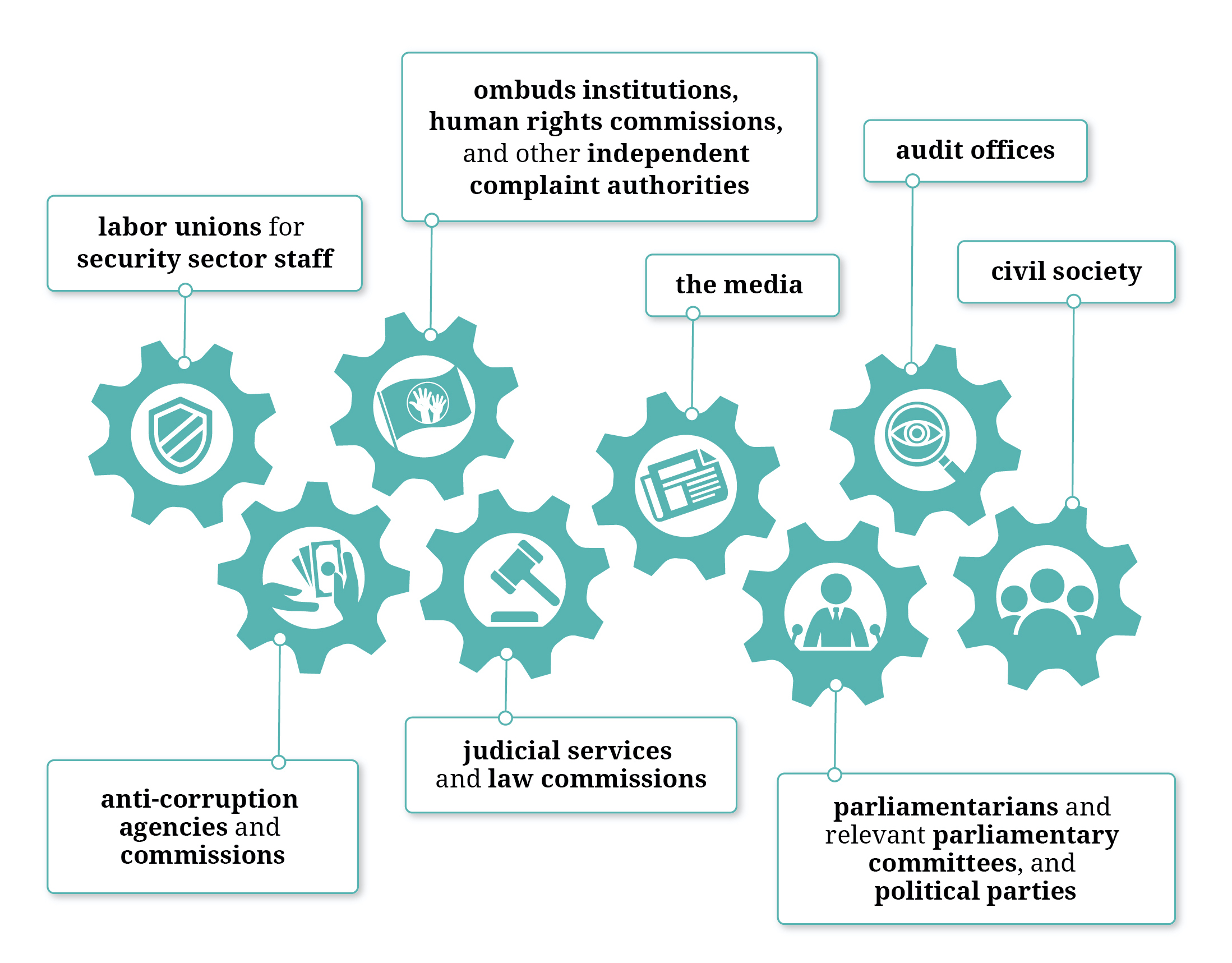
There are a number of actors, which should be considered when assessing integrity needs in the security sector. The specific stakeholders to be engaged will depend on the context, the scope and the objective of the assessment but general examples include:

Counterparts for integrity assessments

For further information and a concrete example, see section 4.1 in Chapter 6 of the Guidelines.

7. Entry Points for Supporting Integrity Building - 2

Policy and legal frameworks

International, regional, national, local legal and policy frameworks provide entry points for building integrity in the security sector, especially by means of policies and regulations within security sector institutions. Support in this area can involve mapping legislative gaps, supporting legal and policy framework development in line with international standards, and supporting the practical application of these frameworks. While legal and policy frameworks related to integrity will differ from context to context, the following are some broad examples:

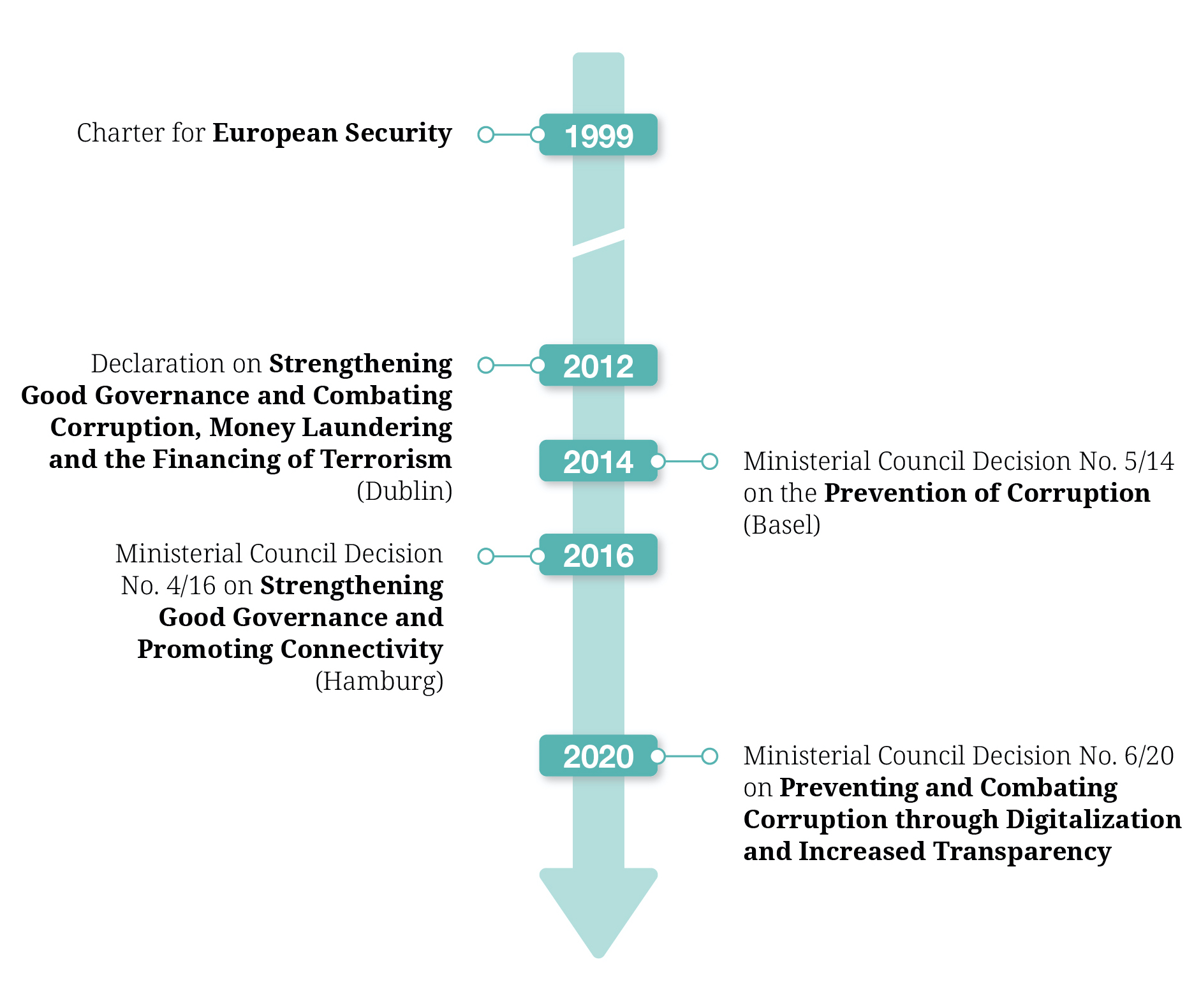
    • International conventions and other tools and commitments made by Governments that include references to integrity and democratic governance of the public sector, and in particular, of the security sector (e.g., the UN Convention against Corruption, the World Customs Organization’s Revised Arusha Declaration on Good Governance and Integrity in Customs Services, the International Organization of Supreme Audit Institutions’ declarations and guidelines on international professional standards for public sector auditing or relevant OSCE commitments).

Integrity-related commitments

    • National legislation that builds on applicable international standards and sets a clear context-specific framework to support integrity building in the security sector (e.g., laws on civil service, anti-corruption laws, surveillance laws, etc.).
    • National strategies include anti-corruption strategies and national security strategies, which are the two most relevant and common strategies in the area of integrity. Anti-corruption strategies should not only set minimum standards to be observed in the public sector but also explicitly mention the importance of these for the security sector. National security strategies should also explicitly mention integrity building as a prominent issue that affects the effective delivery of security.
    • National action plans seeking the implementation of the commitments made in the aforementioned instruments. Enough human and financial resources should be allocated to that end, and accountability for their implementation should be sought, including by establishing clear M&E mechanisms.

For further information, see section 4.2 in Chapter 6 of the Guidelines.

8. Entry Points for Supporting Integrity Building - 3

Institutional level

Building integrity is not only about creating a framework but also about creating the right conditions at the institutional level. If staff are expected to be accountable to the institutions they represent, then these institutions should provide for clear and transparent processes to decision-making and management, including on recruitment. The institutions need to ensure decent working conditions for their staff, offer adequate remuneration, provide a safe working environment and manage risks. All these processes are part of the internal accountability system that make the institutions more effective in delivering on their tasks. In these processes, it is encouraged to further explore and utilize digital tools to support strengthening integrity and internal accountability as appropriate. 

Click on each headline to read more. 

A system could be developed to systematically map sensitive processes (e.g., procurement, promotion of staff, inspection), sensitive functions (typically, staff with relevant decision-making powers related to finances, procurement, human resources etc.) and identify vulnerabilities and risks to integrity violations. Control mechanisms with investigation capacity to respond to suspicions of violations should also be put in place. Similarly, public surveys and other tools for the systematic collection of data on the population’s perception regarding the level of integrity of the security sector could be developed.

There is a need to ensure that the management of the security sector institutions’ staff meets relevant international standards, such as clear and transparent assignment of authority and responsibility, appropriate lines of reporting, fair and transparent recruitment policies, merit-based systems to promotions, regular performance reviews, gender-equality policies, and the planning for post-service employment services. Cronyism and nepotism must be safeguarded against, and illicit practices has to be prevented. Labor unions should also play a role in ensuring respectable social and working conditions which are necessary preconditions for integrity.

Salaries should be adequate and paid on time to avoid the need to look for other sources of income. Implications for family members of security sector personnel should also be taken into consideration when deciding about the appropriateness of benefits, such as housing, schooling, medical care, etc. If the workplace provides for welfare, then it reduces the need for staff to engage in corrupt behaviors and provides incentives for them to perform their work competently, honestly and completely. Similarly, efforts should be made to identify existing vulnerabilities and incentives for malpractice and to support their elimination.

Non-transparent financial management in security sector institutions, lack of control over expenditures and the disconnection between policymaking, planning and budgeting are powerful enablers of corrupt practices. Moreover, in the security sector, corruption can often occur in contracting and procurement, as relevant information is often confidential due to security reasons and may involve security restrictions on competition in tenders or limitations on subsequent audit and investigation. Thus, more attention should be paid to support participating States in establishing or enhancing appropriate financial management within security institutions, including by setting effective inspection and audit systems, clear and transparent procurement processes and appropriate mechanisms for income and asset declarations of public officials.

The way how integrity-building efforts are framed and perceived within the institution concerned will influence attitudes of staff whose behavior and conduct are essential for achieving a long-term change. Promoting an institutional culture that endorses integrity as a key value can thus significantly contribute to the success of reform efforts in any other area, be it human resources, financial management, risk management or preventing misconduct.

For further information and a concrete example, see section 4.3 in Chapter 6 of the Guidelines.

9. Entry Points for Supporting Integrity Building - 4


Individual level

To promote integrity within the security sector, personnel need to be provided with easily accessible tools that clearly define the shared ethical values that are expected from the institution they represent. Moreover, if staff is to be internally accountable for their actions, they should be capacitated with the ways and means to perform their duties in accordance with the set standards. To support efforts in this area, the OSCE staff could: 

Click on each headline to read more.

Codes of conduct offer important tools to guide the behavior of staff by setting expectations and requirements of professional conduct. They can cover areas such as conflicts of interest, declaration of offers/gifts, disclosure of assets, handling confidential information, abuse of office, etc. The codes should be easily accessible for all security personnel, firmly rooted in ethics and values, and appealing to read. They should also foresee mechanisms of implementation, sanctions for non-compliance and oversight arrangements.

It is important that security sector personnel are familiar with relevant legal norms and operational guidelines and understand the consequences for breaking the rules. The provision of training and training-of-trainers programmes, as well as the development of promotional materials, can support raising the level of awareness of the staff. Awareness raising on integrity can be also integrated in the curricula of military, police and judicial academies, as well as online training modules. It is equally important to promote understanding of the opportunities and challenges in building integrity within the security sector among the leadership of the security sector institutions and policy makers.

For further information and a concrete example, see section 4.4 in Chapter 6 of the Guidelines.

10. Entry Points for Supporting Integrity Building - 5


External oversight

External oversight mechanisms should be strengthened to ensure integrity frameworks are applied and to seek redress and compensation when those are violated. OSCE staff could: 

Click on each headline to read more.

State mechanisms typically consist of anti-corruption agencies, ombuds institutions, parliamentarians and parliamentary committees, audit offices, the judiciary, the prosecutor’s office, and other similar entities. Efforts should be made to develop strong, independent oversight mandates and capacities for these actors to enable the effective oversight of security sector institutions. Appropriate measures should be established to ensure that easily accessible complaints procedures and safe reporting channels are available to victims of misconduct by security personnel, whistleblowers, and other individuals with a legitimate interest in reporting the lack of integrity in the security sector. Efforts should be also made to raise awareness on existing complaint mechanisms among both citizens and security personnel.

Non-state actors include the civil society organizations, academic institutions, independent think tanks and the media. OSCE could strengthen the role and capacities of these actors to oversee security sector institutions, with a particular focus on civil society. Additionally, the OSCE could support the establishment of strong, independent, well-mandated, and respected labour unions for security sector staff. The OSCE could also organize joint workshops for journalists and press officers from the security sector institutions on media reporting on the security sector.

While a diverse set of oversight actors already exist in most OSCE participating States, specialized corruption prevention agencies and other oversight bodies are often scattered throughout all levels of government. To strengthen a governance-driven approach, efforts could focus on promoting co-operation and co-ordination among anti-corruption agencies and oversight bodies, as well as between these and the security sector institutions themselves to support a coherent and effective accountability system.

Stimulating public debate and creating space for dialogue are key entry points for integrity-building programmes. For example, national and regional roundtables can provide a platform for stakeholders to reach a common understanding of the scope and importance of the security sector’s integrity.

For further information and a concrete example, see section 4.5 in Chapter 6 of the Guidelines.

11. Wrap-up Questions

Get to the questions