Completion requirements
6. Entry Points for Supporting Integrity Building - 1
Tailor-made integrity-building initiatives should take into account the specific challenges, risks, needs and opportunities in building the integrity of the security sector in a given context. The cultural and political context in which these institutions operate should be taken into considerations for all programmatic interventions. To ensure this is the case, when planning for support to integrity building, OSCE staff could:
Click on each headline to read more.
If SSG/R assessments are intended to examine the extent to which security sector institutions function in accordance with democratic norms and good governance principles, then assessing the status of integrity of the institutions can provide an important contribution to the overall exercise.
If integrity building has been identified as a key area for action, an in-depth assessment should be supported to identify specific needs and entry points. This requires gathering information on the applicable international and regional minimum standards, as well as on what constitutes low and high-levels of corruption in a given country and what are the perceptions by the local population.
If there is sufficient interest from national stakeholders, the assessment by the OSCE could be combined with support to national stakeholders in undertaking a self-assessment. This can help promote ownership of identified programmatic areas for support and at the same time build capacity to address this issue and factor it into future risk analysis and risk management.
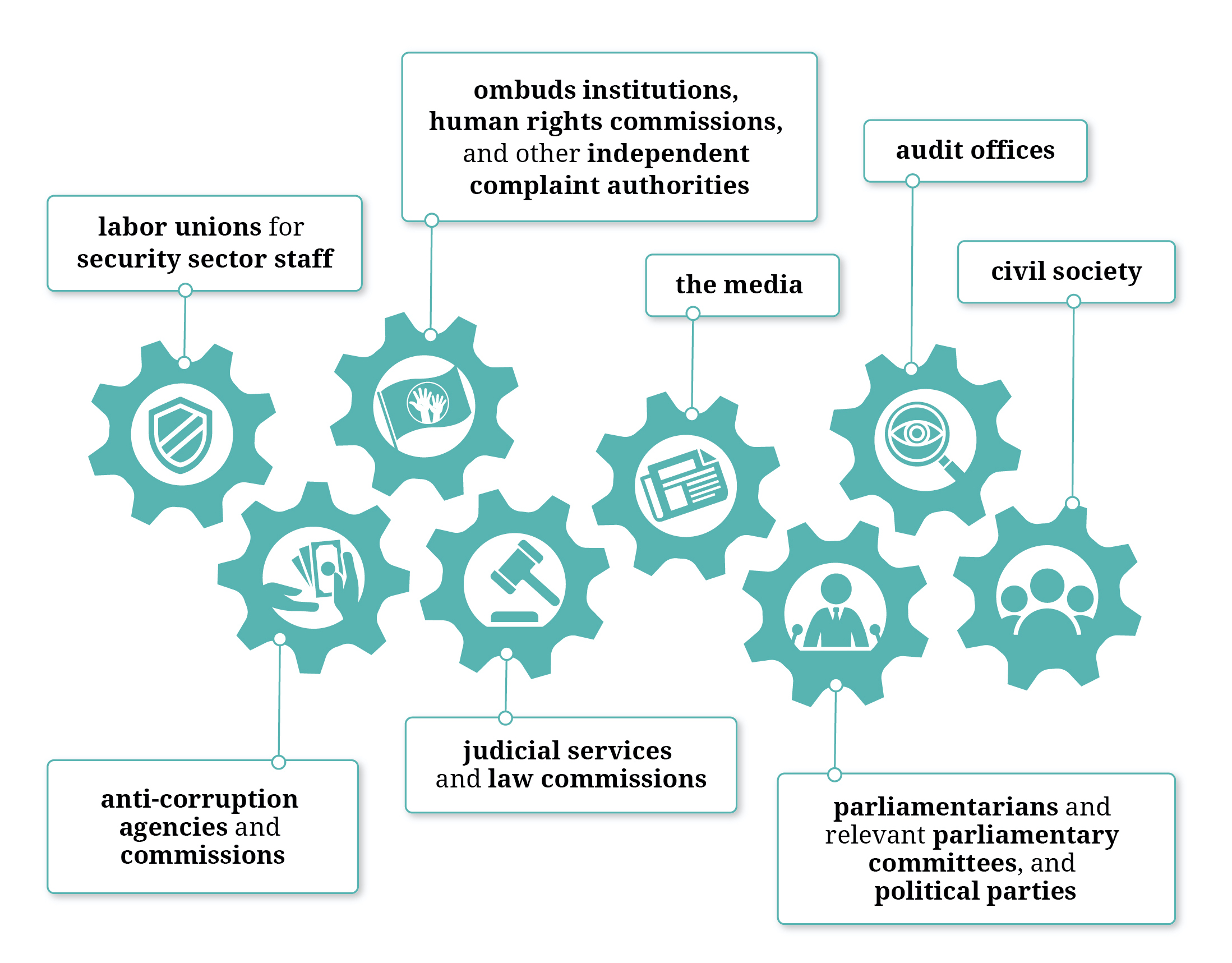
There are a number of actors, which should be considered when assessing integrity needs in the security sector. The specific stakeholders to be engaged will depend on the context, the scope and the objective of the assessment but general examples include:
For further information and a concrete example, see section 4.1 in Chapter 6 of the Guidelines.