Completion requirements
3. Cross-Dimensional Approaches to Integrity Building
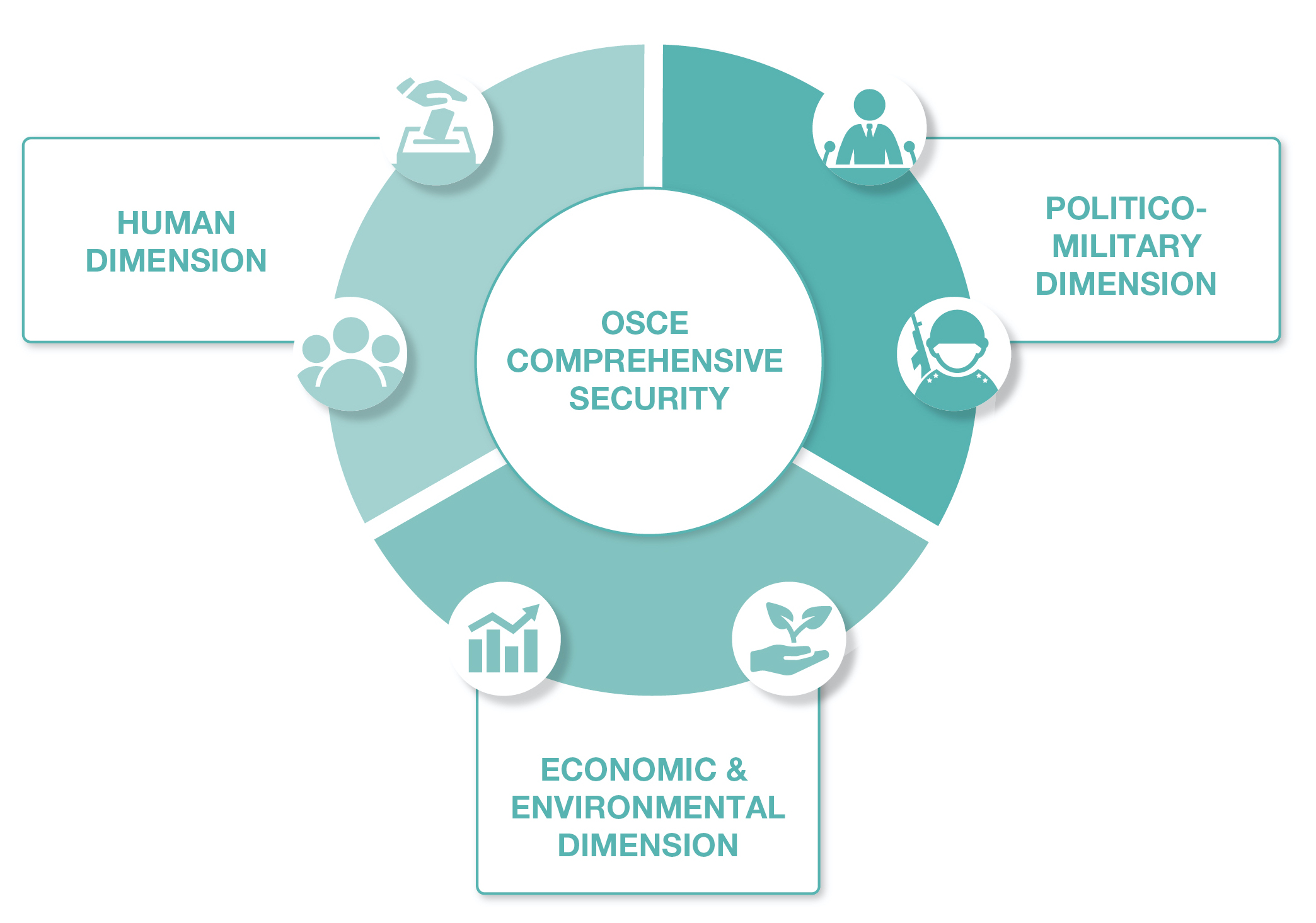
To ensure effective OSCE support, there is a need for stronger cross-dimensional approaches to identifying integrity-building needs and to acting on these. Such cross-dimensional approaches can build on the comparative advantages of each OSCE dimension, which can bring different expertise to the table.
Politico-Military Dimension |
||
 |
 |
Under the first dimension, several field operations have sought to engage in integrity building, with a particular focus on policing and border management. Occasionally, the OSCE has supported programmes aimed at building accountability of specific security institutions in a comprehensive manner (including areas such as parliamentary oversight, external and internal oversight mechanisms, training, community consultations, and media support), which set the foundations for building integrity. However, the first dimension’s efforts to date have often been focused on specific parts of the security sector, driven by the perception that integrity building within the security sector as a whole is a matter for the second dimension, just like for the other parts of the public sector. |
Economic and Environmental Dimension |
||
 |
 |
The second dimension has developed significant experience in supporting the development of anti-corruption strategies, sound and transparent public procurement processes, and regulations on whistle-blower protection, as well as in promoting integrity in the public sector. However, except for very few exceptions, the Office of the Co-ordinator of OSCE Economic and Environmental Activities (OCEEA) has not been involved in activities related to integrity building in the security sector per se. It has, however, engaged in building the capacity of the security sector, and in particular, investigators and prosecutors in investigating corruption and money laundering. Efforts have also been made to support the adoption and implementation of existing instruments, standards and norms. |
Human Dimension |
||
 |
 |
The third dimension has also made an important contribution to building a culture of integrity within the security sector, working mainly on building external accountability (e.g., through supporting ombuds institutions and other independent oversight bodies, building civil society’s oversight capacities, as well as strengthening security sector institutions’ compliance with the rule of law and mainstreaming human rights and gender equality). Support has also been provided to enhance judicial integrity and to develop effective and transparent mechanisms to prosecute corruption. Ultimately, integrity is a cornerstone for the promotion of democratic and accountable institutions, which is at the core of the third dimension’s mandate. |
All dimensions thus have extensive experience and interest in building integrity in different parts of the security sector and from different perspectives. Bearing this in mind, more efforts should be made to identify synergies across all three dimensions to promote organization-wide coherent approaches to integrity building.
For further information and concrete examples, see section 2 in Chapter 6 of the Guidelines.