Требуемые условия завершения
9. Benefits of OSCE Approach to SSG/R Assistance - 4
SSG/R and the Conflict Cycle
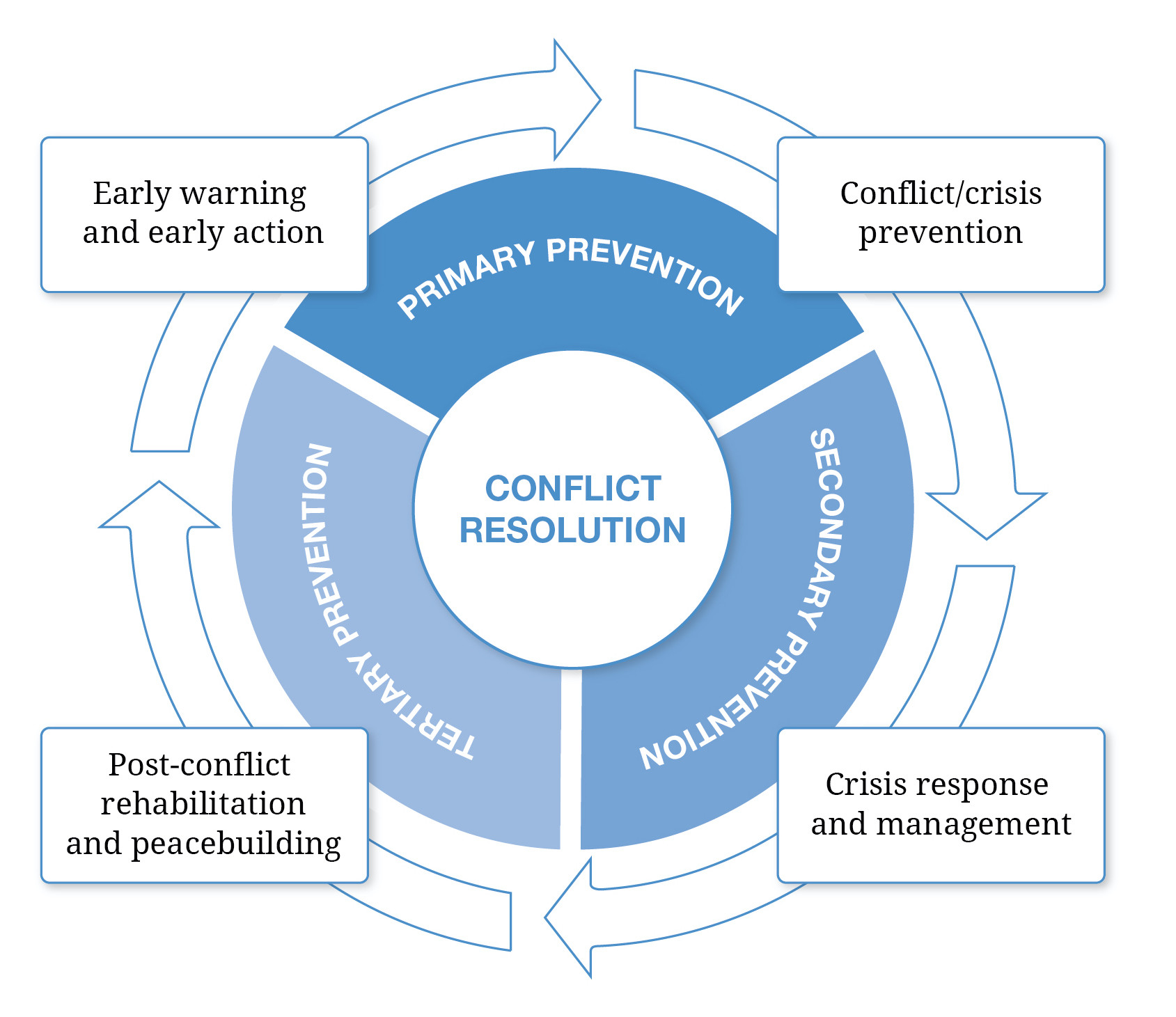
Ministerial Council Decision No. 3/11 on "Elements of the Conflict Cycle" recognizes the need for a comprehensive and cross-dimensional response in addressing the multi-faceted causes of crises and conflicts.
Many violent conflicts around the world have links to structural deficiencies in the security sector. Security sector institutions that are poorly managed, corrupt, politicized, ineffective, neither inclusive nor representative of the population they serve, commit human rights violations and are not sufficiently accountable are themselves a root cause of conflict. Moreover, they have the potential to destabilize already fragile situations and can become a driver of conflict instead of contributing to conflict prevention. Empirical evidence suggests that countries with poorly governed security sectors have a 30 to 45 per cent higher risk of violence and civil conflict. On the other hand, a well-functioning security sector, governed in line with OSCE commitments and principles, increases crisis resilience and contributes to stability. An accountable security sector that responds to the needs of the entire population is therefore vital to effective conflict prevention.
Many participating States have acknowledged the importance of effective and accountable security sector institutions and their significant contribution to early warning, conflict prevention, crisis management and resolution, post-conflict rehabilitation and sustainable peacebuilding. This has also let the SG to recommend in his report to "further integrate SSG/R into the OSCE’s conflict cycle toolbox in order to strengthen the OSCE’s work in SSG/R in the context of global efforts to prevent conflict and sustain peace".
For these reasons, any conflict analysis needs to recognize the role of the security sector, as well as SSG/R in conflict prevention. By the same token, SSG/R assistance should always be conflict-sensitive and conscious of the different phases of the conflict cycle and the respective role that SSG/R can play in these phases. This will help to ensure long-term sustainability and effectiveness of reform efforts, e.g., by allowing for adequate consideration of conflict dynamics and applying a do-no-harm approach, especially vis-à-vis groups that are in a situation of vulnerability, when engaging with security sector institutions.
For further information see section 4.4 in chapter 1 of the guidelines.