Understanding SSG/R in the OSCE context
| Site: | OSCE eLearning |
| Course: | OSCE Training on Security Sector Governance and Reform (SSG/R) |
| Book: | Understanding SSG/R in the OSCE context |
| Printed by: | Guest user |
| Date: | Thursday, 1 October 2026, 1:25 AM |
Table of contents
- 1. Introduction
- 2. Working definition of SSG/R in the OSCE context
- 3. Security Sector
- 4. Governance and reform
- 5. Guiding Principles of the OSCE’s SSG/R Assistance
- 6. Benefits of OSCE Approach to SSG/R Assistance - 1
- 7. Benefits of OSCE Approach to SSG/R Assistance - 2
- 8. Benefits of OSCE Approach to SSG/R Assistance - 3
- 9. Benefits of OSCE Approach to SSG/R Assistance - 4
- 10. Benefits of OSCE Approach to SSG/R Assistance - 5
- 11. Wrap-up Questions
1. Introduction
Welcome to the first module of the OSCE Training on Security Sector Governance and Reform (SSG/R). After completing both e-learning and in-class parts of this module, you should be able to:
- Explain the concept of human security and people-centred approach to security in relation to OSCE’s comprehensive concept of security
- Describe the main security sector actors, which are involved in security provision, management and oversight
- Discuss the main principles and relevance of SSG/R support in the OSCE context
The module is based on the first chapter of the Guidelines on SSG/R for OSCE Staff (2nd edition), which is a required reading for this course.
2. Working definition of SSG/R in the OSCE context
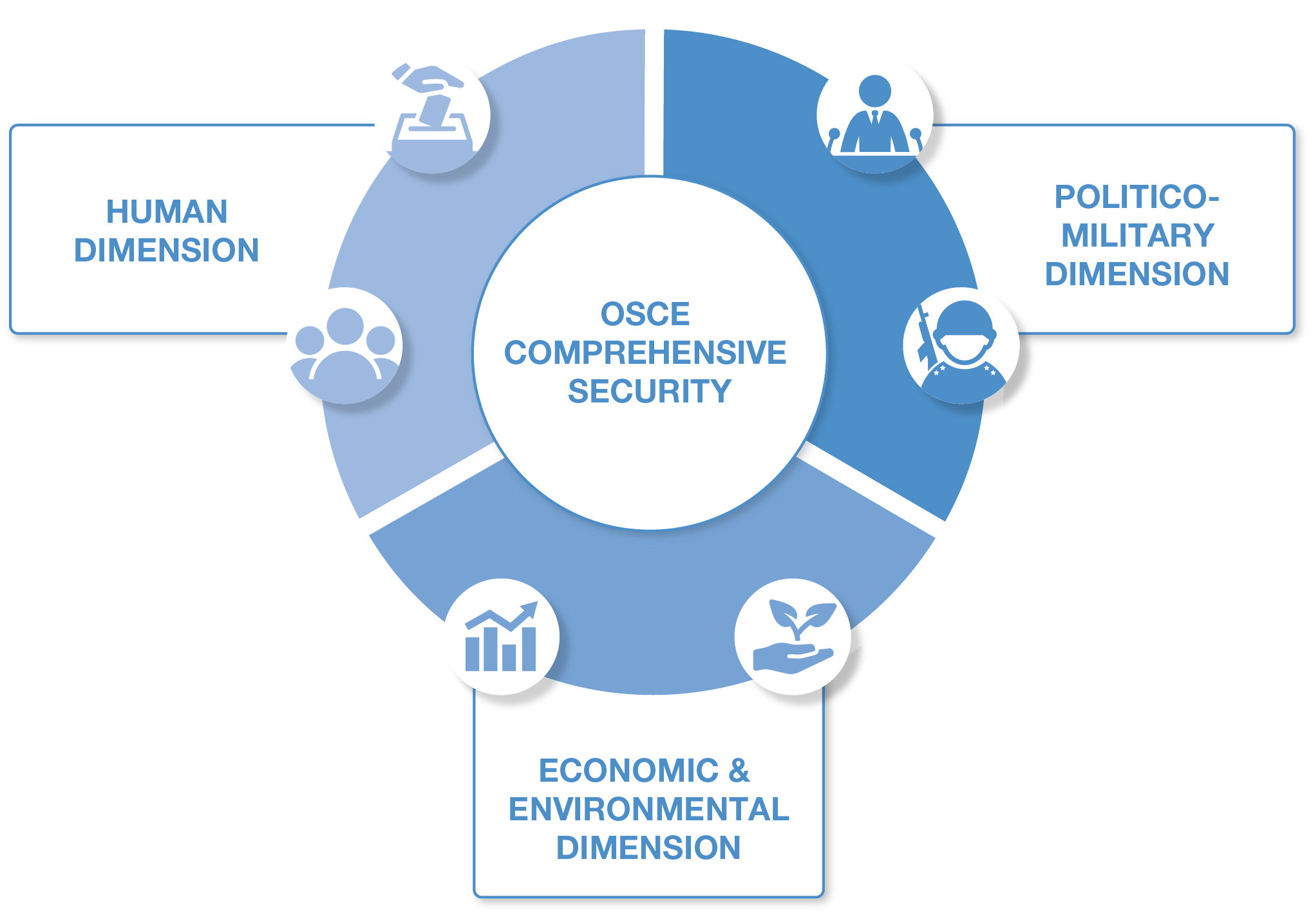
Changes in the international security environment since the end of the Cold War and in the nature of conflicts, from predominantly inter-state to intra-state or hybrid conflicts, have created a paradigm shift in the understanding of security. The conventional state-centred model that primarily emphasized military aspects of security has been gradually complemented by a new concept that also recognizes non-military aspects of security and applies a people-centred approach, in that it centres on the security needs of all individuals and communities. The 1975 Helsinki Final Act can be seen as a precursor of this shift, as it pioneered a broader understanding of security at both the state and individual level. This broad understanding later evolved into the OSCE’s comprehensive concept of security with its three dimensions: the politico-military, the economic and environmental, and the human dimension.
Security began to be seen as a matter of concern for all institutions – from legislative bodies and justice systems to all citizens, both as individuals and as members of civil society. It also began to be seen as a public good, which should be provided according to the same standards and principles as any other public service. The term “security sector” was coined and with it the concept of “security sector governance” and “security sector reform.”
While there is no formal definition of SSG/R in the OSCE, a working definition has developed over time:
Good security sector governance means that the security sector is subject to the same standards of good governance as any other public sector.
Good governance standards and principles mean that the security sector is to provide security to the State and its people in an accountable and effective way, within a framework of democratic civilian control, rule of law, respect for human rights, and the promotion of gender equality.
Activities aimed at improving security sector governance are defined as security sector reform even if they are not always explicitly referred to as such.
Accordingly, security sector governance and reform is a political and technical process through which a country seeks to enhance the good governance of its security sector.
To better understand this working definition, it is necessary to explore its individual components. These include the security sector, security sector governance and security sector reform. All of these components are underpinned by a people-centred approach to security, complementing the traditional state-centred approach.
3. Security Sector
Providing security for men, women, boys and girls is one of the key functions of every state. While there is no exhaustive and universally accepted definition of the security sector, generally it is understood to encompass state- and non-state security actors, as well as all the structures, institutions and personnel responsible for provision, management and oversight of security. It is important to recognize that components of the security sector are always country-specific and will differ depending on the national context.
Select each tab to reveal the explanation.
 Management and Oversight: State Actors
- Executive bodies (e.g., national security council)
- Government ministries (e.g., ministries for defence, the interior, justice and finance)
- Parliament and its specialized committees
- Prosecution services
- Judiciary
- Special statutory institutions (e.g., ombuds institutions, human rights bodies, anti-corruption bodies or independent complaint authorities)
 Management and Oversight: Non-State Actors
- Civil society (e.g., national and international NGOs monitoring corruption, ill-treatment and human rights violations by security actors)
- Media (e.g., investigative journalism on security-related issues)
- Academia and think tanks (e.g., research on military spending)
- The public (e.g., individuals involved in security-related advocacy and policy debates)
- Customary and traditional authorities (e.g., village councils)
 State Security Actors
- Armed forces
- National guard
- Police services
- Gendarmeries
- Border guards
- Coast guards
- Customs authorities
- Prisons and penitentiary services
- Executive protection forces (e.g. presidential guard)
- Intelligence services
- Emergency services
- Other internal security forces
 Non-State Security Actors
- Private military and security companies
- Community security initiatives
- Neighbourhood volunteer patrols
- Self-defence groups
- Customary security providers
- Non-statutory armed forces (i.e., unofficial armed groups, such as guerrilla forces/militia)
4. Governance and reform
Security sector governance relates to the principles of good governance and how they apply to security provision, that is the use of force, management and oversight – with the aim of meeting the security needs of all people in a society and making the most efficient and sustainable use of existing resources. Commonly accepted principles of good governance encompass the following.
Select each tab to reveal the explanation.
 Accountability and transparency
Accountability is the responsibility of duty bearers (the State and its security sector institutions, who hold the monopoly on legitimate use of force) towards rights holders (individuals and communities) in meeting their security needs and the existence of fully functioning oversight mechanisms to provide adequate checks and balances. Accountability in the security sector is pursued through internal and external mechanisms of control and oversight to ensure compliance with standards of conduct, integrity and legal obligations for the discharge of security functions. Internal formal control mechanisms can consist of disciplinary and other sanction procedures connected to the adherence of personnel to codes of conduct and other rules and procedures related to the provision of security services. External oversight typically focuses on compliance with standards of the rule of law and human rights and are exercised through formal democratic civilian control (e.g., by parliaments and national human rights institutions) and informal control and monitoring (e.g., by civil society, media and academia).
Transparency is a key element of accountability. A transparent security sector is one in which the necessary information is freely available and accessible to those who will be affected by decisions and their implementation. Moreover, the process of planning, programming, budgeting and implementation of security sector institutions is publicly available and adequate. Instances exist in which limitations in transparency are legitimate, and these are principally for the protection of state secrets or individual privacy.
 Effectiveness and efficiency
Security sector institutions fulfil their respective mandates to a high professional standard according to the diverse needs of all segments of society. Institutions work efficiently, making the best possible use of public resources – for example, by ensuring adequate organizational and managerial capacities, professional leadership, integrity of staff, sound financial management and planning, among others.
 Rule of law
All security sector institutions are accountable and subjected to laws that are publicly promulgated, equally enforced, independently adjudicated and consistent with international human rights norms and standards. Rule of law also requires measures to ensure adherence to the principles of supremacy of the law, equality before the law, accountability to the law, fairness in the application of the law, separation of powers, participation in decision-making, legal certainty, avoidance of arbitrariness, and procedural and legal transparency. In practice, this means that the use of force and the mandates of different security sector institutions are clearly defined by law and that their activities are compliant with human rights standards. The rule of law is relevant to security sector governance as it provides safeguards against arbitrariness by security sector institutions and, at the same time, safeguards for justice in case of human rights violations by members of the security sector.
 Human rigths
Respecting and protecting human rights is a core function of security sector institutions, and as such, should inform the approach of relevant actors in providing security to the communities they serve. The right to a fair trial, the absolute prohibition of torture, the right to non-discrimination and the right to freedom of peaceful assembly are, among others, all directly relevant to the work of security sector institutions. Security sector institutions that respect and protect human rights enjoy public confidence, making their work more effective and conducive to stability in a given society. The respect for human rights and fundamental freedoms is an integral element of the Helsinki Final Act and the OSCE’s regional security framework. As stated in the Charter of Paris, protection and promotion of human rights is the first responsibility of government; respect for them is an essential safeguard against an over-mighty State.
 Gender equality
Gender plays an important role in societal inequality, as it puts women, men, boys and girls in different positions of power, risk, security and insecurity. For example, women, men, boys and girls have different needs and experiences when accessing security and justice services. Therefore, security sector institutions need to integrate a gender perspective throughout their work to effectively respond to different needs and avoid perpetuating discrimination. Achieving gender equality involves a positive obligation to transform unequal power relations; to address the underlying causes and structures of gender inequality, including discriminatory norms, prejudices and stereotypes; and to transform institutions that perpetuate discrimination and inequality. Security sector institutions must uphold gender equality within their own structures through inclusive policies and practices that promote the recruitment, retention and promotion of women and under-represented groups. Likewise, they must create conducive environments that are free of harassment and abuse and that address gender stereotypes that hamper effective security delivery.
 Participation and inclusivity
All persons of all backgrounds have the opportunity to participate in decision-making and security provision on a free, equitable and inclusive basis, either directly or through legitimate representative institutions. Security sector institutions should also be representative of the communities they serve and ensure equal participation and representation – at all levels, including in senior management positions – of women and other underrepresented groups (e.g., ethnic and other minorities).
 Responsiveness
Institutions are sensitive to the different security needs of all parts of the population and perform their missions in the spirit of public service, without discrimination. They recognize that the security needs of men, women, boys, and girls vary and actively apply gender and youth perspectives in executing their mandates.
Activities to improve and strengthen SSG are referred to as security sector reform (SSR). SSR can be understood as a continuous political and technical process through which a country seeks to enhance the good governance of its security sector. In short, the goal of SSR is good SSG. However, not all activities aimed at improving SSG are explicitly referred to as SSR, even though they share the same purpose and principles. All countries, including those with well-functioning and well-governed security sector institutions, need to engage in continuous reform processes in order to maintain their resilience to crises, to evaluate service effectiveness and to adjust their capacities to respond to emerging trends and evolving security needs. Furthermore, many broader public administration reforms may also have an impact on SSG, for example, reforms of civil service or human resources policies for state employees or changes in budgeting and procurement. SSR activities can take place at different (and at times overlapping) levels:
- Strategic (e.g., related to legal, political and policy frameworks)
- Organizational (e.g., related to organizational structures, guidelines, regulations)
- Operational (e.g., related to specific procedures and processes)
SSR activities address a wide range of political and technical aspects of security and focus on processes that affect the following:
- The entire security sector (e.g., gender mainstreaming)
- A particular locality or level of government within the security sector (e.g., municipal security provision)
- One sub-sector of security policy or provision (e.g., police reform)
- The role of a particular institution that is engaged in security provision, management or oversight of the security sector (e.g., ombuds institutions)
5. Guiding Principles of the OSCE’s SSG/R Assistance
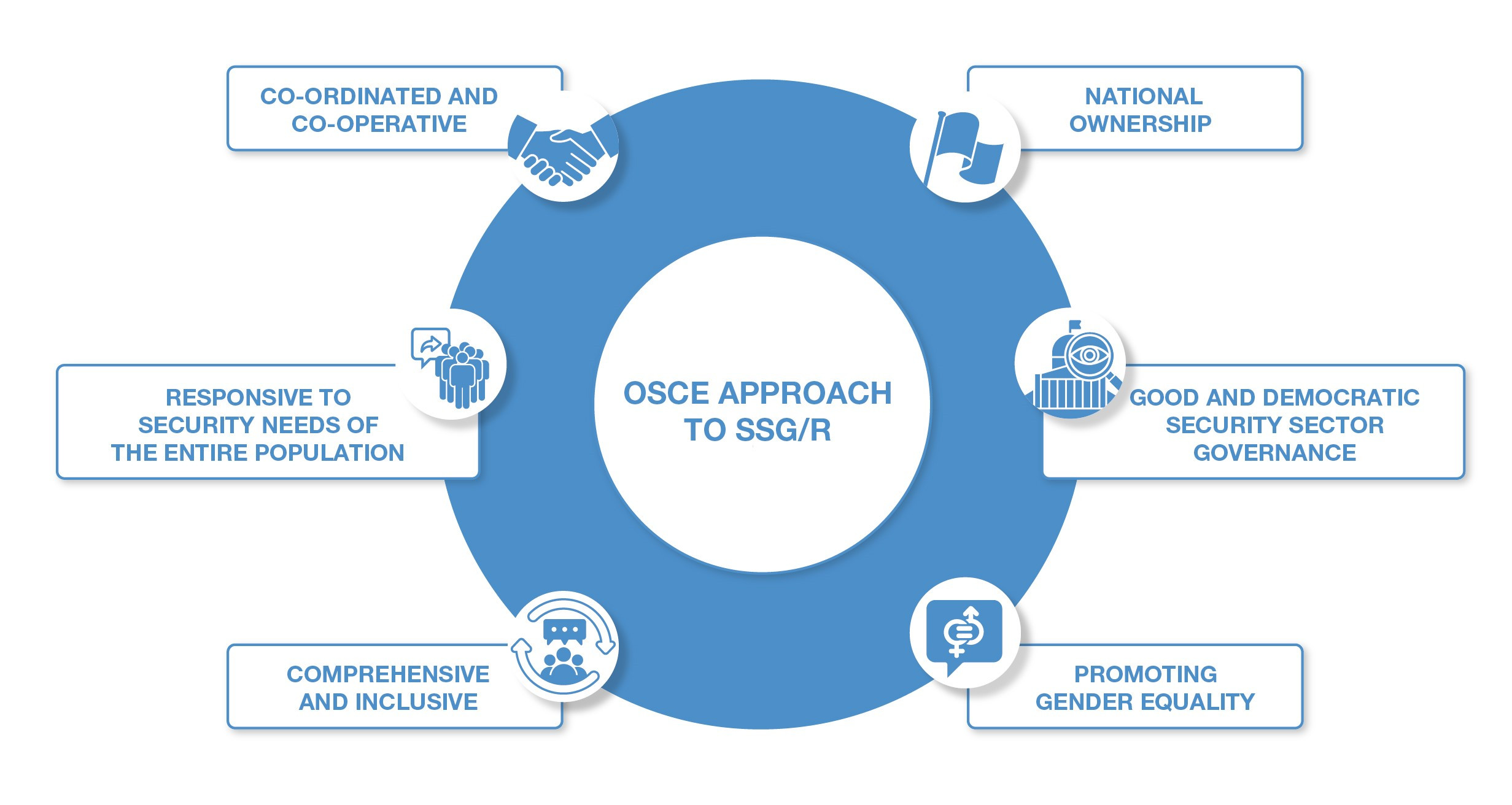
The OSCE assists participating States in strengthening the governance of their security sectors in line with the Organization’s commitments. The provision of such assistance is underpinned by several key principles, as outlined in the statements on the OSCE’s role in SSG/R made at the 2019 and 2021 Ministerial Councils and in the 2019 OSCE Secretary General’s report on the OSCE’s approach to SSG/R.
| OSCE’s SSG/R assistance: | |
|---|---|
| Is nationally owned: | Support provided by the OSCE should be based on a request for assistance from a participating State and be aligned with its national priorities for reform. The concept of SSG/R acknowledges national ownership as a necessary element for success. Thus, SSG/R processes are fundamentally demand-driven and nationally-led. |
| Fosters good and democratic SSG: | The OSCE’s support should foster democratic civilian control, the rule of law and full respect for human rights. |
| Promotes gender equality | An essential element of SSG/R is the full, equal and active involvement of women in SSG/R, as well as the promotion of women’s meaningful participation in the security sector on strategic and operational levels. |
| Is comprehensive and inclusive: | SSG/R support should take a cross-dimensional approach, based on the OSCE’s comprehensive and inclusive concept of security, in order to take account of the holistic nature of national SSG/R processes and to promote the meaningful participation of all segments of society, including civil society. |
| Is responsive to the security needs of the entire population: | SSG/R support should take into consideration the needs of all segments of society, including youth, and follow approaches that are gender-responsive and respect human rights. All SSG/R support should be grounded in a thorough understanding of the given context and based on a comprehensive needs assessment. |
| Is co-ordinated and co-operative: | OSCE activities should be co-ordinated with other relevant actors at the local, national, regional and international levels. Such co-operation should build on the OSCE’s added value and comparative advantages. |
6. Benefits of OSCE Approach to SSG/R Assistance - 1
SSG/R is highly relevant for the OSCE’s engagement with security sector institutions, as it brings multiple benefits to both participating States and OSCE Executive Structures.
SSG/R as an Integral Part of the OSCE’s Comprehensive Approach to Security
The principles underpinning SSG/R are very much in line with the OSCE’s comprehensive concept of security, which encompasses the politico-military, economic, environmental and human dimensions. SSG/R promotes the need for a comprehensive approach when working with the security sector that takes into account inter-linkages between various actors and thematic issues. It calls for due consideration of different reform processes that are mutually reinforcing (police reform, justice reform, etc.), instead of dealing with such processes individually. SSG/R also recognizes that successful security sector reform goes beyond the changes made in individual components of the sector, which often only enhance the capacities, effectiveness and professionalism of individual security sector institutions. Activities related to SSG/R therefore usually cut across all OSCE dimensions and involve a holistic understanding of security and the actors involved in security provision, management and oversight. SSG/R can thus be understood as an approach that operationalizes the OSCE’s comprehensive concept of security when working with security sector institutions.
A more strategic, coherent and co-ordinated approach to SSG/R can help to strengthen cross-dimensional co-ordination and co-operation. By following such an approach, the OSCE can move beyond fragmentation in its programmatic activities towards more comprehensively integrating commitments and mandates that have previously been addressed in isolation. In this way, more effective support for national reform processes can be facilitated. Given that the security sector is often mainly viewed through a politico-military lens, it is important to underline that many aspects within the human, economic and environmental dimensions are indispensable elements in the overall approach to SSG/R. By taking such a comprehensive approach to SSG/R, a high level of synergy can be created when working with security institutions.
7. Benefits of OSCE Approach to SSG/R Assistance - 2
SSG/R as a Framework for Results-Oriented, Sustainable and Efficient OSCE Programming
In times of an increasingly complex security environment, which is putting many different demands on states and their security sector institutions, it is crucial to make the most efficient use of all available resources and expertise. Strengthening cross-dimensional co-ordination and co-operation also means making more strategic, efficient and coherent use of resources to obtain better value for money.
With regard to SSG/R activities, efficiencies can be achieved by working jointly with relevant actors rather than with individuals. This could mean, for example, implementing joint activities with all actors in the criminal justice sector rather than separate activities with police, prosecutors, judges or prison officials.
The OSCE’s work on SSG/R is embedded in a long-term process of transformation focused on broader institution-building, with the aim of ensuring the good management and financial sustainability of reform efforts. SSG/R as a framework for programming means moving away from ad-hoc projects and moving towards applying a (more) strategic, holistic and long-term approach to change.
8. Benefits of OSCE Approach to SSG/R Assistance - 3
SSG/R as an Important Contribution to National Reform Processes
SSG/R principles are enshrined in multiple OSCE commitments related to the functioning of security sector institutions in areas such as democratic and civilian oversight, democratic policing, human rights protection, gender mainstreaming, the rule of law, anti-corruption, good governance, countering terrorism, border management, SALW reduction and many others. SSG/R thus provides a conceptual framework for operationalizing and fulfilling many OSCE commitments in practice.
Furthermore, by placing emphasis on increasing the effectiveness and professionalism of security sector institutions, SSG/R contributes to an accountable, well-governed security sector, which follows a people-centred approach and is able to serve as a provider and guardian of security for all people. This contributes to enhancing public trust, as an accountable security sector increases confidence and trust between the public and the state, strengthens the legitimacy of state institutions and reduces the potential for tension and conflict in a given society.
Good SSG also helps to more effectively counter existing and evolving security threats, in particular, transnational threats. Security threats and risks are becoming more complex and inter-connected than ever before and are often exacerbated by economic asymmetries, social divisions, poor governance and weak institutions. Many of today’s security threats — such as organized crime, terrorism, cybercrime, trafficking in human beings and illicit goods, as well as the security risks arising from pandemics — require multi-dimensional responses. None of these issues can be effectively addressed by one institution or state alone. They require close co-operation among various actors at the local, national and international levels. As a framework that promotes a comprehensive approach to security, trying to break silos, at the same time fostering regional co-operation, SSG/R can contribute to preventing and countering transnational threats. By applying good governance principles, the resiliency and agility of security sector institutions can be strengthened, thus increasing their ability to adapt to the rapidly evolving security needs of the individuals and communities they serve.
9. Benefits of OSCE Approach to SSG/R Assistance - 4
SSG/R and the Conflict Cycle
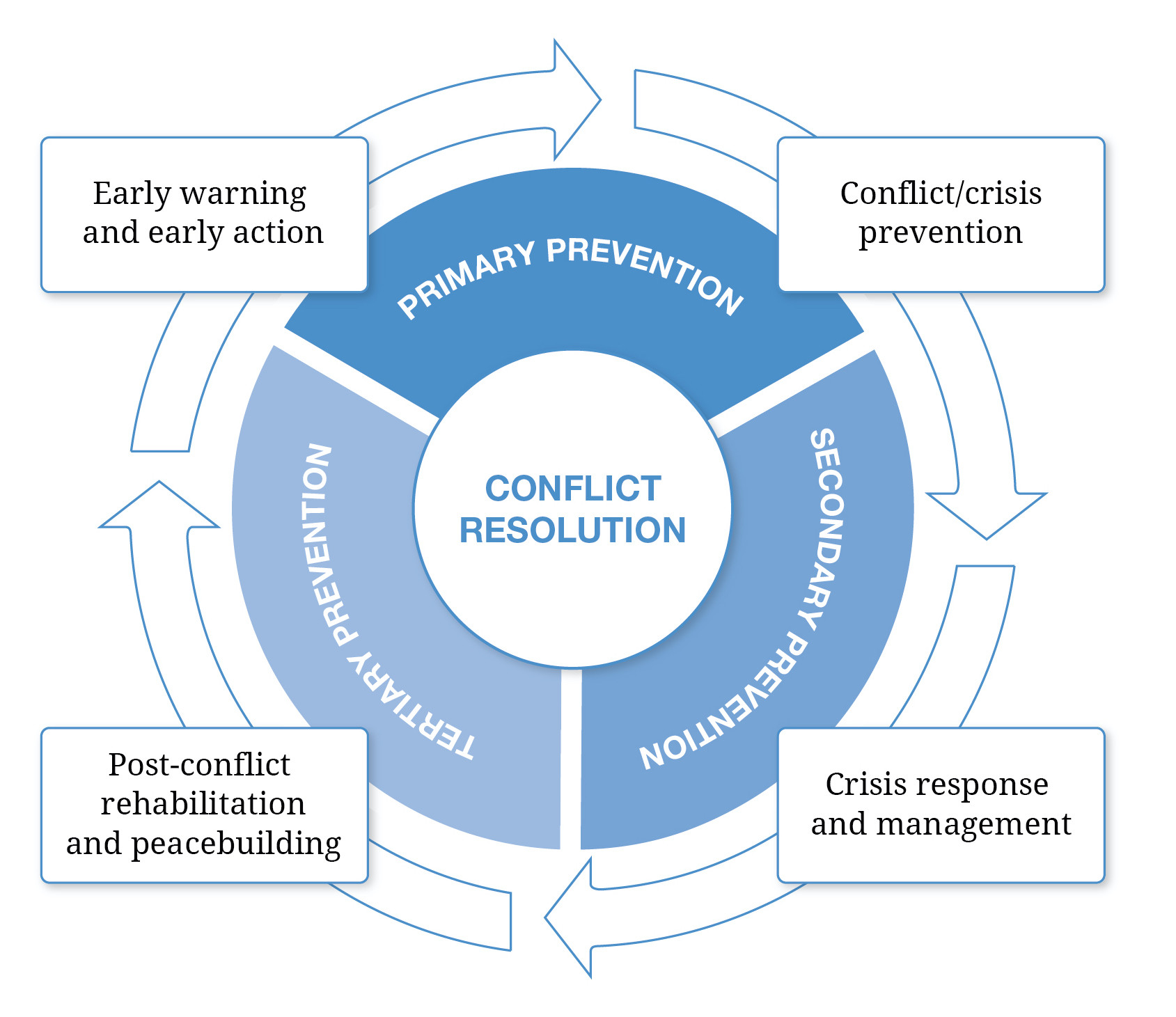
Ministerial Council Decision No. 3/11 on "Elements of the Conflict Cycle" recognizes the need for a comprehensive and cross-dimensional response in addressing the multi-faceted causes of crises and conflicts.
Many violent conflicts around the world have links to structural deficiencies in the security sector. Security sector institutions that are poorly managed, corrupt, politicized, ineffective, neither inclusive nor representative of the population they serve, commit human rights violations and are not sufficiently accountable are themselves a root cause of conflict. Moreover, they have the potential to destabilize already fragile situations and can become a driver of conflict instead of contributing to conflict prevention. Empirical evidence suggests that countries with poorly governed security sectors have a 30 to 45 per cent higher risk of violence and civil conflict. On the other hand, a well-functioning security sector, governed in line with OSCE commitments and principles, increases crisis resilience and contributes to stability. An accountable security sector that responds to the needs of the entire population is therefore vital to effective conflict prevention.
Many participating States have acknowledged the importance of effective and accountable security sector institutions and their significant contribution to early warning, conflict prevention, crisis management and resolution, post-conflict rehabilitation and sustainable peacebuilding. This has also let the SG to recommend in his report to "further integrate SSG/R into the OSCE’s conflict cycle toolbox in order to strengthen the OSCE’s work in SSG/R in the context of global efforts to prevent conflict and sustain peace".
For these reasons, any conflict analysis needs to recognize the role of the security sector, as well as SSG/R in conflict prevention. By the same token, SSG/R assistance should always be conflict-sensitive and conscious of the different phases of the conflict cycle and the respective role that SSG/R can play in these phases. This will help to ensure long-term sustainability and effectiveness of reform efforts, e.g., by allowing for adequate consideration of conflict dynamics and applying a do-no-harm approach, especially vis-à-vis groups that are in a situation of vulnerability, when engaging with security sector institutions.
For further information see section 4.4 in chapter 1 of the guidelines.
10. Benefits of OSCE Approach to SSG/R Assistance - 5
SSG/R’s Contribution to the UN Sustainable Development Goals SSG/R plays an important role in sustainable peace and security and is essential for sustainable development.
A key element of sustainable development is stability, which is increased by a well-functioning security sector. In the 2019 Ministerial Council statement on the OSCE’s role in SSG/R, 44 participating States recognized that “an inclusive, accountable and democratically controlled security sector with full respect for human rights and the rule of law can promote confidence and trust between society and state and stability in the entire OSCE region”. Thus, good SSG directly supports the UN Sustainable Development Goals (SDGs) – in particular, SDG 5 on Gender Equality and SDG 16 on Peace, Justice and Strong Institutions. The OSCE’s co-operation on SSG/R with other multilateral organizations – in particular, the UN and the EU – also supports SDG 17 on Partnership for the Goals.