Enrolment options
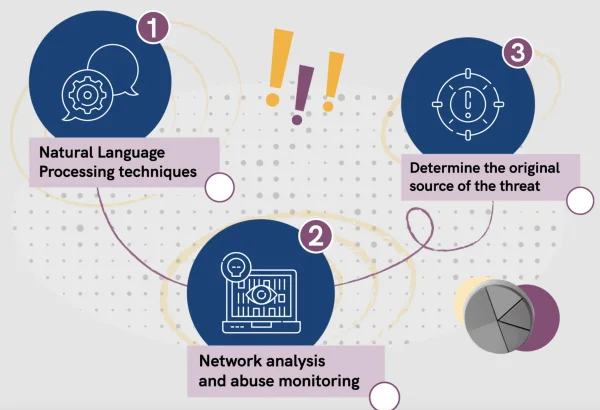
The aim of this course is to provide different stakeholders with the opportunity to understand the context of online violence against women journalists and to prevent escalation of this phenomenon using the OSCE Monitoring Guidelines (2023).
By the end of this module, you will have:
- an understanding about what gender-based online violence is
- an understanding of the 16 indicators that connect to the bigger threat picture – online violence to offline harm – as increasing escalation points
- an understanding of the context within which these indicators operate, meaning international human rights standards (like UN framework SDG 16.10.1 and the UN’s International Classification of Crime for Statistical Purposes/ ICCS codes) for a global understanding of the problem. For example, when mapped to violations of international human rights status, online violence acts would potentially be actionable under international criminal law.
- an understanding of what you should monitor in connection with those triggers for online violence escalation, using quantitative and qualitative data
- an introduction to systematic monitoring and recording of data, using an abuse typology of online violations
As a stakeholder, you will leave this module having understood how better to more systematically capture, record and report the violations according to a standardised framework.
Disclaimer:
This e-learning module was commissioned by the OSCE Representative on Freedom of the Media to complement the related publication Guidelines for Monitoring Online Violence Against Female Journalists (Posetti et al 2023). It is part of the project "Safety of Female Journalists Online," or #SOFJO. The views, findings, interpretations, recommendations, and conclusions expressed herein are those of the authors and do not necessarily represent the official position of the OSCE and/or its participating States.
Point of contact in case of questions: pm-fom@osce.org.