OSCE Code of Conduct on Politico-Military Aspects of Security: Case of Bosnia and Herzegovina
Дата початку навчання: 6 жовтня 2025

Programme Overview

The "OSCE Code of Conduct on Politico-Military Aspects of Security" course has been developed to increase the knowledge of representatives of the Ministry of Foreign Affairs and other relevant BiH Institutions about the norms and principles outlined in the Code and its role in fostering security and confidence among OSCE participating states.

A particular focus in this course is on Bosnia and Herzegovina, its commitments under the Code and compliance with the requirements for information exchange and transparency in the politico-military sphere.

If you have any questions, do not hesitate to reach out to:

Semin Numić / Arms Control Project Assistant Security Co-Operation
Email: semin.numic@osce.org, Office: +387 33 952 209
https://www.osce.org/forum-for-security-cooperation

What you will learn

  • how did the Code of Conduct on Politico-Military Aspects of Security come to exist and how did it evolve to its current form;
  • what military information which is exchanged through the annual questionnaire on implementation of the Code;
  • engaging insights and practical examples from various sections of the Code of Conduct and its Reference Guide.

Course curriculum

 OSCE Code of Conduct on Politico-Military Aspects of Security

Consists of the following units:

  1. Introduction
  2. Historical background
  3. Structure of the Code of Conduct
  4. Code of conduct annual information exchange
  5. The reference guide for questionnaire on the OSCE Code of Conduct on politico-military aspects of security
  6. Review exercises
  7. Module overview

Donors

Gratitude is extended to Austria, Finland, Germany, Ireland, Liechtenstein, Poland, Sweden and Switzerland, whose financial contributions supported the development of the "FSC E-learning Programme".

Frequently Asked Questions

How long will this course take?

The course is entirely self-paced, meaning that you can log in to the OSCE E-Learning platform at any time and progress at your own speed to complete modules in no particular order. However, please note that there may have an end date, so it means you should complete it within the given timeframe.

Why is this course free?

All courses available on the OSCE E-Learning platform are free. We extend our gratitude and thank our organizational donors in Austria, Finland, Germany, Ireland, Liechtenstein, Poland, Sweden and Switzerland, whose financial contributions supported the "FSC E-learning Programme" development.

What language the course is available in?

The course is available in English.

Are there any requirements and prerequisites?

No special skills or knowledge are required for the course. You can start with any course or even attempt the certificate assessment.

Can I receive the certificate?

Yes, after completion of the module and if you pass the certificate assessment - you will receive an official OSCE certificate of achievement or other acknowledgement (a "Certificate").

How does the Certificate assessment work?

There will be several quiz questions covering the course content. In total, you should score 70% or more to get the certificate. Please note:

  • You will get only one attempt per question;
  • Except for Correct/Incorrect - no further feedback is provided.
What if I fail the assessment?

Don't worry - you will get unlimited attempts to re-do the certificate assessment!

Can I learn using my mobile phone?

Yes. The Open edX platform works on desktop and mobile devices with current versions of Chrome, Edge, Firefox, Internet Explorer, or Safari. See our list of supported browsers for the most up-to-date information.

E-learning Course on Practice of Deactivating Small Arms and Light Weapons
Дата початку навчання: 1 вересня 2024

Overview of the Course

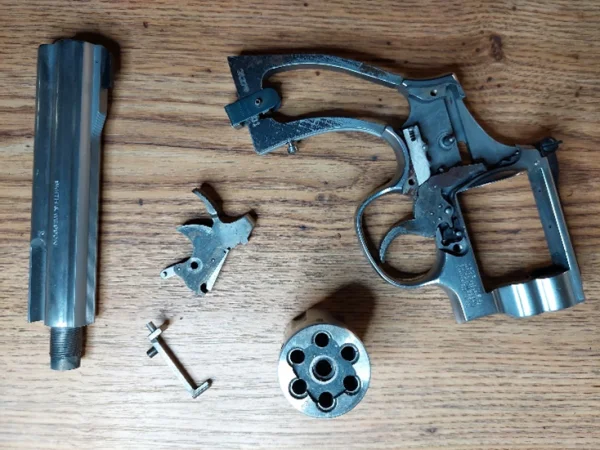
The E-learning Course on Practice of Deactivating Small Arms and Light Weapons provides comprehensive training on the standards, frameworks, and practical procedures for the deactivation of Small Arms and Light Weapons (SALW). It is based on the standards and practices followed by the Banc National d’Epreuve in Saint-Etienne (BNE), a Proof House based in France, and offers an in-depth overview of the tools and equipment required to carry out firearm deactivation safely, effectively, and in strict compliance with European Union (EU) regulations.

A dedicated section on the tools required for deactivation workshops, supported by visuals, ensures a clear and professional understanding of the process. Enhanced with interactive elements and visual aids, the e-learning course equips participants with the knowledge and skills needed to effectively meet deactivation standards.

Course level: Recommended for participants with basic and in-depth knowledge
Methodology: Online Self-paced Course
Registration: Public Self-enrolment

Participants interested in international standards and normative frameworks for the SALW deactivation may also enroll in the E-learning Course on Theory of Deactivating Small Arms and Light Weapons. Further information and enrollment details are available here.


Course curriculum

E-learning Course on Practice of Deactivating Small Arms and Light Weapons consists of 5 modules:

  1. Overview of required Tools and their Use for Deactivation

  2. Deactivation of a Revolver with an Inner Firing Pin Compliant with EU Regulation 2018/337

  3. Deactivation of Pistols (single shot, semi-automatic) Compliant with EU Regulation 2018/337

  4. Deactivation of an AK47 Kalashnikov (Assault Rifle) Compliant with EU Regulation 2018/337

  5. Deactivation of a Single Shot Long Firearm Mauser K98 Compliant with EU Regulation 2018/337


Target Audience

  • Practitioners from the Ministry of Interior (Police Department – Criminal Investigators, Forensic Investigators, Analysts)

  • Ministry of Foreign Affairs (Security and Arms Control Divisions)

  • Ministry of Economy (Customs Administration, Arms Control Export, Import, and Transit Licensing Departments)

  • Arms Control Officers

  • Other entities involved in the deactivation process


SALW Deactivation E-Learning Course Outcomes

By completing the E-learning Course on Practice of Deactivating Small Arms and Light Weapons, participants will:

  • Learn to apply international and regional deactivation standards, ensuring compliance with EU Regulation and related frameworks.

  • Develop practical knowledge of firearm deactivation processes for various weapon types and the tools required for effective deactivation.

  • Acquire skills in inspection, verification, certification, and record-keeping to uphold professional and regulatory standards in SALW deactivation.


Language and Technical Requirements

Language: The course is available in English
Hardware: Computer or mobile device equipped with audio capabilities and a reliable internet connection
Materials: Digital handbooks and guides may be downloadable from the course platform


Assessments and Certification

Participants who successfully complete the training course will be awarded a Certificate of Completion. For official certification of deactivators or verifiers, please contact your local SALW Control Commission or OSCE.

Continuous Online Assessments:

  • Multiple-choice quizzes after each module

  • Participants should score 50% or more in total to receive the certificate

Certification:

  • Digital certificates issued to participants who successfully complete the course and pass the continuous assessments


Contact Information:
CONFLICT PREVENTION CENTRE / FSC SUPPORT UNIT
OFFICE: +43 1 514 36 6262
https://www.osce.org/forum-for-security-cooperation


Frequently Asked Questions

How long will this course take?
This course is entirely self-paced, meaning that you can log in to the OSCE E-Learning platform at any time and progress at your own speed to complete modules in no particular order.

Why is this course free?
All courses available on the OSCE E-Learning platform are free. We extend our gratitude and thank our organizational donors in European Union, France, Germany, Slovakia, Spain, Norway, Poland, and Switzerland for their contributions that supported the development of this knowledge product.

What language is the course available in?
The course is available in English.

Can I receive the certificate?
Yes, after completion of the course and if you pass the certificate assessment – you will receive an official OSCE and BNE certificate of achievement.

How does the Certificate assessment work?
There will be questions at the end of each module covering all topics of the module. You should score 50% or more in total to get the certificate. Please note:

  • You will get only one attempt per question

  • Except for Correct/Incorrect – no further feedback is provided

Can I learn using my mobile phone?
Yes. The Open edX platform works on desktop and mobile devices with current versions of Chrome, Edge, Firefox, Internet Explorer, or Safari. See the list of supported browsers for the most up-to-date information.

Good Governance and Anti-Corruption – An Introductory Guide for OSCE Staff
Дата початку навчання: 1 березня 2026

About this Course

Corruption poses a significant threat to security and stability. It undermines democracy, diminishes the rule of law, and hinders social and economic development by diverting critical resources from welfare and infrastructure into the hands of corrupt individuals. Promoting good economic governance, and preventing and combating corruption are key elements of the OSCE’s comprehensive approach to security and one of the main priorities of the Office of Coordinator of OSCE Economic and Environmental Activities (OCEEA). This course equips participants with up-to-date tools and mechanisms on anti-corruption and good governance, fostering trust and stability in society.

FAQ: What web browser should I use?

The Open edX platform works best with current Chrome, Edge, Firefox, Internet Explorer, or Safari versions.

See our list of supported browsers for the most up-to-date information.

Good Governance and Anti-Corruption
Дата початку навчання: 18 березня 2026

About this Course

Course objectives: 

    • Identify the causes and consequences of corruption.
    • Equip participants with key up-to-date tools and mechanisms for anti-corruption and good governance. 


Target group
: Government officials and representatives of law enforcement, the private sector and civil society. 

Duration: 20h.

Course Structure

The course is divided into 9 modules.

Module 1. Anti-corruption Initiatives, Strategies and Bodies

Module 2. Integrity in the Public and Private Sector

Module 3. Codes of Conduct and Conflict of Interest

Module 4. Public Financial Management and Public Procurement

Module 5. Political Party Funding and Lobbying Regulation

Module 6. Corruption Risk Assessment

Module 7. Criminalization of Corruption

Module 8. Tools of Judicial Cooperation

Module 9. Anti-Money Laundering, Confiscation and Recovery of Assets

Fundamentals of Preventing Violent Extremism and Radicalization that Lead to Terrorism
Дата початку навчання: 16 листопада 2022
 - 
Дата завершення курсу: 16 листопада 2032

The course “Fundamentals of Preventing Violent Extremism and Radicalization that Lead to Terrorism” is based on the ‘Leaders against Intolerance and Violent Extremism (LIVE)’ capacity-building initiative developed by the OSCE Transnational Threats Department’s Action against Terrorism Unit. 

2023 Capacity Building for Survivor Leaders of Trafficking in Human Beings
Дата початку навчання: 1 січня 2023
 - 
Дата завершення курсу: 1 січня 2030
Базовый курс по предотвращению насильственного экстремизма и радикализации, ведущих к терроризму
Дата початку навчання: 14 лютого 2023
 - 
Дата завершення курсу: 2 січня 2032

Базовый курс по предотвращению насильственного экстремизма и радикализации, ведущих к терроризму основан на инициативе по наращиванию потенциала «Лидеры против нетерпимости и насильственного экстремизма (LIVE)», разработанной Отделом по борьбе с терроризмом Департамента по противодействию транснациональным угрозам ОБСЕ. Программа LIVE предназначена для наращивания потенциала гражданского общества в деле укрепления устойчивости сообществ к насильственному экстремизму и радикализации, ведущим к терроризму (НЭРВТ).

Combating Trafficking in Human Beings and Labour Exploitation in OSCE Supply Chains
Дата початку навчання: 6 грудня 2022
 - 
Дата завершення курсу: 6 грудня 2032

This e-learning course provides an introduction to combatting human trafficking and labour exploitation in OSCE supply chains. It consists of a series of three further modules, which address three key areas: What is human trafficking and labour exploitation? Due diligence, supply chains and risk management. And how we can implement this knowledge in the procurement process.

Фандрайзинг для центров Аархус
Дата початку навчання: 1 січня 2025
 - 
Дата завершення курсу: 14 серпня 2026