Kërkesat e përfundimit
3. Planning for Needs Assessment - 1
It is important to engage with national stakeholders during the planning phase in order to ensure that they can help in shaping the assessment to their needs. Engaging national stakeholders in this phase also increases their commitment to implement the recommendations arising from the assessment. A key output of the planning phase is the development of terms of reference (ToR) and agreement on them with national stakeholders. It is good practice to highlight in the ToR the need for a comprehensive, inclusive, gender-sensitive and people-centred approach to the conduct of the assessment, which will consider the needs of different groups of women, men, girls and boys. In the area of SSG/R, such an approach includes, for example, tailoring the methodology to include consultations not only with formal (state) security sector actors but also with representatives of civil society and non-state security actors.
The planning phase consists of number of steps that are briefly described below. For additional information, see section 2 in Chapter 4 of the Guidelines.
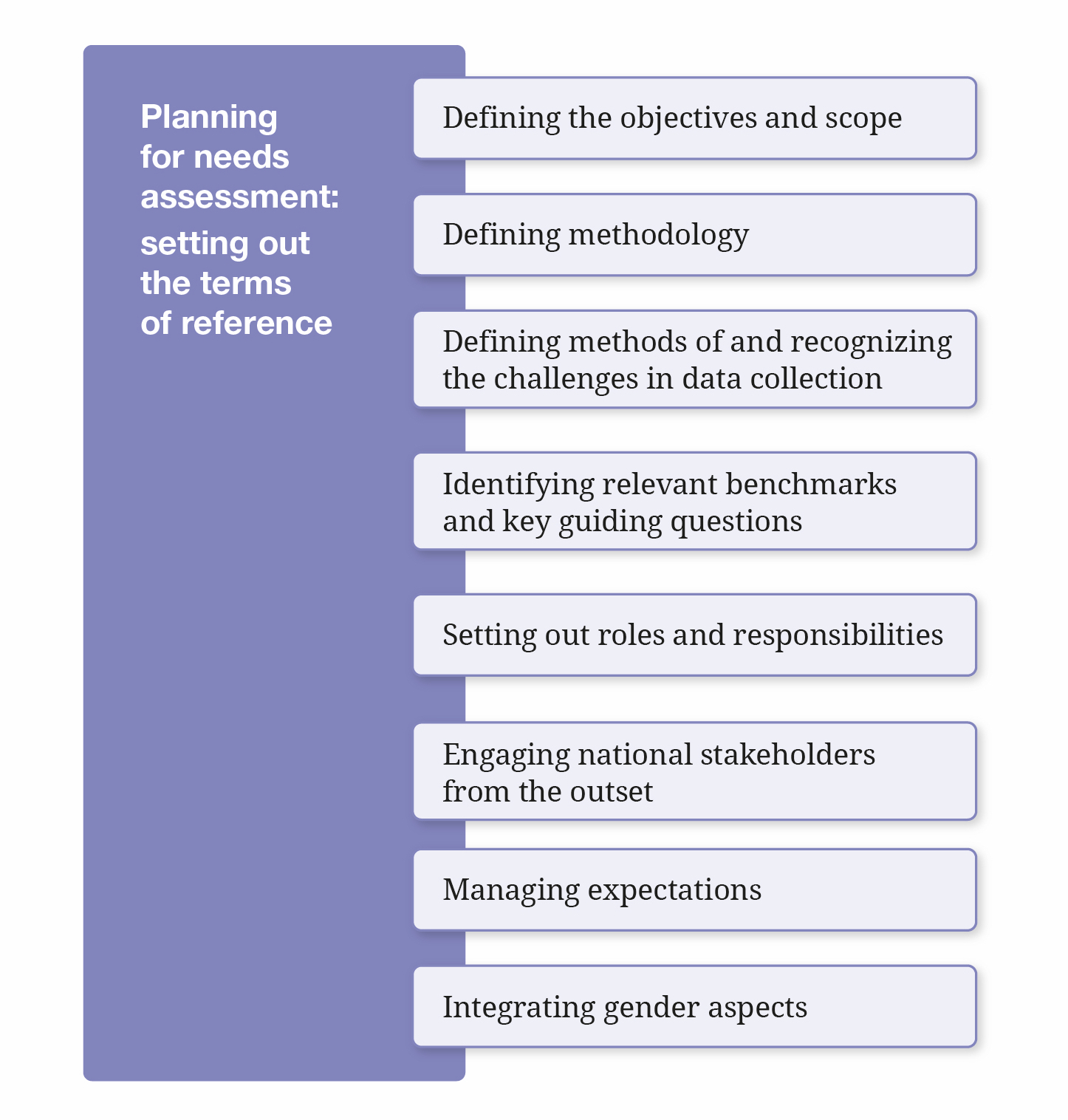
Defining the Objectives and Scope: OSCE staff should start by defining the overall objectives and scope of the assessment, as this will directly affect the timeline and the resources needed. Decisions are required as to whether the assessment will be broad (i.e., sector-wide) or limited to one or multiple subsectors. The objectives should be clear to all stakeholders involved.
Defining the Methodology: Different methodologies are used to conduct needs assessments in the field of SSG/R. The choice of methodology will depend on the purpose, the financial and human resources available and the access to data. Ideally, a mixed methodology should be applied, even if there are often time constraints and insufficient financial and human resources that hinder the assessment of all aspects. However, even when compromises need to be found, it is necessary to have a clear understanding of the challenges and opportunities offered by the methodology selected.