Kërkesat e përfundimit
2. Needs Assessments in the Field of SSG/R
Needs assessments are part of the strategic planning, which is used to determine priorities, to strengthen programme and project design, to improve decision-making, and subsequently to enhance monitoring and evaluation. They are an integral element of the identification phase of the project cycle. Needs assessments help OSCE programme/project managers to understand a variety of factors – notably, the national priorities of reform processes; the context in which the programme/project will take place; the different stakeholders, their interests, expectations and challenges; and the strategic options to address challenges. A thorough assessment of these elements will facilitate sustainable and results-oriented approaches to SSG/R support.
Needs assessments have different functions and provide important added value to different processes such as:
- Supporting national reform processes
- Facilitating more effective OSCE programming by contributing to:
o Stronger engagement with national stakeholders
o The identification of entry points for relevant support
o The identification of cross-dimensional approaches to SSG/R
o The early identification of risks and challenges
o Stronger co-operation with other international actors
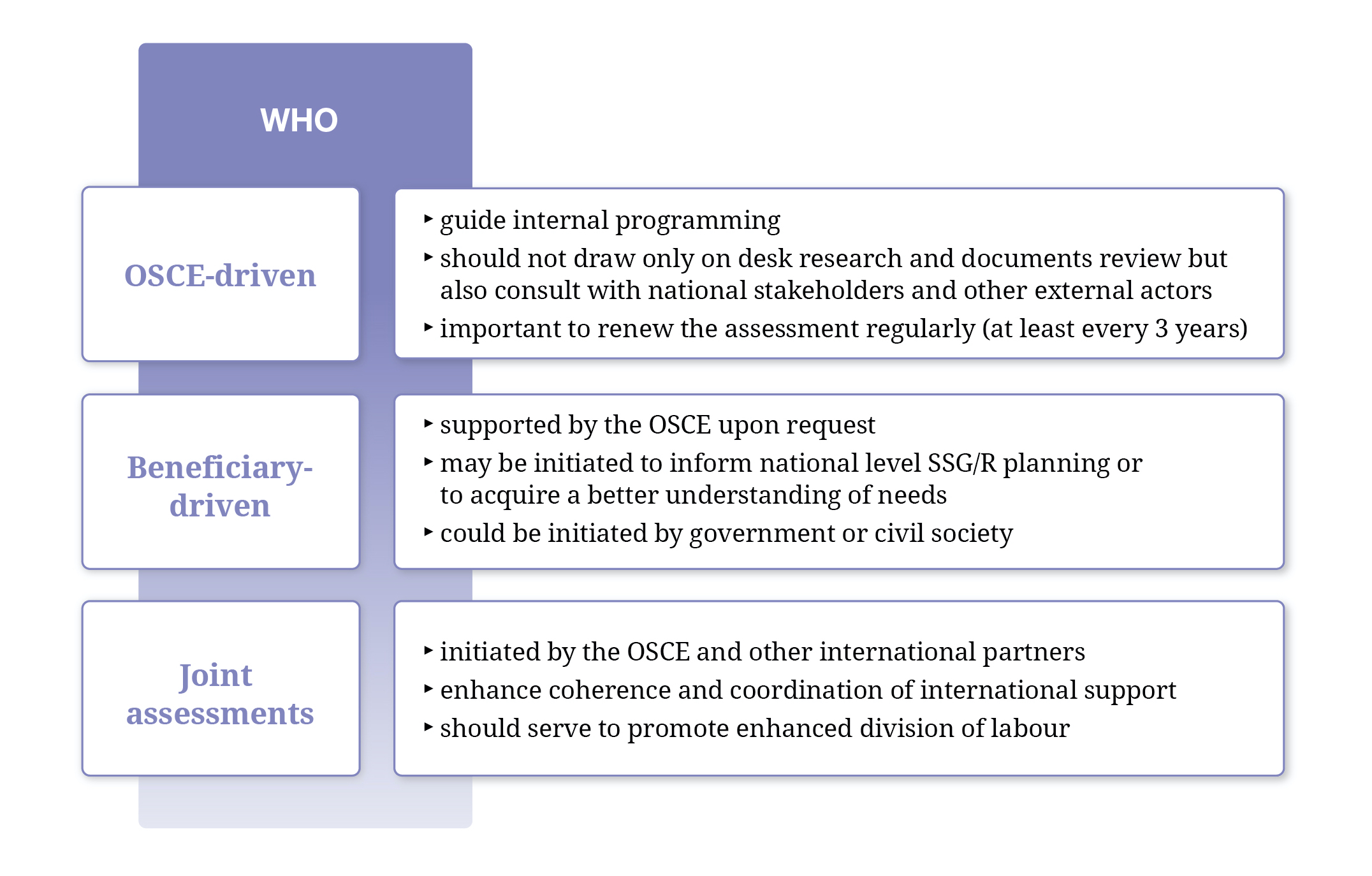
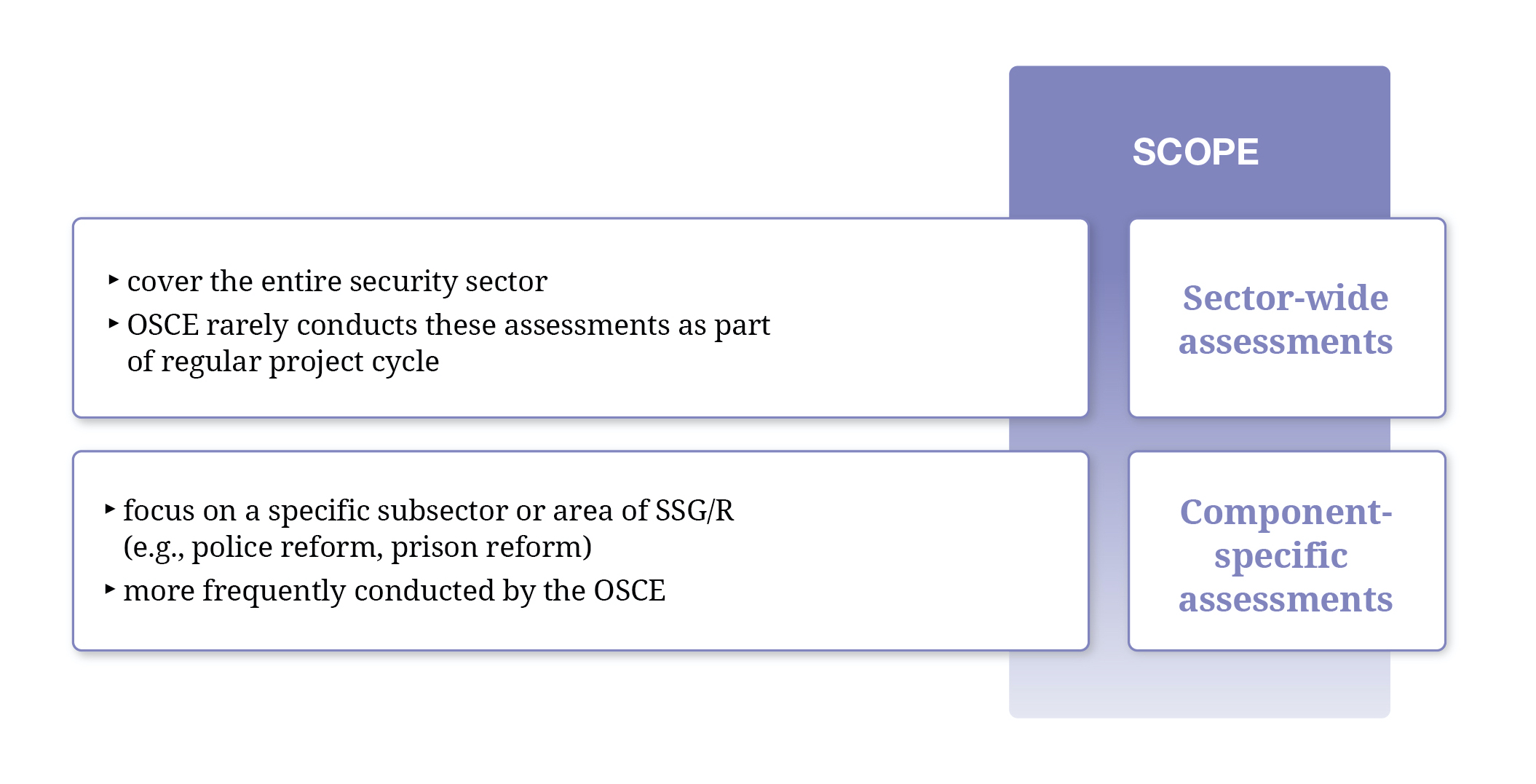
- Providing baseline data for subsequent planning, monitoring and evaluation efforts Likewise, there are different types of needs assessments.
Likewise, there are different types of needs assessments.
For additional information, see section 1 in Chapter 4 of the Guidelines.